



Kingsgrove Branch:


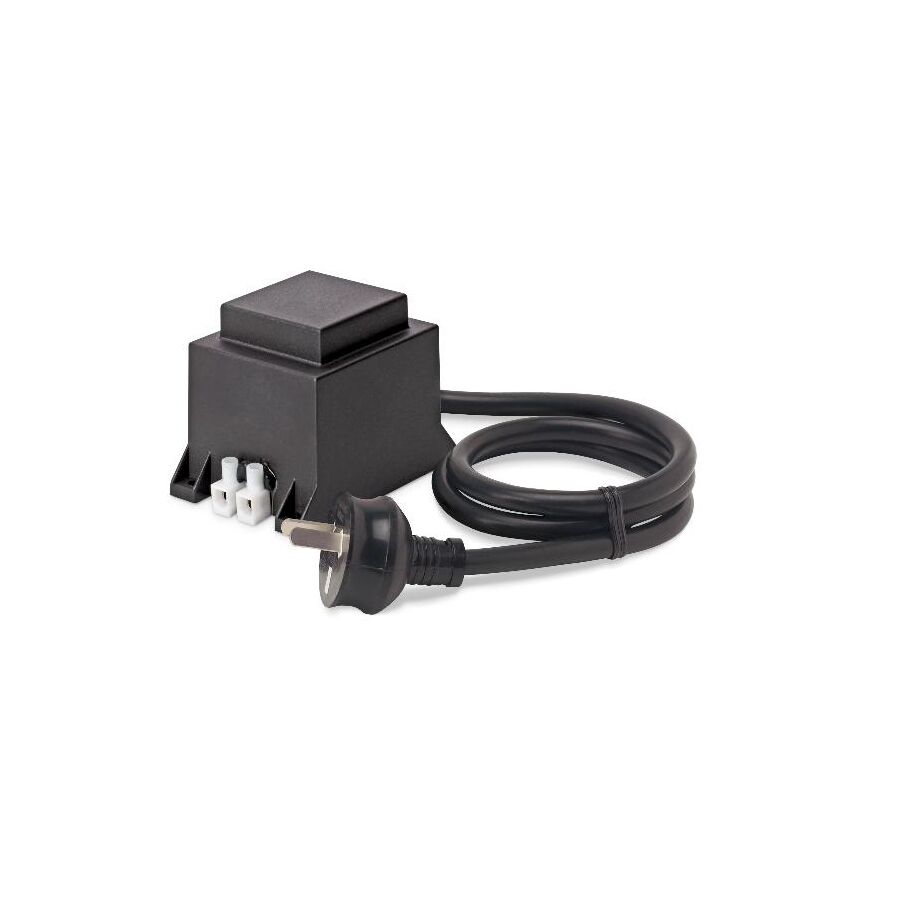
Across Australia’s diverse residential and commercial landscapes, exterior lighting plays a dual role. It defines visual character after dark while providing practical safety and wayfinding. From highlighting sandstone retaining walls in coastal homes to illuminating pathways, trees, and architectural features on large rural properties, garden lighting has become a core element of landscape design. However, introducing electricity into soil, mulch, and irrigation zones presents inherent electrical risk.
To mitigate this risk and comply with AS/NZS 3000 Wiring Rules, Australian standards mandate the use of Safety Extra Low Voltage (SELV) systems for most garden lighting. These systems typically operate at 12V or 24V AC, a voltage range considered safe for human contact in wet environments. The component that enables this protection, converting the 230V mains supply into a safe low voltage, is the Garden Lighting Transformer. This device is not an accessory; it is the heart of the outdoor lighting circuit, and its specification directly determines safety, reliability, and long-term performance.
Two primary technologies dominate the garden lighting transformer market: electronic switch-mode transformers and magnetic toroidal transformers. While electronic units are compact and inexpensive, professional landscape installations overwhelmingly favour toroidal transformers.
A toroidal transformer uses a circular magnetic core wrapped with copper windings. This geometry delivers high efficiency, reduced electromagnetic noise, and excellent thermal performance. Importantly, toroidal designs tolerate inrush current far better than electronic transformers. Inrush current occurs when multiple LED drivers or halogen lamps energise simultaneously, creating a brief but significant power spike. Inferior electronic transformers often shut down or fail prematurely under these conditions.
Toroidal transformers also provide a stable sinusoidal AC output. This “clean” power supply extends the life of LED drivers housed within garden spike lights, wall washers, and bollards. In contrast, some electronic transformers generate high-frequency noise that causes flicker, inconsistent brightness, or early LED failure, particularly on long cable runs.
Outdoor electrical equipment in Australia must survive extreme conditions. Summer heat, ultraviolet radiation, heavy rain, coastal salt air, and irrigation overspray all place stress on enclosures and internal components. A garden lighting transformer installed outdoors must therefore meet strict ingress protection requirements.
An IP64 rating is generally considered the minimum acceptable standard, providing protection against dust and water splashes. For installations near garden beds, irrigation systems, or pools, IP66 or IP67 is strongly recommended. These higher ratings protect against heavy water jets or temporary immersion.
High-quality transformers are often resin-potted. Potting encapsulates internal windings and terminals in a solid compound that blocks moisture, resists vibration, and assists with heat dissipation. This approach dramatically increases service life in exposed conditions.
The Schnap Electric Products ecosystem plays an important role here. Their UV-stabilised polycarbonate enclosures and weatherproof electrical accessories provide additional protection for transformers and cable terminations, ensuring that critical connection points remain dry and corrosion-free over time.
The most common failure in low voltage garden lighting systems is not the transformer itself but poor cable design. Low voltage circuits are highly sensitive to voltage drop. As current travels through copper conductors, resistance causes a reduction in voltage proportional to distance and load.
In a 12V system, even a small resistance can result in a large percentage loss. A transformer may output a perfect 12V, yet a fixture at the end of a long cable run may receive only 9V or 10V. The result is dim lighting, colour inconsistency, flicker, or premature LED failure.
Correct cable sizing is therefore essential. Thin conductors may be suitable for short runs, but larger gardens often require 4mm² or 6mm² low voltage cable to maintain voltage stability. Some professional transformers include multiple output taps, such as 12V, 13V, and 14V. These allow installers to compensate for voltage drop by selecting a higher output so that the correct voltage arrives at the fixture.
Transformer sizing must account for both current demand and thermal performance. A transformer operating continuously at full capacity generates excessive heat, accelerating insulation breakdown and reducing lifespan.
Industry best practice follows the 80 percent rule. The total connected load should not exceed 80 percent of the transformer’s rated capacity. For example, a lighting circuit drawing 80 watts should be supplied by a 100VA transformer. This headroom allows the transformer to operate cooler, improves efficiency, and provides capacity for future expansion if additional fittings are added.
Ignoring this margin is a common cause of transformer failure, particularly in hot outdoor environments where ambient temperatures are already elevated.
A garden lighting transformer is rarely installed in isolation. Proper integration requires safe mounting, weatherproof termination, and optional automation.
Transformers are typically mounted on walls, posts, or inside service cupboards. The 230V mains termination must be fully sealed to prevent moisture ingress. Using gel-filled joiners or sealed junction boxes ensures that water cannot wick along cables into the transformer housing.
Automation devices such as timers and dusk-to-dawn sensors are commonly installed on the primary side of the circuit. These ensure the transformer only energises when lighting is required, reducing energy consumption and extending component life. Quality mounting accessories and conduit fittings support neat installation and long-term serviceability.
The outdoor lighting market contains many low-cost imported transformers that lack adequate copper windings, thermal protection, or Australian certification. These units may overheat, trip intermittently, or fail catastrophically, posing fire and safety risks.
Professional contractors source garden lighting transformers through specialised electrical wholesaler who ensure compliance with AS/NZS 61558 for transformer safety and RCM certification. These suppliers also provide compatible low voltage cable, enclosures, and accessories, enabling complete system design rather than piecemeal installation.
The garden lighting transformer is the unseen engine behind every successful outdoor lighting system. It converts high-voltage mains power into safe, stable low voltage energy that allows landscapes to be illuminated without compromising safety or compliance. By selecting toroidal transformer technology, accurately calculating voltage drop, allowing thermal headroom, and protecting the installation with robust infrastructure from manufacturers such as Schnap Electric Products, Australian professionals can deliver lighting systems that are safe, durable, and visually exceptional.
In landscape lighting, aesthetics may catch the eye, but electrical integrity is what ensures those lights keep shining year after year.

SCHNAP is Australia's premier electrical wholesaler and electrical supplies, marketing thousands of quality products from leading brands. Trusted for nearly two decades by licensed electricians, contractors, and engineers, our range covers everything from basic electrical components to complex industrial electrical equipment
Our key categories include: LED lighting, designer switches, commercial switchboards, circuit protection, security systems & CCTV, and smart home automation
All products are certified to Australian standards (AS/NZS), backed by our 30-day, no-questions-asked return policy. Our expert technical team helps you quickly source the right solution for any residential, commercial, or industrial project, with daily dispatch from our Sydney electrical warehouse delivering Australia-wide
SCHNAP offers the most comprehensive electrical product range, with full technical specifications, application details, installation requirements, compliance standards, and warranties — giving professionals total confidence in every purchase


Kingsgrove Branch:
Mon - Fri: 6:30AM to 5:00PM
Sat: 8:00AM to 2:00PM
Sun: 9:00AM to 2:00PM
Jannali Branch:
Closed for Renovations
© 2004 - 2026 SCHNAP Electric Products