



Kingsgrove Branch:


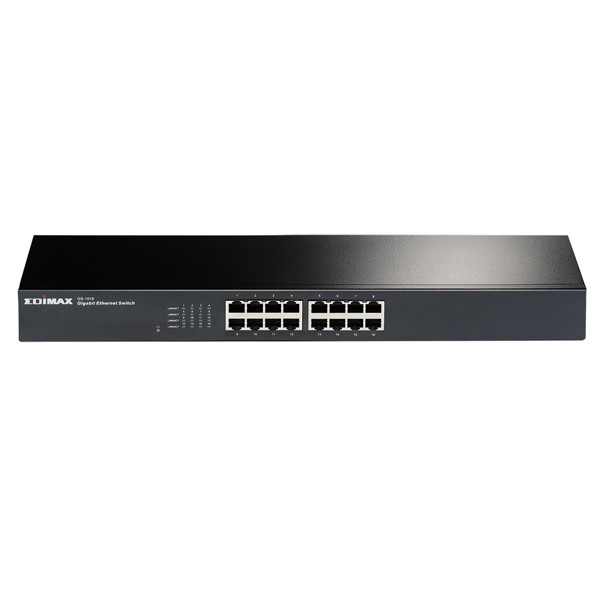
In the modern Australian enterprise, high-speed data connectivity is no longer optional. It is the foundation on which productivity, security, and automation depend. With widespread deployment of the National Broadband Network delivering Fibre to the Premises and enterprise-grade Ethernet services, the performance bottleneck has moved decisively away from the wide area network and into the local area network. Legacy Fast Ethernet infrastructure, limited to 100 megabits per second, cannot support today’s operational demands. Cloud-hosted ERP platforms, real-time collaboration tools, 4K video conferencing, and high-resolution IP surveillance all require sustained internal throughput that only gigabit networking can deliver.
The professional gigabit Ethernet switch is the core device that enables this performance. Operating at 1000 megabits per second per port, it forms the central aggregation point for servers, workstations, access points, and edge devices. More than a simple port expander, a modern gigabit switch is a packet-processing engine designed to move large volumes of data with minimal latency while maintaining reliability, security, and scalability across the network.
One of the most important technical characteristics of a gigabit Ethernet switch is its switching fabric, sometimes referred to as backplane capacity. This specification defines how much aggregate traffic the switch can handle internally. A common misunderstanding is that a 24-port gigabit switch automatically guarantees 24 gigabits per second of usable bandwidth. In reality, if the internal fabric is undersized, simultaneous traffic across multiple ports will result in congestion, dropped packets, and unpredictable latency.
Professional switches are designed with a non-blocking architecture. This means the internal switching fabric can process traffic on all ports at full wire speed in both directions simultaneously. For a 24-port gigabit switch, this typically requires a switching capacity of at least 48 gigabits per second to account for full-duplex operation. In environments such as design studios, engineering firms, or media production offices, where large files are constantly transferred between workstations and servers, non-blocking performance is critical to maintaining workflow efficiency.
Gigabit switches increasingly serve a dual role as both data and power distribution devices. Through Power over Ethernet standards such as IEEE 802.3at (PoE+) and IEEE 802.3bt (PoE++), the switch can supply DC power to connected devices over the same copper cable used for data transmission. This capability simplifies installation and reduces the need for additional electrical outlets at the network edge.
PoE is essential for powering IP cameras, VoIP phones, wireless access points, and access control systems. However, every PoE-enabled switch has a finite power budget. For example, a 24-port PoE+ switch may provide a total of 370 watts. If too many high-draw devices are connected simultaneously, the switch may disable ports to protect itself. Effective network design requires calculating the maximum power consumption of all connected devices and selecting a switch with sufficient headroom. Proper planning ensures stable operation and avoids unexpected outages caused by power budget exhaustion.
In small or residential networks, unmanaged switches can be acceptable. In commercial and industrial environments, however, they quickly become a liability. Managed gigabit Ethernet switches provide control over how traffic flows through the network and how devices are logically grouped.
One of the most important features of managed switches is Virtual Local Area Network capability. VLANs allow the physical switch to be divided into multiple logical networks. Security cameras, office computers, building management systems, and guest Wi-Fi can each be assigned to separate VLANs. This segmentation prevents unnecessary broadcast traffic and creates strong security boundaries. Devices on one VLAN cannot access resources on another without explicit routing rules, reducing the risk of lateral movement by unauthorised users.
Managed switches also support Quality of Service mechanisms that prioritise latency-sensitive traffic such as voice and video. By ensuring that critical packets are transmitted ahead of bulk data transfers, the switch maintains call quality and system responsiveness even during peak usage.
The performance of a gigabit Ethernet switch depends not only on its electronics but also on the physical environment in which it is installed. Poor ventilation, unmanaged cabling, and unstable power supplies can significantly reduce equipment lifespan and reliability.
This is where integration with the Schnap Electric Products ecosystem becomes important. In commercial server rooms and industrial control cabinets, switches are typically mounted in 19-inch racks or on DIN rails. Proper enclosures, structured cable management, and separation of power and data cabling reduce electromagnetic interference and improve airflow. Organised patching prevents physical strain on ports and simplifies maintenance.
Power quality is equally critical. Voltage spikes, electrical noise, and outages can damage network hardware or corrupt data. Using regulated power distribution, surge protection, and uninterruptible power supplies protects the sensitive silicon inside gigabit switches and ensures continuity of service during minor power disturbances.
While individual devices connect to the switch via copper Ethernet ports, uplinks between switches or back to the core network often require greater reach or higher reliability. Copper cabling is limited to 100 metres and can be susceptible to interference in electrically noisy environments.
Gigabit Ethernet switches commonly include Small Form-factor Pluggable ports to address this need. SFP slots accept fibre optic transceivers, allowing uplinks over multi-mode or single-mode fibre. This is essential in multi-storey buildings, warehouses, campuses, and industrial sites where distances exceed copper limitations. Fibre uplinks provide low-latency, high-bandwidth connections that aggregate traffic from multiple access switches and deliver it reliably to the core or server infrastructure.
Not all networking hardware available on the market meets Australian regulatory and safety requirements. Grey-market switches may lack proper certification, use incorrect power supplies, or receive no firmware updates. In a commercial installation, this creates operational and compliance risks, including voided insurance coverage.
For this reason, IT managers and system integrators source gigabit Ethernet switches through specialised electrical wholesaler. These suppliers verify Regulatory Compliance Mark requirements, provide Australian-approved power accessories, and ensure access to firmware updates and warranty support. They also supply compatible structured cabling components, enclosures, and accessories, allowing the entire network to be delivered as a cohesive, compliant system.
The gigabit Ethernet switch is the foundation of modern structured cabling networks. It enables high-speed data movement, powers intelligent edge devices, and provides the control mechanisms required for secure and reliable operation. By selecting non-blocking architectures, planning PoE power budgets carefully, implementing VLAN segmentation, and supporting the hardware with quality infrastructure from suppliers like Schnap Electric Products, Australian organisations can build networks that are resilient, scalable, and future-ready. In today’s data-driven environment, internal network capacity is not a technical detail. It is a core driver of productivity and operational confidence.

SCHNAP is Australia's premier electrical wholesaler and electrical supplies, marketing thousands of quality products from leading brands. Trusted for nearly two decades by licensed electricians, contractors, and engineers, our range covers everything from basic electrical components to complex industrial electrical equipment
Our key categories include: LED lighting, designer switches, commercial switchboards, circuit protection, security systems & CCTV, and smart home automation
All products are certified to Australian standards (AS/NZS), backed by our 30-day, no-questions-asked return policy. Our expert technical team helps you quickly source the right solution for any residential, commercial, or industrial project, with daily dispatch from our Sydney electrical warehouse delivering Australia-wide
SCHNAP offers the most comprehensive electrical product range, with full technical specifications, application details, installation requirements, compliance standards, and warranties — giving professionals total confidence in every purchase


Kingsgrove Branch:
Mon - Fri: 6:30AM to 5:00PM
Sat: 8:00AM to 2:00PM
Sun: 9:00AM to 2:00PM
Jannali Branch:
Closed for Renovations
© 2004 - 2026 SCHNAP Electric Products