



Kingsgrove Branch:


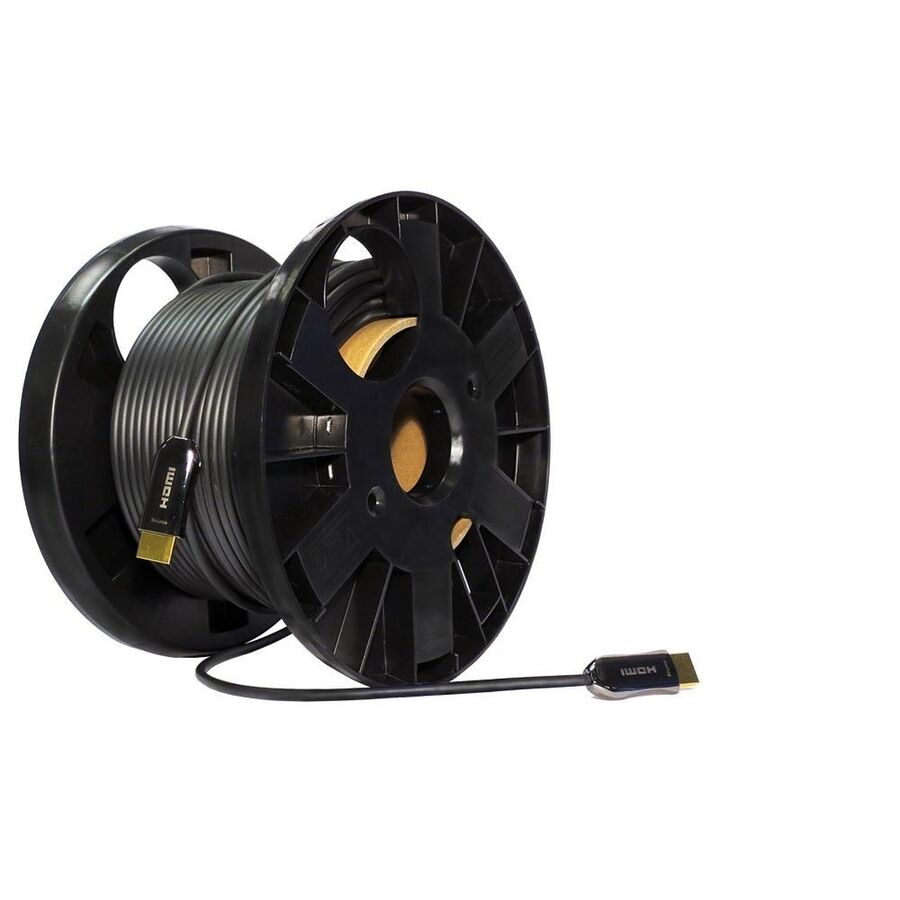
In the evolving landscape of Australian audiovisual integration, the limitations of traditional copper HDMI cabling have become one of the most significant constraints on system design. As commercial environments move rapidly from Full HD to 4K Ultra HD, and increasingly toward 8K and high-frame-rate content, the data rates demanded of interconnects have escalated dramatically. Where 1080p required under 5 Gbps, 4K at 60Hz with full colour resolution demands 18 Gbps, and HDMI 2.1 pushes this to 48 Gbps. At these frequencies, copper conductors struggle to maintain signal integrity over distance, resulting in the well-known digital cliff where images drop out entirely rather than degrading gracefully.
To overcome this limitation without introducing bulky extender boxes, external power injectors, or compressed transmission methods, the industry has adopted the HDMI Active Optical Cable. This technology replaces electrical transmission with light for the most demanding signal paths, enabling uncompressed, zero-latency video delivery over distances exceeding 100 metres. For commercial AV designers, this fundamentally changes how equipment rooms, displays, and control spaces can be planned.
An HDMI Active Optical Cable is not a simple fibre lead with HDMI plugs. It is a hybrid, active device containing both optical and copper elements, as well as miniature electronics embedded within the connector heads. High-speed TMDS video and audio channels are transmitted over multimode glass fibres, typically OM3-grade, while lower-speed control and power signals remain on copper conductors.
At the source end, an integrated conversion chipset transforms the electrical HDMI signal into pulses of light using Vertical-Cavity Surface-Emitting Lasers. These photons travel down the fibre core without resistance, unaffected by attenuation or impedance variation. At the display end, a photodiode converts the light back into an electrical signal that the HDMI receiver can decode. Meanwhile, copper conductors handle EDID communication, HDCP authentication, hot-plug detection, and the 5V power rail. This division of labour allows the cable to retain full HDMI compatibility while eliminating the distance limitations of copper for high-bandwidth data.
One of the most valuable characteristics of an active optical cable in Australian commercial environments is its immunity to electromagnetic and radio-frequency interference. Copper HDMI cables behave like antennas when routed near mains power, variable-speed drives, fluorescent lighting, or medical equipment. This interference introduces jitter and noise that quickly overwhelms high-frequency digital signals.
Optical fibre is a dielectric medium and carries no electrical current. By transmitting video as light rather than voltage, an AOC is immune to EMI and RFI. This provides inherent galvanic isolation for the video path, making AOCs the preferred choice in hospitals, laboratories, industrial facilities, and broadcast environments where electrical noise is unavoidable. The result is stable, repeatable performance regardless of surrounding infrastructure.
Unlike passive HDMI leads, active optical cables are directional. The internal laser transmitter and optical receiver are fixed to specific ends of the cable. Connector housings are clearly marked “Source” and “Display,” and reversing the cable will result in no image. In permanent installations, this makes correct orientation during installation critical, as correcting a reversed cable after walls or ceilings are closed can be costly.
Active optical cables also require power to operate the internal electronics. Most modern designs draw this power directly from the HDMI source’s 5V pin, typically consuming less than 100 mA. This eliminates the need for external USB power injectors, simplifying installation. However, integrators must ensure that the source device provides a stable 5V output. Some older or ultra-compact devices may struggle to supply sufficient current, in which case compatibility testing is essential during design.
Although fibre within an AOC is reinforced with aramid yarn for tensile strength, it remains more sensitive to bend radius than copper. Excessive bending or sharp kinks can cause fibre fracture or macrobend loss, where light escapes the core and degrades the signal.
This is where installation discipline and proper containment are critical. The Schnap Electric Products ecosystem plays an important role in protecting AOCs during and after installation. Flexible conduit systems, smooth-bore ducting, and compliant cable management accessories prevent snagging on sharp studs and maintain safe bend radii through wall cavities and slab penetrations. Because AOC connector heads are larger than standard HDMI plugs, recessed wall boxes and brush plates designed for multimedia cabling are essential to avoid crushing or stressing the cable behind displays.
One of the strongest arguments for deploying HDMI Active Optical Cables is future-proofing. Replacing a cable concealed inside walls or ceilings is far more expensive than specifying adequate performance from the outset. While copper-based extender systems may support today’s 4K requirements, they may not accommodate higher frame rates, deeper colour formats, or emerging 8K content.
Active optical cables rated for 18 Gbps or 48 Gbps provide confidence that the physical infrastructure will not become the limiting factor as display technology evolves. The fibre medium itself has bandwidth potential far beyond current HDMI standards, meaning that future upgrades are constrained by connector electronics rather than the transmission path.
Not all active optical cables are created equal. Low-cost imports often use plastic optical fibre instead of glass, or drive lasers beyond their safe operating limits, leading to early failure. Others lack proper fire ratings or struggle with HDCP stability across different source devices.
Professional AV integrators and facility managers mitigate these risks by sourcing AOCs through electrical wholesaler. These suppliers ensure compliance with Australian safety and cabling standards, including low-smoke zero-halogen jacket requirements where applicable. They also provide access to compatible cable management solutions, testing support, and manufacturer-backed warranties, reducing long-term operational risk.
The HDMI Active Optical Cable represents a fundamental shift in how high-bandwidth video is transported within buildings. By combining fibre-optic transmission with HDMI compatibility, it removes the distance and interference limitations that constrain copper cabling. When installed with proper orientation, protected by compliant containment, and supported by quality infrastructure from manufacturers like Schnap Electric Products, AOCs enable Australian industry professionals to deliver robust, interference-free, and future-ready AV systems. In an era where resolution and reliability continue to rise together, the speed of light has become the new standard.

SCHNAP is Australia's premier electrical wholesaler and electrical supplies, marketing thousands of quality products from leading brands. Trusted for nearly two decades by licensed electricians, contractors, and engineers, our range covers everything from basic electrical components to complex industrial electrical equipment
Our key categories include: LED lighting, designer switches, commercial switchboards, circuit protection, security systems & CCTV, and smart home automation
All products are certified to Australian standards (AS/NZS), backed by our 30-day, no-questions-asked return policy. Our expert technical team helps you quickly source the right solution for any residential, commercial, or industrial project, with daily dispatch from our Sydney electrical warehouse delivering Australia-wide
SCHNAP offers the most comprehensive electrical product range, with full technical specifications, application details, installation requirements, compliance standards, and warranties — giving professionals total confidence in every purchase


Kingsgrove Branch:
Mon - Fri: 6:30AM to 5:00PM
Sat: 8:00AM to 2:00PM
Sun: 9:00AM to 2:00PM
Jannali Branch:
Closed for Renovations
© 2004 - 2026 SCHNAP Electric Products