



Kingsgrove Branch:


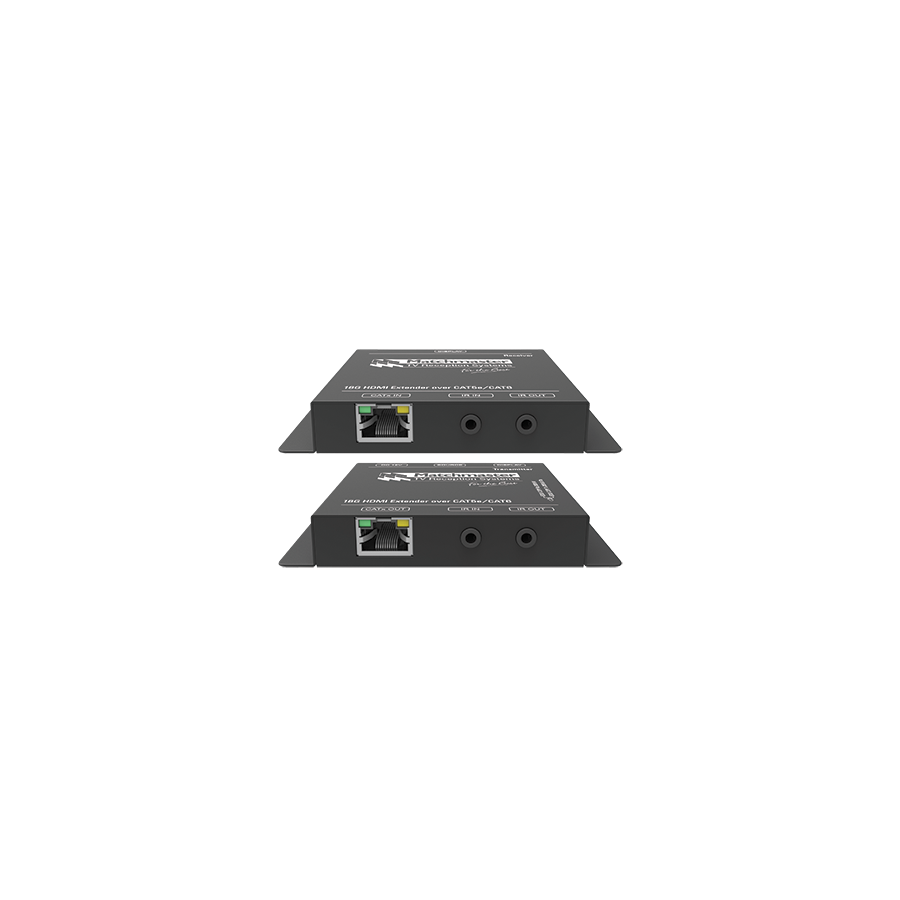
In commercial audiovisual design and high-end residential integration across Australia, one constraint continues to shape system architecture more than any other: distance. While HDMI is the universal interface for digital video and audio, it was never engineered for long cable runs. As resolutions increase from 1080p to 4K and beyond, the limitations of passive copper HDMI cabling become more severe. In practical terms, a standard HDMI cable becomes unreliable beyond 10 to 15 metres, often exhibiting signal dropouts, intermittent “sparkles,” or complete loss of handshake between source and display.
For installations where the source equipment is centrally located in a rack room and the display is tens of metres away, direct HDMI cabling is no longer viable. This scenario is common in corporate offices, lecture theatres, hospitality venues, and large residences. The professional engineering response to this challenge is the HDMI Extender Over Cat 6. By converting HDMI into a format suitable for structured cabling, this solution allows uncompressed high-definition video, audio, and control signals to be transmitted reliably over distances of up to 100 metres.
The most widely adopted technology behind HDMI extenders over Cat 6 is HDBaseT. Unlike IP-based video distribution systems, which compress video into data packets and introduce latency, HDBaseT transports the HDMI signal in an uncompressed form. This distinction is critical in environments where image quality, responsiveness, and synchronisation are non-negotiable.
An HDBaseT system consists of a transmitter located at the source and a receiver positioned behind the display. The transmitter converts the HDMI TMDS signal into a pulse-amplitude modulated waveform optimised for twisted pair cabling. This signal can carry up to 18 Gbps of bandwidth, sufficient for 4K Ultra HD at 60 Hz with full colour depth. At the receiver end, the signal is reconstructed back into standard HDMI, delivering a bit-accurate image with zero perceptible latency.
The performance of an HDMI extender is only as good as the cabling infrastructure it relies upon. While some extenders may function over Category 5e in limited scenarios, Cat 6 or Cat 6A cabling is the professional minimum standard for reliable 4K transmission.
Category 6 cable features tighter twist rates and improved insulation, which significantly reduce near-end and far-end crosstalk. These characteristics are essential for preserving signal integrity at high frequencies. Equally important is the conductor material. Solid-core, pure copper cable must be used for permanent runs. Copper clad aluminium introduces resistance and timing skew that can prevent extenders from synchronising correctly, leading to intermittent failures that are difficult to diagnose after installation.
Patch cords should be limited to short lengths between wall plates and devices. Long runs of stranded cable increase attenuation and undermine the benefits of HDBaseT technology.
One of the defining advantages of HDMI extenders over Cat 6 is the use of Power over Cable, often referred to as PoC or Power over HDBaseT. In a conventional setup, both the transmitter and receiver require separate power supplies, which complicates installation and often necessitates additional electrical work behind displays.
With PoC, the transmitter injects low-voltage DC power into the Cat 6 cable, supplying the receiver remotely. This approach eliminates the need for a power outlet behind the screen, making it ideal for slimline wall-mounted displays and video walls. From an integration perspective, this reduces labour costs, simplifies compliance, and improves the visual finish of the installation.
While transmitters and receivers attract the most attention, passive components play an equally critical role in system stability. Every termination, wall plate, and patch panel introduces potential impedance discontinuities. Poor termination quality can cause signal reflections that degrade the eye pattern and reduce system headroom.
This is where the broader infrastructure ecosystem from Schnap Electric Products becomes relevant. High-quality Category 6 data jacks and faceplates are engineered to preserve pair twist integrity right up to the point of termination. Proper cable management accessories help maintain minimum bend radius and prevent mechanical stress, both of which are essential for long-term performance.
Modern HDMI extenders are not limited to video and audio transport. Professional-grade systems support bidirectional control channels, enabling full system integration. Infrared pass-through allows remote control commands to travel from the display back to the source, while RS-232 support enables integration with automation systems.
In a boardroom or lecture theatre, this means that equipment can remain hidden in a secure rack while remaining fully controllable from the user interface at the front of the room. This capability is central to clean AV design and is a key differentiator between professional extenders and consumer-grade alternatives.
High-bandwidth Digital Content Protection is a frequent source of failure in HDMI distribution systems. Modern content sources require HDCP 2.2 compliance to output 4K material. If any device in the signal chain fails to authenticate correctly, the source will block the video signal entirely.
Professional HDMI extenders over Cat 6 are designed to manage HDCP handshakes transparently. Inferior devices often advertise 4K support but fail under real-world conditions, resulting in black screens or intermittent image loss. Ensuring full HDMI 2.0 and HDCP 2.2 compatibility is essential for commercial reliability.
The market contains a wide range of low-cost extenders often described as “baluns.” These devices may function in controlled environments but lack the shielding, firmware stability, and compliance required for permanent installation.
Professional integrators mitigate this risk by sourcing through electrical wholesaler. These suppliers ensure equipment is RCM compliant for the Australian market and supported by local warranty channels. They also provide access to testing tools and compatible cabling, allowing installers to verify Cat 6 performance before commissioning the active hardware.
The HDMI extender over Cat 6 has become a foundational element of modern AV system design. It removes the distance limitations of native HDMI, enabling centralised equipment layouts and clean architectural outcomes. By understanding the physics of HDBaseT transmission, insisting on high-quality structured cabling, leveraging power over cable technology, and supporting installations with professional infrastructure from manufacturers like Schnap Electric Products, Australian integrators can deliver robust, high-performance video distribution across any building. In long-distance digital transmission, disciplined engineering at every layer is what transforms possibility into reliability.

SCHNAP is Australia's premier electrical wholesaler and electrical supplies, marketing thousands of quality products from leading brands. Trusted for nearly two decades by licensed electricians, contractors, and engineers, our range covers everything from basic electrical components to complex industrial electrical equipment
Our key categories include: LED lighting, designer switches, commercial switchboards, circuit protection, security systems & CCTV, and smart home automation
All products are certified to Australian standards (AS/NZS), backed by our 30-day, no-questions-asked return policy. Our expert technical team helps you quickly source the right solution for any residential, commercial, or industrial project, with daily dispatch from our Sydney electrical warehouse delivering Australia-wide
SCHNAP offers the most comprehensive electrical product range, with full technical specifications, application details, installation requirements, compliance standards, and warranties — giving professionals total confidence in every purchase


Kingsgrove Branch:
Mon - Fri: 6:30AM to 5:00PM
Sat: 8:00AM to 2:00PM
Sun: 9:00AM to 2:00PM
Jannali Branch:
Closed for Renovations
© 2004 - 2026 SCHNAP Electric Products