



Kingsgrove Branch:


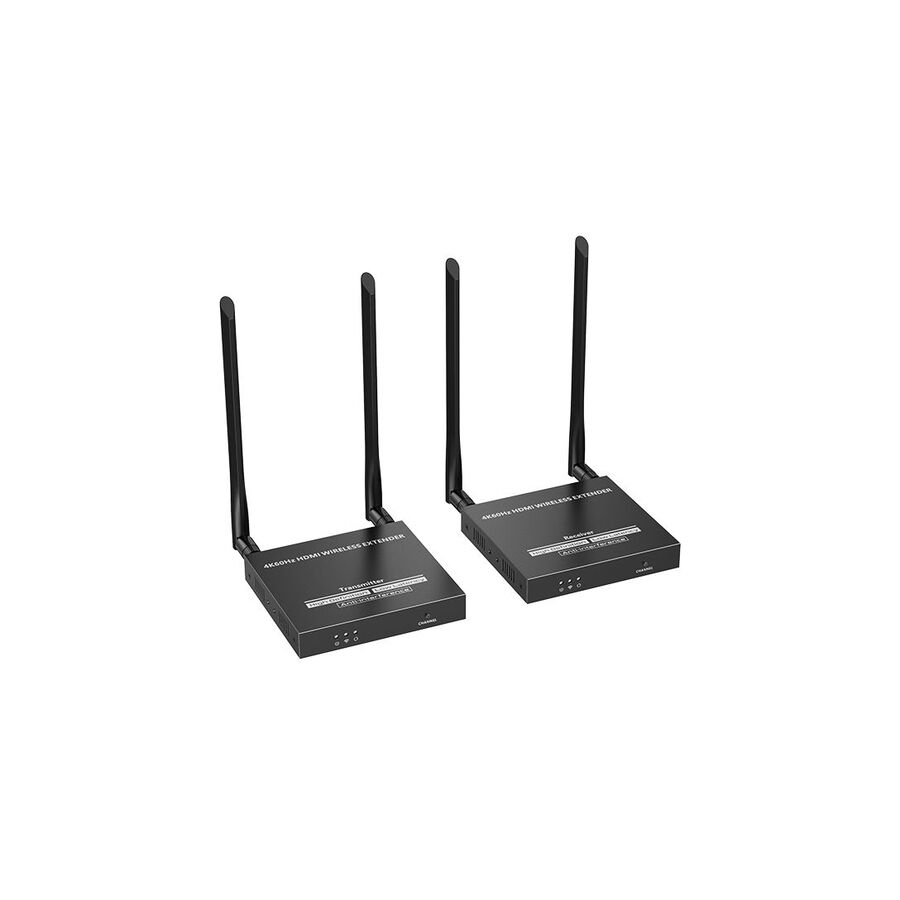
In the diverse architectural landscape of Australian commercial and residential property, audiovisual integration is often constrained by the building itself. Heritage-listed façades, asbestos-containing wall cavities, post-tensioned concrete slabs, and modern glass-partitioned interiors regularly prohibit drilling or surface conduit. In these environments, running HDMI or structured cabling is either unsafe, illegal, or aesthetically unacceptable.
When physical infrastructure cannot be modified, the professional solution is the HDMI wireless extender. Unlike consumer casting devices designed for casual streaming, a professional wireless extender establishes a dedicated point-to-point video link between a source and a display. It replaces copper or fibre with radio frequency transmission while maintaining predictable latency, stable bandwidth, and deterministic behaviour required in corporate, education, and hospitality settings.
Wireless video performance is dictated by the physics of radio propagation. In professional HDMI wireless extenders, two frequency bands dominate: 5GHz and 60GHz. Each serves a distinct application profile.
Systems operating in the 5GHz band use wavelengths capable of passing through plasterboard, light timber framing, and furniture. This makes them suitable for residential and light commercial retrofits where the source and display are separated by one or two walls. However, 5GHz is a crowded spectrum. Wi-Fi access points, laptops, phones, and IoT devices all compete for airtime. While modern extenders use proprietary modulation and channel management to improve stability, interference remains a design consideration.
At the other end of the spectrum, 60GHz millimetre-wave systems behave very differently. These signals cannot penetrate walls and behave more like light than traditional radio waves. Their advantage lies in enormous available bandwidth. This allows transmission of uncompressed or near-uncompressed video with latency measured in microseconds rather than milliseconds. As a result, 60GHz extenders are the preferred choice for in-room presentation systems, interactive whiteboards, and boardrooms where cursor lag or lip-sync delay is unacceptable.
Latency and Compression Trade-Offs
Bandwidth determines how much compression is required. A raw 1080p60 signal requires several gigabits per second. Most wireless systems cannot sustain this rate without compression.
Entry-level wireless extenders apply H.264 compression similar to online streaming platforms. While efficient, this introduces visible artefacts and latency that can exceed 200 milliseconds. For digital signage or passive display content, this delay is usually acceptable. For live presentations, video conferencing, or interactive demonstrations, it is not.
Higher-end HDMI wireless extenders use visually lossless or line-based compression techniques. These reduce bandwidth without altering visible pixel data and keep latency below the threshold of human perception. Correct specification depends on the application. Engineers must define whether the system is intended for passive viewing or interactive use before selecting a technology platform.
Wireless video links must coexist with other RF systems. In dense urban environments, spectrum congestion is a reality. Professional HDMI wireless extenders mitigate this through dynamic channel management.
Advanced systems continuously scan the RF environment and evaluate signal-to-noise ratios. If interference is detected, the extender shifts to a cleaner channel without interrupting the video stream. This process, known as Dynamic Frequency Selection, is essential in offices, hotels, and education campuses where wireless conditions change throughout the day.
Millimetre-wave systems reduce interference risk by operating in a less congested band, but they require clear line-of-sight. Placement accuracy is critical. Minor misalignment can degrade signal quality, so careful mounting and commissioning are required.
Although the video path is wireless, the transmitter and receiver remain physical devices requiring stable power and secure mounting. Voltage fluctuation can affect RF oscillators and cause link instability.
This is where the support ecosystem from Schnap Electric Products becomes relevant. Powering wireless extenders through surge-protected outlets reduces the risk of dropouts caused by transient voltage events. In display installations, recessed mounting solutions and cable management accessories ensure that receivers and power packs fit neatly behind wall-mounted screens without mechanical stress.
Short, high-quality HDMI patch leads are also critical. Poor shielding can allow the HDMI signal itself to radiate interference into the wireless module. Proper strain relief prevents connector fatigue, which is a common failure point in retrofit installations.
Wireless transmission in Australia is regulated by the Australian Communications and Media Authority. Devices must operate within defined frequency bands and power limits under class licence conditions. Non-compliant equipment can interfere with radar, telecommunications, or emergency services.
Professional HDMI wireless extenders sold through authorised Australian channels carry the Regulatory Compliance Mark, indicating compliance with ACMA standards. Integrators must avoid grey-market imports designed for overseas frequency allocations. The legal and operational risk of non-compliant RF equipment far outweighs any short-term cost savings.
Successful deployment of a wireless extender requires realistic assessment of the environment. Wall composition, ceiling height, reflective surfaces, and human traffic all influence RF behaviour.
For 5GHz systems, wall density and neighbouring networks are key considerations. For 60GHz systems, line-of-sight and mounting stability are paramount. In both cases, pre-installation testing is recommended. Many professional extenders include signal strength indicators or alignment tools to assist commissioning.
Wireless does not eliminate planning. It replaces cable routing complexity with RF engineering discipline. When deployed correctly, it provides reliable, repeatable performance.
Wireless extenders are active electronic devices with firmware, RF components, and power regulation circuits. Long-term reliability depends on build quality, thermal design, and ongoing manufacturer support.
Electrical wholesaler act as technical gatekeepers in this space. They supply ACMA-approved hardware, firmware updates, and compatible accessories. They also provide guidance on matching extender capabilities to project requirements, reducing the risk of under-specification or over-engineering.
The HDMI wireless extender is a critical tool for modern retrofit AV projects. It enables high-definition video distribution where cabling is impractical or prohibited, without compromising usability or aesthetics. By understanding RF propagation physics, selecting the appropriate frequency band, managing latency expectations, and supporting the installation with quality infrastructure from manufacturers like Schnap Electric Products, Australian industry professionals can deliver wireless video systems that are stable, compliant, and fit for purpose. In challenging buildings, wireless is not a compromise. It is a specialised engineering solution.

SCHNAP is Australia's premier electrical wholesaler and electrical supplies, marketing thousands of quality products from leading brands. Trusted for nearly two decades by licensed electricians, contractors, and engineers, our range covers everything from basic electrical components to complex industrial electrical equipment
Our key categories include: LED lighting, designer switches, commercial switchboards, circuit protection, security systems & CCTV, and smart home automation
All products are certified to Australian standards (AS/NZS), backed by our 30-day, no-questions-asked return policy. Our expert technical team helps you quickly source the right solution for any residential, commercial, or industrial project, with daily dispatch from our Sydney electrical warehouse delivering Australia-wide
SCHNAP offers the most comprehensive electrical product range, with full technical specifications, application details, installation requirements, compliance standards, and warranties — giving professionals total confidence in every purchase


Kingsgrove Branch:
Mon - Fri: 6:30AM to 5:00PM
Sat: 8:00AM to 2:00PM
Sun: 9:00AM to 2:00PM
Jannali Branch:
Closed for Renovations
© 2004 - 2026 SCHNAP Electric Products