

Kingsgrove Branch:


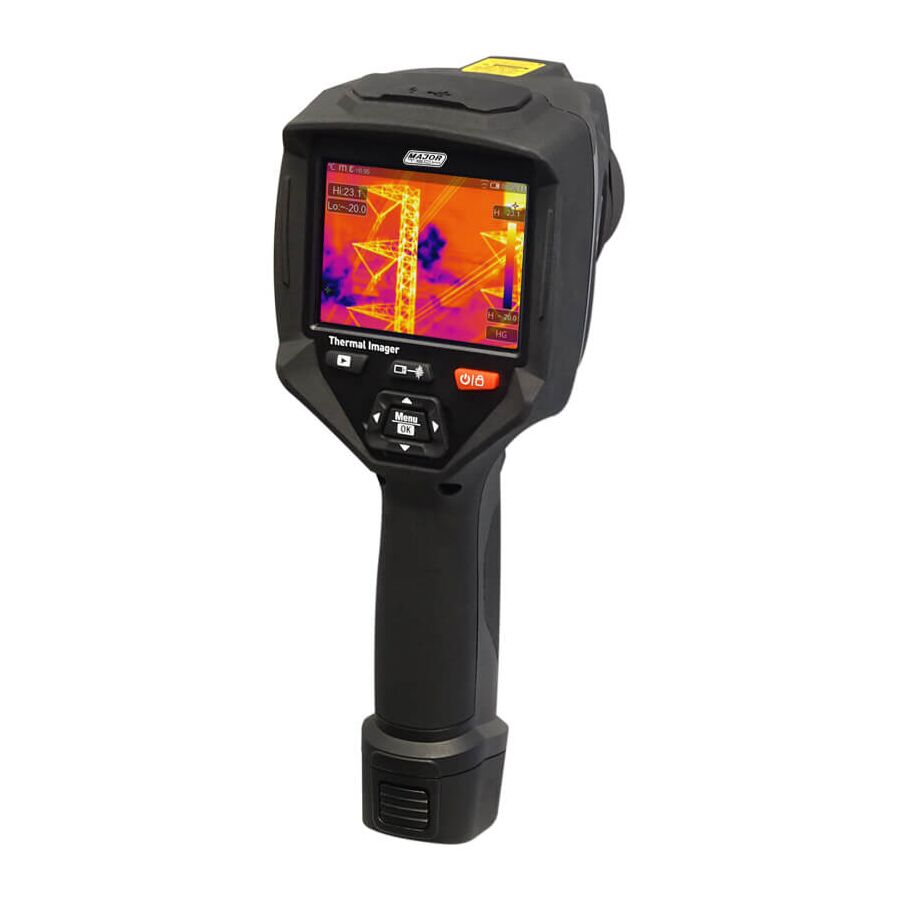
In Australian heavy industry, downtime is expensive. Whether in mining operations, large manufacturing plants or major port facilities, unexpected failure can cost thousands of dollars per hour. As a result, maintenance strategies have evolved from reactive repair to predictive maintenance. The goal is simple: detect faults before they become failures.
The High Performance Thermal Imager is one of the most important tools in this transition. It enables non-destructive testing of energised equipment without physical contact. Instead of shutting down systems to inspect them, technicians can scan electrical panels, motors and mechanical assets while they are operating. This improves safety, reduces downtime and increases asset reliability.
At SCHNAP Electric Products, we align with this performance-driven approach by supporting trade professionals and reliability teams with compliant inspection infrastructure and electrical safety accessories.
A defining feature of a High Performance Thermal Imager is its detector resolution. Professional units typically start at 640x480 pixels and may scale higher using advanced image processing.
Higher resolution is not just about clearer images. It directly affects temperature measurement accuracy. In thermography, the target must occupy enough pixels to provide a valid reading. If the area of interest is too small relative to the detector resolution, the temperature reading becomes averaged with surrounding cooler surfaces.
This concept is linked to the spot size ratio. When inspecting a loose cable termination or a small fuse connection inside a switchboard, insufficient resolution can underestimate the real hotspot temperature. In high voltage environments, a small measurement error can mask a serious risk.
High resolution imaging ensures that small components can be analysed accurately from a safe working distance. This is critical when inspecting energised switchgear or overhead connections.
Another key performance metric is Noise Equivalent Temperature Difference, known as NETD. This value represents the smallest temperature difference the camera can detect above background noise.
High performance imagers often feature NETD values below 30 milliKelvin. This high sensitivity allows technicians to identify subtle temperature variations before they escalate into visible hotspots.
In practical terms, this means early detection of phase imbalance, overloaded circuits or deteriorating bearings in rotating machinery. Minor temperature deviations often appear weeks or months before failure. Detecting them early enables planned maintenance rather than emergency repair.
For building diagnostics, low NETD performance helps identify moisture intrusion or insulation gaps where temperature differences are small but significant.
Industrial inspections vary in scale and distance. Some applications require scanning entire motor control centres in tight spaces. Others require inspection of high voltage components from outside arc flash boundaries.
High Performance Thermal Imagers often support interchangeable lenses. Wide-angle lenses are suitable for confined switchrooms, while telephoto lenses allow safe distance inspections of substations and overhead assets.
Precise focus is essential. An out-of-focus image reduces temperature accuracy. Advanced units use autofocus systems that adjust automatically based on target distance. This improves repeatability and reduces operator error during routine inspections.
Thermographic inspection traditionally required opening live electrical panels. This exposes technicians to arc flash hazards and increases safety risk.
A safer approach is to integrate infrared viewing windows into switchboard enclosures. These windows are transparent to infrared radiation but maintain enclosure integrity. They allow technicians to scan internal components without removing covers.
SCHNAP Electric Products supports safe inspection practices by supplying compliant electrical accessories and protective infrastructure suitable for industrial environments. Integrating thermal imaging with safe panel access improves inspection frequency and reduces risk exposure.
This proactive approach aligns with modern safety and reliability standards across Australian industrial sites.
High performance thermal imagers capture fully radiometric images. Each pixel contains temperature data, allowing detailed post-analysis.
Professional reporting software enables adjustment of emissivity, reflected temperature and environmental factors after the image is captured. This ensures accurate readings across different materials such as copper, PVC insulation or painted steel.
Isotherm features highlight specific temperature bands, allowing rapid identification of components operating outside safe limits. Trend analysis over time helps maintenance teams identify gradual deterioration patterns.
Clear reporting strengthens compliance with insurance and condition monitoring standards.
Predictive maintenance reduces operational risk. Instead of waiting for failure, maintenance teams schedule intervention based on measured performance data.
Thermal imaging is central to this strategy. It allows identification of loose terminations, overloaded circuits, unbalanced phases and mechanical friction without dismantling equipment.
Combined with vibration analysis and power quality monitoring, thermography creates a complete reliability framework.
SCHNAP Electric Products supports trade professionals and maintenance teams with dependable supply of inspection-related accessories and electrical safety solutions. Our strategy focuses on supporting electricians, engineers and facility managers who demand reliable infrastructure.
A High Performance Thermal Imager is a significant capital investment. Selecting the correct model requires consideration of resolution, sensitivity, lens compatibility and industrial durability.
Professional users require reliable calibration, training support and durable protective storage. Secure transport cases and lanyards protect the equipment from harsh site conditions.
Working with a specialised electrical supplier ensures that inspection tools and supporting infrastructure meet Australian industrial requirements.
At SCHNAP Electric Products, we focus on practical, compliance-driven solutions that support high performance work environments across Australia.
The High Performance Thermal Imager is a critical instrument in modern predictive maintenance. It reveals thermal signatures that indicate developing faults long before failure occurs.
High resolution detectors, low NETD sensitivity and optical flexibility enable accurate inspections of electrical and mechanical assets. When combined with safe inspection infrastructure and compliant electrical protection, thermal imaging becomes a powerful reliability tool.
By prioritising early detection and safe access, Australian industry professionals can reduce downtime, protect assets and improve operational efficiency.
At SCHNAP Electric Products, we align with this proactive approach by supporting trade professionals with dependable electrical infrastructure and safety solutions. In condition monitoring, visibility creates control, and control protects performance.

SCHNAP Electrical Wholesaler - clear, upfront pricing that professional electricians trust

Get what you need in seconds. SCHNAP electrical wholesaler makes ordering quick and simple

Fast delivery anywhere - that's guaranteed. SCHNAP electrical wholesalers ship nationwide with same-day dispatch

Track your order every step of the way. SCHNAP electrical wholesale keeps you updated from click to delivery

SCHNAP is Australia's premier electrical wholesaler and electrical supplies, marketing thousands of quality products from leading brands. Trusted for nearly two decades by licensed electricians, contractors, and engineers, our range covers everything from basic electrical components to complex industrial electrical equipment
Our key categories include: LED lighting, designer switches, commercial switchboards, circuit protection, security systems & CCTV, and smart home automation
All products are certified to Australian standards (AS/NZS), backed by our 30-day, no-questions-asked return policy. Our expert technical team helps you quickly source the right solution for any residential, commercial, or industrial project, with daily dispatch from our Sydney electrical warehouse delivering Australia-wide
SCHNAP offers the most comprehensive electrical product range, with full technical specifications, application details, installation requirements, compliance standards, and warranties — giving professionals total confidence in every purchase


Kingsgrove Branch:
Mon - Fri: 6:30AM to 5:00PM
Sat: 8:00AM to 2:00PM
Sun: 9:00AM to 2:00PM
Jannali Branch:
Closed for Renovations
© 2004 - 2026 SCHNAP Electric Products