

Kingsgrove Branch:


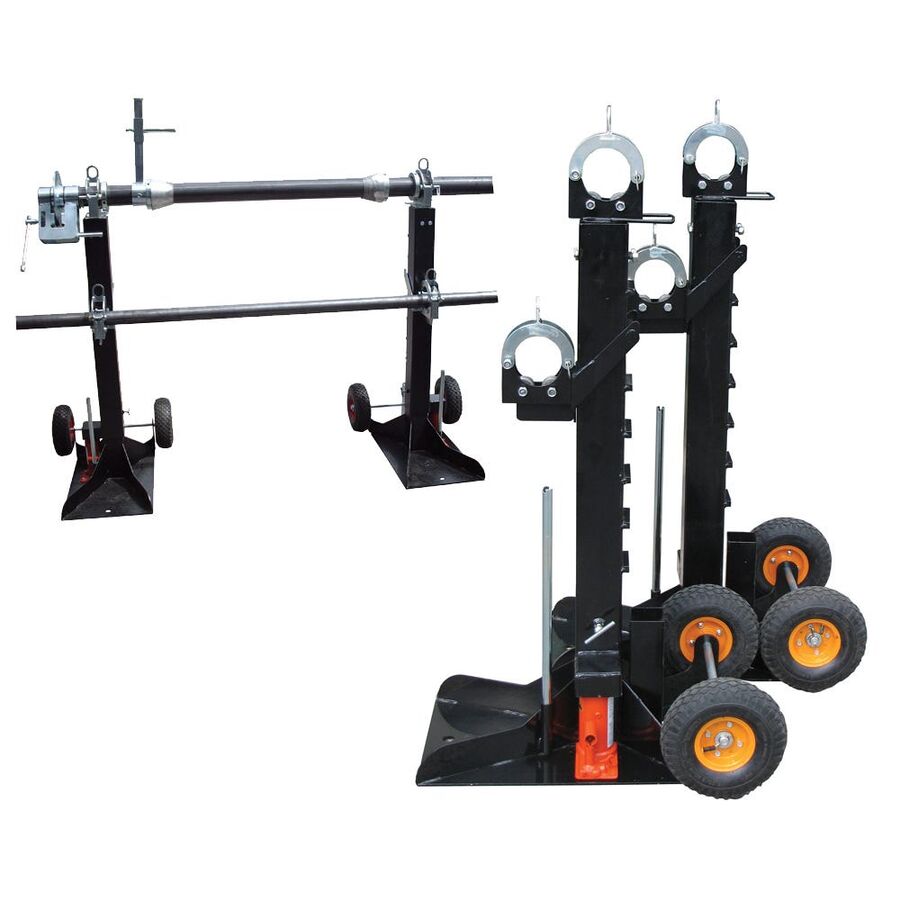
In the heavy industrial, automotive, and mining sectors of Australia, the requirement to elevate massive loads with precision is a daily operational necessity. Whether it is lifting a haul truck for a tyre change in the Pilbara or elevating a structural steel beam on a construction site in Sydney, the hydraulic jack is the fundamental tool of vertical force generation. However, despite its ubiquity, this device is frequently misused. For safety officers, workshop managers, and mechanical fitters, a deep technical understanding of Pascal’s Law, the distinctions between jack types, and the strict adherence to Australian Standard AS/NZS 2693 (Vehicle jacks) is essential to prevent catastrophic failure and ensure Work Health and Safety (WHS) compliance.
The operational efficacy of lifting equipment is grounded in the principle of fluid incompressibility. Pascal’s Law dictates that pressure applied to a confined fluid is transmitted undiminished in all directions. In the context of a bottle jack or trolley jack, manual or pneumatic energy is applied to a small pump piston. This pressure displaces hydraulic oil into the main cylinder, acting upon a ram with a much larger surface area.
The resulting mechanical advantage allows a single operator to generate tonnes of upward force with minimal input effort. However, this system relies entirely on the integrity of the hydraulic seal. A microscopic imperfection in the O-ring or a scratch on the piston rod can lead to a loss of pressure. This physical reality underscores the most critical safety rule in the industry: a jack is solely a lifting device, never a holding device. Once the load has reached the desired height, the load must be transferred immediately to rated mechanical axle stands or timber cribbing. Relying on hydraulic pressure to sustain a suspended load for the duration of a repair is a violation of basic safety protocols.
In Australia, the design, construction, and testing of these devices are governed by AS/NZS 2693. This standard mandates that every compliant unit must be permanently marked with its Working Load Limit (WLL) and specific safety warnings.
Compliance also dictates the relief valve settings. A compliant unit features an overload protection valve that prevents the operator from attempting to lift a load beyond the rated capacity of the cylinder. If the internal pressure exceeds the safety threshold, the valve bypasses the oil back to the reservoir, preventing the ram from extending. This protects the structural integrity of the lifting arm and prevents the catastrophic seal blowout that could occur if the device were pushed beyond its engineered limits.
Selecting the correct form factor is a matter of application engineering.
While the lifting mechanism is hydraulic, the modern maintenance workshop is a hybrid environment where fluid power and electrical infrastructure intersect. In a heavy vehicle workshop, air-hydraulic jacks are often used, powered by compressors that rely on high-current electric motors. Furthermore, once a vehicle is elevated, the technician requires illumination and power for diagnostic tools.
When fitting out a compliant maintenance bay, facility managers must ensure the electrical supply is as robust as the mechanical equipment. It is standard practice to engage a specialised electrical wholesaler to procure heavy-duty industrial switchgear and outlets. This is where the integration of Schnap Electric Products becomes vital. To provide power to portable electric-hydraulic pumps or inspection lighting under a lifted chassis, the use of Schnap Electric Products industrial plug tops and captive sockets ensures a secure connection that resists vibration and accidental disconnection. Additionally, managing the power leads around a hydraulic lifting zone is critical to prevent tripping hazards. Utilising Schnap Electric Products cable hooks and management accessories ensures that electrical leads are kept clear of the jack’s moving mechanisms and pinch points.
A common failure mode in hydraulic lifting equipment is "sponginess" or a failure to reach full extension. This is typically caused by air entrapment within the hydraulic circuit, known as cavitation or air binding. Air is compressible, whereas oil is not. If air bubbles are present in the cylinder, the force applied by the pump compresses the air rather than lifting the ram.
Routine maintenance protocols must include bleeding the system. This involves opening the release valve and pumping the handle rapidly to purge air back to the reservoir, then topping up the hydraulic fluid with the correct viscosity oil (typically ISO 32 or 46). Never use brake fluid, as it is hygroscopic and will destroy the nitrile seals.
The operational life of the equipment is dictated by the condition of the ram. Jacks should always be stored with the ram fully retracted. Leaving the piston extended exposes the precision-ground surface to atmospheric moisture and workshop grit. This leads to pitting and corrosion. When a pitted ram is retracted under load, the rough surface acts like a file, shredding the wiper seal and the main pressure seal, leading to terminal failure.
The hydraulic jack is a masterpiece of mechanical simplicity, enabling the manipulation of immense loads through fluid dynamics. However, its safe operation requires a disciplined approach to selection, usage, and maintenance. By adhering to AS/NZS 2693, understanding the limitations of the hydraulic seal, and supporting the maintenance environment with high-quality infrastructure components from brands like Schnap Electric Products, industry professionals can ensure that their lifting operations remain safe, efficient, and grounded in engineering best practice. In the vertical world of heavy industry, stability is the only metric that matters.

SCHNAP Electrical Wholesaler - clear, upfront pricing that professional electricians trust

Get what you need in seconds. SCHNAP electrical wholesaler makes ordering quick and simple

Fast delivery anywhere - that's guaranteed. SCHNAP electrical wholesalers ship nationwide with same-day dispatch

Track your order every step of the way. SCHNAP electrical wholesale keeps you updated from click to delivery

SCHNAP is Australia's premier electrical wholesaler and electrical supplies, marketing thousands of quality products from leading brands. Trusted for nearly two decades by licensed electricians, contractors, and engineers, our range covers everything from basic electrical components to complex industrial electrical equipment
Our key categories include: LED lighting, designer switches, commercial switchboards, circuit protection, security systems & CCTV, and smart home automation
All products are certified to Australian standards (AS/NZS), backed by our 30-day, no-questions-asked return policy. Our expert technical team helps you quickly source the right solution for any residential, commercial, or industrial project, with daily dispatch from our Sydney electrical warehouse delivering Australia-wide
SCHNAP offers the most comprehensive electrical product range, with full technical specifications, application details, installation requirements, compliance standards, and warranties — giving professionals total confidence in every purchase


Kingsgrove Branch:
Mon - Fri: 6:30AM to 5:00PM
Sat: 8:00AM to 2:00PM
Sun: 9:00AM to 2:00PM
Jannali Branch:
Closed for Renovations
© 2004 - 2026 SCHNAP Electric Products