



Kingsgrove Branch:


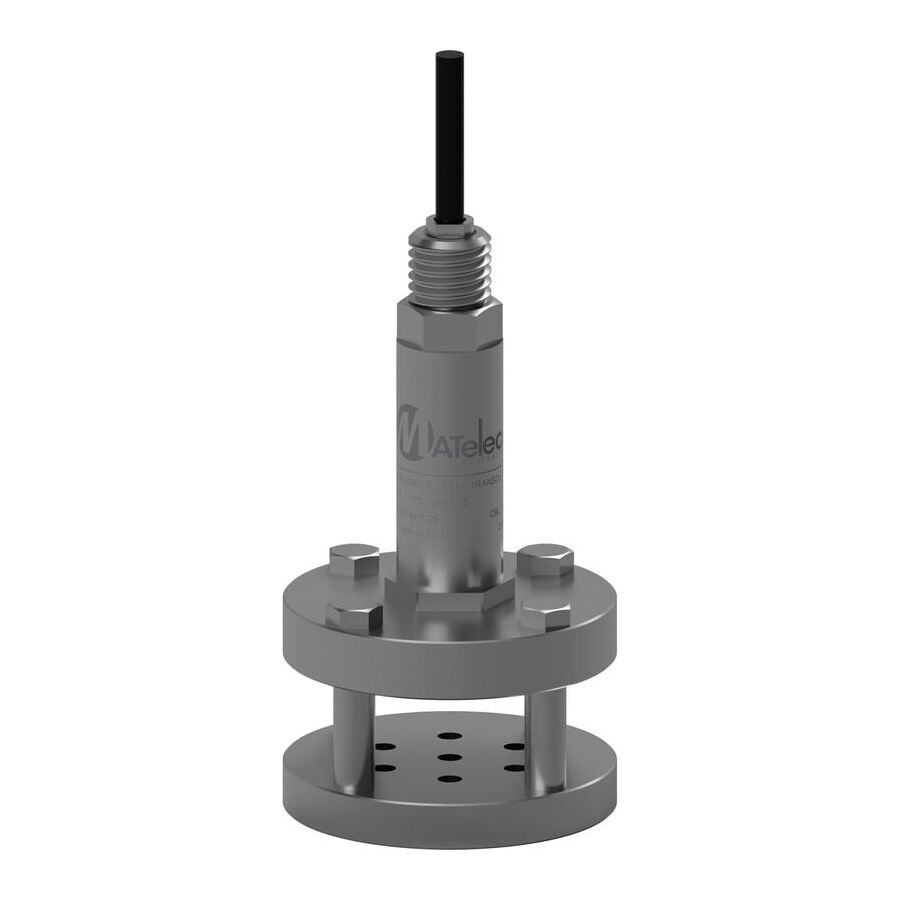
In Australian municipal and industrial wastewater networks, sewage lift stations operate as critical nodes that protect public health, environmental compliance, and downstream infrastructure. These assets handle raw effluent containing biological solids, fats, oils, fibrous debris, and abrasive grit, often under corrosive atmospheric conditions. Instrumentation failure in this environment is not a minor inconvenience; it can result in pump damage, uncontrolled overflows, environmental penalties, and community disruption.
Traditional float switches have long been used to control pump operation, but their binary nature and mechanical exposure limit their effectiveness in modern systems. As water authorities and industrial operators pursue energy efficiency, predictive maintenance, and telemetry-driven control, continuous level measurement has become the engineering standard. Conventional clear-water pressure sensors, however, are unsuitable for sewage. Their narrow inlet ports rapidly foul with sludge, grease, and rag material, leading to sensor blindness and false readings.
The dedicated Hydrostatic Sewage Transducer addresses these challenges by adapting pressure sensing principles to the realities of blackwater environments. Through specialised mechanical design, material selection, and signal conditioning, it delivers reliable, continuous level data where other sensors fail.
The defining feature of a sewage-rated hydrostatic transducer is its flush diaphragm construction. Standard submersible pressure sensors rely on a small pressure port or cavity to transmit fluid pressure to the sensing element. In sewage, this cavity becomes a collection point for fats, oils, grease, and suspended solids, eventually blocking pressure transmission.
A hydrostatic sewage transducer eliminates this failure mode by using a flat, flush-mounted sensing diaphragm. The diaphragm forms the entire face of the sensor, with no recesses or capillaries. Hydrostatic pressure exerted by the fluid column acts uniformly across the diaphragm surface, transmitting force directly to the internal piezoresistive element.
This geometry provides two critical benefits. First, it prevents the accumulation of solids that would otherwise blind the sensor. Second, the natural movement of sewage within the wet well creates a scouring action across the diaphragm face, helping to keep it clean. The result is a stable, linear 4–20mA output that accurately reflects liquid level even in high-solids effluent.
Sewage wet wells are chemically aggressive environments. The anaerobic breakdown of organic matter produces hydrogen sulfide gas, methane, and other corrosive by-products. Hydrogen sulfide is particularly destructive, attacking copper conductors and degrading standard elastomeric cable jackets.
For this reason, professional hydrostatic sewage transducers use housings manufactured from 316L stainless steel as a minimum. In industrial trade waste applications involving extreme chemistry, alloys such as Hastelloy or titanium may be specified. These materials resist pitting, crevice corrosion, and long-term chemical attack.
Equally important is the integrity of the cable system. PVC-insulated cables, common in clean-water sensors, become brittle and porous when exposed to sewer gases. Sewage transducers therefore use polyurethane or fluoropolymer cable jackets, which are resistant to hydrocarbons, hydrogen sulfide, and microbial degradation. This prevents gas migration along the cable sheath and protects the internal electronics over the life of the installation.
The shift from float-based control to hydrostatic measurement is driven largely by energy efficiency and mechanical longevity. Float switches provide discrete on and off signals, forcing pumps to operate at full speed whenever activated. This results in hydraulic shock, high inrush currents, and accelerated wear.
A hydrostatic sewage transducer provides continuous level data, typically scaled across a 4–20mA current loop. This analogue signal enables integration with Variable Speed Drives. Instead of cycling pumps between empty and full, the control system can modulate pump speed to match the incoming flow rate.
This matched-flow control strategy reduces energy consumption, minimises pipe stress, and extends pump service life. It also allows the system to maintain a stable operating level within the wet well, improving odour control and reducing sediment accumulation. In modern smart infrastructure, this capability is essential rather than optional.
The low-level analogue signal produced by a hydrostatic transducer must coexist with high-power electrical equipment. Pump motors, contactors, and VSDs generate significant electromagnetic interference that can corrupt unprotected signal lines.
This is where the Schnap Electric Products ecosystem becomes critical to system reliability. Shielded control cables, EMC-rated cable glands, and correct earthing practices are essential to prevent noise pickup on the 4–20mA loop. Without proper screening, induced voltages can cause the PLC to interpret false level changes, leading to erratic pump behaviour.
Surge protection is equally important. Remote pump stations are often exposed to lightning-induced ground potential rise. DIN-rail surge diverters installed at the control panel clamp transient voltages before they reach sensitive electronics. In a properly designed system, these devices sacrifice themselves during an extreme event, preserving the transducer, PLC, and telemetry hardware.
Even the most robust sensor can produce unstable readings if installed incorrectly. Turbulence, aeration, and inflow velocity can cause rapid pressure fluctuations that appear as level noise.
Best practice installation places the transducer within a stilling tube. This is typically a large-diameter PVC pipe with generous perforations near the base. The stilling tube isolates the sensor from direct inflow turbulence while allowing the liquid level inside the tube to equalise with the wet well. This results in a smooth, stable signal suitable for precise control.
Maintenance access must also be considered. Although flush diaphragm transducers are non-clogging, periodic inspection may still be required. A dedicated retrieval cable or chain must be installed to allow the sensor to be raised without placing mechanical strain on the electrical cable or vent tube.
Selecting the correct hydrostatic sewage transducer requires careful specification. The pressure range must closely match the maximum wet well depth to maintain resolution. Oversized ranges reduce measurement accuracy, while undersized ranges risk sensor damage.
Vented cable systems must be terminated correctly to maintain atmospheric reference. Desiccant breathers and sealed junction boxes prevent moisture ingress that would otherwise compromise accuracy. Compliance with local water authority standards is mandatory, and documentation of materials, ratings, and certifications is essential.
For these reasons, professional contractors source sewage transducers through specialised electrical and instrumentation wholesalers. These suppliers ensure compatibility with Australian conditions and provide the ancillary hardware required for a compliant installation.
The hydrostatic sewage transducer is a cornerstone of modern wastewater management. It enables the transition from reactive, float-based control to predictive, energy-efficient operation. Through flush diaphragm design, chemical hardening, and robust signal protection, it delivers reliable performance in one of the harshest environments in infrastructure.
By understanding the physics of hydrostatic measurement, insisting on correct materials, and integrating the sensor with quality infrastructure from manufacturers like Schnap Electric Products, Australian industry professionals can build lift station systems that are resilient, efficient, and fit for the demands of smart cities. In wastewater control, precision is not a luxury; it is a requirement for sanitation and sustainability.

SCHNAP is Australia's premier electrical wholesaler and electrical supplies, marketing thousands of quality products from leading brands. Trusted for nearly two decades by licensed electricians, contractors, and engineers, our range covers everything from basic electrical components to complex industrial electrical equipment
Our key categories include: LED lighting, designer switches, commercial switchboards, circuit protection, security systems & CCTV, and smart home automation
All products are certified to Australian standards (AS/NZS), backed by our 30-day, no-questions-asked return policy. Our expert technical team helps you quickly source the right solution for any residential, commercial, or industrial project, with daily dispatch from our Sydney electrical warehouse delivering Australia-wide
SCHNAP offers the most comprehensive electrical product range, with full technical specifications, application details, installation requirements, compliance standards, and warranties — giving professionals total confidence in every purchase


Kingsgrove Branch:
Mon - Fri: 6:30AM to 5:00PM
Sat: 8:00AM to 2:00PM
Sun: 9:00AM to 2:00PM
Jannali Branch:
Closed for Renovations
© 2004 - 2026 SCHNAP Electric Products