



Kingsgrove Branch:


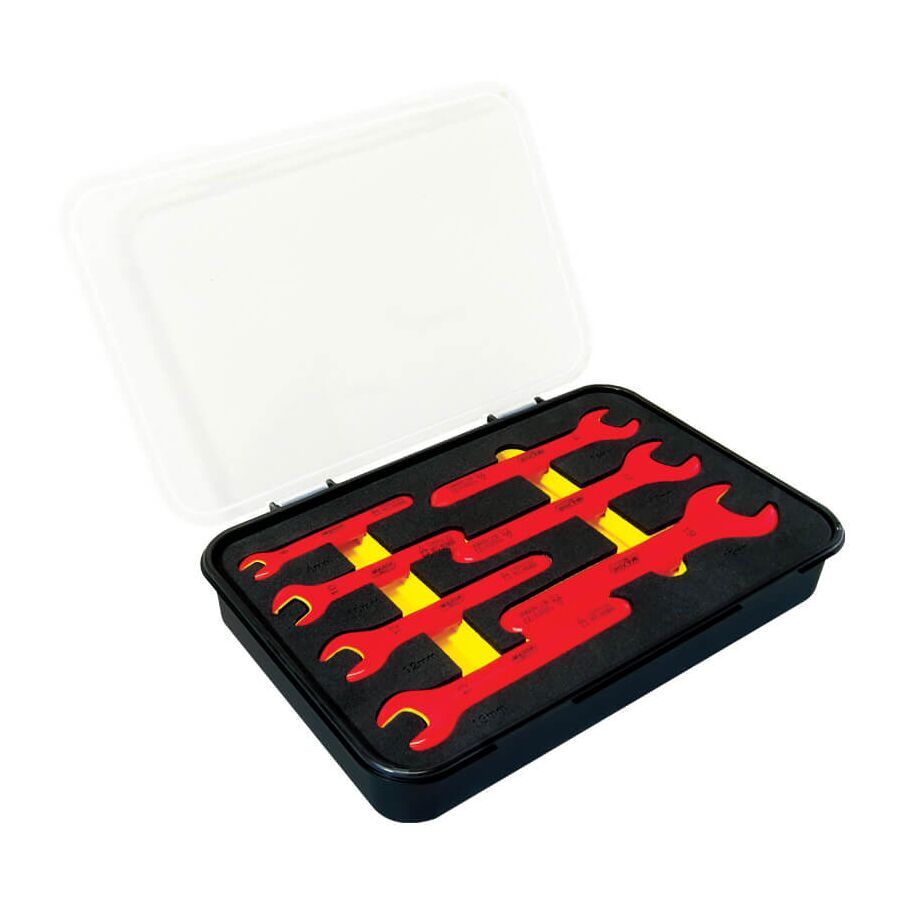
In Australia, live electrical work is tightly controlled under AS/NZS 4836. The preferred method is always isolation and de-energisation. However, certain environments do not allow easy shutdown. Hospitals, data centres, mining infrastructure, and continuous manufacturing plants may require adjustments or maintenance on energised equipment. In these cases, risk cannot be eliminated, but it must be strictly managed.
The tool becomes a critical safety interface. When tightening a termination or adjusting a mechanical linkage inside a live switchboard, the only barrier between the technician and lethal voltage is the insulation system of the tool. That is why a properly certified Insulated Spanner Set is not optional. It is a controlled engineering solution designed to withstand 1000V AC or 1500V DC under defined conditions. More importantly, it reduces the risk of phase-to-phase bridging that could trigger an arc flash event.
Not all insulated tools are equal. A painted or dipped handle is not the same as a certified insulated tool. The defining benchmark is IEC 60900. This international standard governs insulated hand tools used for live working.
A compliant insulated spanner is manufactured with a hardened steel core. Over this core, a specialised thermoplastic insulation layer is injection moulded. The insulation is not decorative. It is a tested dielectric barrier. Every certified tool must withstand a high-voltage proof test, typically around 10,000V, to confirm insulation integrity well above its rated working voltage.
The insulation must also survive mechanical stress. It cannot crack or peel when dropped. It must maintain adhesion to the steel core under temperature changes from cold mornings to hot plant rooms. If the insulation delaminates, the tool becomes dangerous. That is why compliant production and batch testing are essential.
Electric shock is only one hazard in live maintenance. Arc flash is the more catastrophic risk. If a metallic tool bridges two live phases or phase to earth, a high-energy fault can occur instantly. The energy released can cause severe burns, equipment destruction, and fatal injuries.
An insulated spanner reduces the probability of this scenario. Even if the tool contacts an adjacent conductor, the dielectric barrier helps prevent current flow. While no tool can make live work risk-free, IEC 60900 certified insulation significantly lowers the chance of initiating a fault.
Live work procedures must still include arc-rated PPE, correct permit systems, and strict job planning. The insulated spanner is one control within a larger safety framework.
Insulation alone is not enough. The steel core must handle high torque without deformation. Electrical terminations, especially on busbars and older copper systems, require firm tightening to maintain low resistance connections.
High-quality insulated spanner sets use chrome vanadium or similar alloy steels. These materials are heat-treated to maintain strength and dimensional stability. A spanner that spreads under load can slip, damage the nut, or cause loss of control in a confined live enclosure.
Precision fit is critical. In live panels, space is limited. Insulated tools are thicker due to the protective layer. Manufacturers address this with carefully shaped heads and offset angles. Deep offset ring spanners and slim open-end profiles help maintain access without compromising insulation coverage.
A defining feature of modern insulated tools is the dual-colour insulation system. Typically, a bright yellow inner layer is covered by a red outer layer. This is not aesthetic. It is a built-in inspection system.
Before commencing live work, technicians must inspect their tools. If the red outer coating is damaged and the yellow layer is visible, the insulation may be compromised. That tool must be removed from service immediately. This visual indicator removes guesswork and supports compliance audits.
Regular inspection is essential. Insulated tools should never be modified, re-ground, or reshaped. Even small cuts in the insulation can create a path for breakdown under voltage.
An insulated spanner set is only one component of live work safety. The working environment must also be controlled. Insulated mats, gloves, and arc-rated face shields are common elements of a low voltage rescue and live maintenance kit.
This is where Schnap Electric Products supports the broader safety ecosystem. Electrical insulating mats provide separation from earth potential. Insulated gloves and under-gloves add personal protection. Proper storage solutions help prevent damage to tool insulation during transport.
Storing insulated spanners loosely in a mixed toolbag with sharp-edged tools can cause hidden insulation damage. Dedicated tool rolls or protective cases help maintain integrity and extend service life.
Many live adjustments involve soft metals such as brass studs, copper lugs, or battery terminals. Over-tightening can cause stripping, cracking, or mechanical stress on connected equipment.
Insulated spanners are often paired with insulated torque tools when precise torque control is required. However, even standard insulated spanners are designed with handle lengths that balance leverage and control. Excessively long handles may increase torque beyond safe limits.
Technicians must understand the torque requirements of each termination. The goal is a secure electrical connection without mechanical damage.
The safety risk associated with non-compliant tools is severe. Counterfeit or unverified “1000V” marked tools appear in the market. Without valid certification, they may not meet insulation or mechanical requirements.
Professional procurement through a specialised electrical wholesaler reduces this risk. Certified brands provide compliance documentation and adhere to IEC 60900 testing regimes. Engineering managers and safety officers must ensure that only genuine insulated tools enter the workplace.
Sourcing through reputable channels also simplifies audits. Documentation, traceability, and supplier accountability are critical when live work is involved.
An Insulated Spanner Set is a precision safety instrument designed for controlled live line maintenance. It combines high-strength alloy steel with injection-moulded dielectric insulation tested under IEC 60900 standards. It supports compliance with AS/NZS 4836 and forms part of a broader live work risk control strategy.
By selecting certified tools, conducting strict pre-use inspections, integrating PPE, and sourcing through trusted suppliers, Australian electrical professionals can manage the unavoidable risks of energised maintenance. In live environments, insulation is not a convenience. It is the engineered barrier that stands between professional skill and catastrophic failure.

SCHNAP is Australia's premier electrical wholesaler and electrical supplies, marketing thousands of quality products from leading brands. Trusted for nearly two decades by licensed electricians, contractors, and engineers, our range covers everything from basic electrical components to complex industrial electrical equipment
Our key categories include: LED lighting, designer switches, commercial switchboards, circuit protection, security systems & CCTV, and smart home automation
All products are certified to Australian standards (AS/NZS), backed by our 30-day, no-questions-asked return policy. Our expert technical team helps you quickly source the right solution for any residential, commercial, or industrial project, with daily dispatch from our Sydney electrical warehouse delivering Australia-wide
SCHNAP offers the most comprehensive electrical product range, with full technical specifications, application details, installation requirements, compliance standards, and warranties — giving professionals total confidence in every purchase


Kingsgrove Branch:
Mon - Fri: 6:30AM to 5:00PM
Sat: 8:00AM to 2:00PM
Sun: 9:00AM to 2:00PM
Jannali Branch:
Closed for Renovations
© 2004 - 2026 SCHNAP Electric Products