



Kingsgrove Branch:


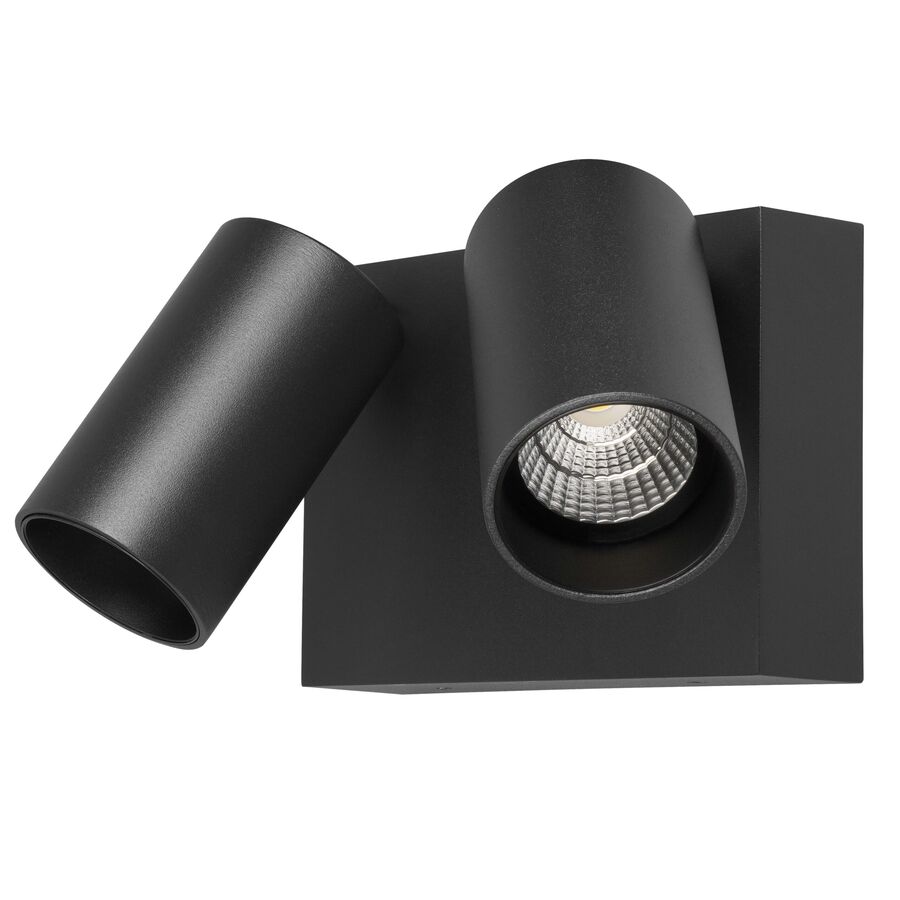
In the strategic planning of residential, commercial, and light-industrial security across Australia, effective perimeter illumination remains the most reliable and immediate deterrent against intrusion. The objective is not only to light an area, but to remove concealment, disrupt movement, and create instant visual awareness for occupants and surveillance systems. Traditional halogen twin floodlights once filled this role, but their high power consumption, excessive heat, and frequent lamp failures have rendered them impractical in modern installations. The current engineering standard is the LED Double Spot Light. This fixture combines high-efficacy solid-state lighting with dual adjustable heads, allowing precise control of beam direction from a single mounting point. It delivers targeted illumination, rapid activation, and long-term durability suited to Australian outdoor conditions.
The primary advantage of LED technology is its superior luminous efficacy. Legacy halogen twin floodlights commonly used two 150-watt lamps to produce approximately 2,400 lumens, drawing a total of 300 watts from the supply. A professional LED double spot light can deliver equivalent or greater brightness while consuming only 24 to 30 watts.
This reduction in power demand allows multiple fittings to be installed on a single lighting circuit without overloading, a key advantage for retrofit security upgrades. In addition to efficiency, the quality of light is significantly improved. Most professional units use COB (Chip on Board) LED arrays, providing consistent output and uniform beam distribution. Typical colour temperatures range from 4000K to 5000K. These cooler tones produce higher contrast, improving facial recognition and colour accuracy on CCTV footage. Under halogen lighting, colours often appear muted or distorted, reducing the effectiveness of recorded evidence.
The defining feature of the LED double spot light is the independent articulation of each head. Each lamp can be rotated and tilted to direct light precisely where it is required. This flexibility allows installers to design coverage that matches the physical layout of the site rather than relying on a single fixed beam.
On a residential corner installation, one head can be set to project along a driveway or boundary fence, while the second head illuminates doorways, gates, or side access paths. In commercial environments, one beam may cover a loading zone while the other washes a wall or storage area. High-quality fittings use friction-based or toothed pivot mechanisms designed to resist vibration and wind load. This ensures the beam alignment remains stable over time and does not drift after installation.
Most LED double spot lights are paired with Passive Infrared (PIR) sensors, either integrated into the fitting or installed as a separate device. The PIR sensor detects changes in infrared radiation caused by a moving heat source, such as a person or vehicle, against the ambient background.
Professional sensors allow adjustment of three critical parameters. Sensitivity controls the detection range, preventing false triggers from distant movement. Time determines how long the light remains on after activation. Lux sets the ambient light threshold, ensuring the fitting operates only in low-light conditions. Correct calibration is essential to prevent nuisance activation and unnecessary energy use.
Many fittings also provide a manual override function. By switching the supply off and on in a specific sequence, the PIR logic can be bypassed, forcing the light to remain on continuously. This is particularly useful during outdoor entertaining, site work, or late-night activity where constant illumination is required.
Although LEDs are more efficient than halogen lamps, they are sensitive to heat accumulation at the diode junction. If this heat is not removed effectively, LED lifespan is significantly reduced.
Professional LED double spot lights use die-cast aluminium housings to act as heat sinks. The fins located behind each lamp head are functional components, designed to maximise surface area and promote convective cooling. This thermal design protects both the LED chips and the internal driver circuitry, ensuring stable output over many years of operation.
Ingress protection is equally important. Exterior installations are exposed to wind-driven rain, insects, and airborne dust. For Australian eaves and walls, a minimum rating of IP54 is required, with IP65 preferred for exposed locations. Lens materials should be UV-stabilised polycarbonate or tempered glass to prevent yellowing, cracking, or loss of clarity under intense sunlight.
The long-term reliability of a security light depends heavily on how it is mounted and wired. Exterior wall surfaces are often uneven, particularly on weatherboard or textured brick, making watertight installation challenging.
This is where the Schnap Electric Products ecosystem is commonly used. Electricians often install Schnap Electric Products mounting blocks to provide a flat, sealed surface for the light base. These blocks also incorporate conduit entry points, improving cable protection and appearance. Internal connections are typically completed using Schnap Electric Products screw connectors or gel-filled joiners, preventing moisture ingress and corrosion at termination points.
For larger sites, a single Schnap Electric Products external PIR sensor may be used to control multiple LED double spot lights simultaneously. This allows coordinated activation across driveways, yards, or access corridors from one detection point.
The consumer market contains many plastic, non-serviceable LED security lights that degrade rapidly under outdoor conditions. These fittings often lack proper surge protection, suffer from sensor failure, and cannot be repaired.
Professional installers source LED double spot lights through specialised electrical wholesalers. These suppliers ensure products comply with Australian EMC requirements, carry the RCM mark, and include meaningful warranty support. A reputable wholesaler will also stock compatible Schnap Electric Products junction boxes, conduit, and mounting accessories, allowing the entire installation to meet Australian standards for safety and durability.
The LED double spot light is a core component of modern exterior security design. It delivers high-intensity illumination with exceptional efficiency while providing the flexibility to eliminate blind spots through adjustable beam geometry. When paired with correctly configured PIR automation and supported by robust infrastructure from manufacturers such as Schnap Electric Products, it becomes a durable, intelligent security asset. In perimeter protection, light is not simply illumination. It is prevention.

SCHNAP is Australia's premier electrical wholesaler and electrical supplies, marketing thousands of quality products from leading brands. Trusted for nearly two decades by licensed electricians, contractors, and engineers, our range covers everything from basic electrical components to complex industrial electrical equipment
Our key categories include: LED lighting, designer switches, commercial switchboards, circuit protection, security systems & CCTV, and smart home automation
All products are certified to Australian standards (AS/NZS), backed by our 30-day, no-questions-asked return policy. Our expert technical team helps you quickly source the right solution for any residential, commercial, or industrial project, with daily dispatch from our Sydney electrical warehouse delivering Australia-wide
SCHNAP offers the most comprehensive electrical product range, with full technical specifications, application details, installation requirements, compliance standards, and warranties — giving professionals total confidence in every purchase


Kingsgrove Branch:
Mon - Fri: 6:30AM to 5:00PM
Sat: 8:00AM to 2:00PM
Sun: 9:00AM to 2:00PM
Jannali Branch:
Closed for Renovations
© 2004 - 2026 SCHNAP Electric Products