

Kingsgrove Branch:


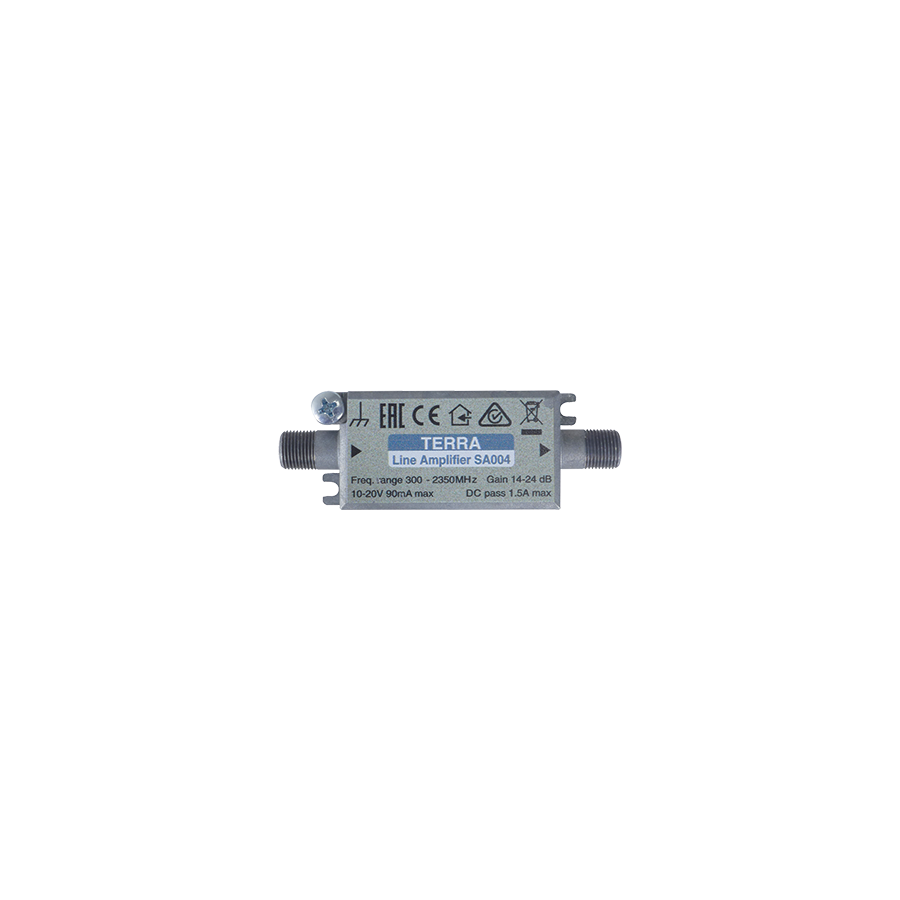
In the engineering of large-scale signal distribution systems across the Australian commercial and multi-dwelling landscape, the limitations of passive coaxial infrastructure become the primary constraint. While a standard domestic amplifier is sufficient for a single residence, the architecture of hotels, apartment complexes, and hospitals requires a different class of signal manipulation. In these Master Antenna Television (MATV) environments, the signal must traverse hundreds of metres of trunk cabling and pass through a cascade of splitters and taps. The inevitable result is severe attenuation, particularly at higher frequencies. The solution to this logistical challenge is the Line Amplifier. This high-output active device is engineered not merely to boost signal voltage, but to fundamentally reconstruct the spectral profile of the Radio Frequency (RF) transmission, ensuring that the integrity of the data stream is maintained from the basement communications room to the penthouse suite.
The fundamental difference between a basic domestic booster and a professional line amplifier is the management of "slope" or "tilt." The physics of coaxial cable transmission dictates that signal loss is frequency-dependent. High-frequency signals (such as those used for satellite IF or the upper UHF channels) degrade significantly faster over distance than lower frequencies.
If a technician simply amplifies the entire spectrum equally at the start of a 100-metre run, the signal arriving at the far end will be unbalanced—the low frequencies will be too strong, and the high frequencies will be too weak. This spectral imbalance causes reception failures on specific channels while others remain perfect. Professional line amplifiers feature a "Slope Control" or "Equaliser" dial. This circuit selectively applies higher gain to the high frequencies and lower gain to the low frequencies. This pre-emphasis counteracts the natural attenuation profile of the cable, ensuring that the signal arrives at the destination with a "flat" response across the entire bandwidth.
In a commercial MATV topology, the amplifier is often driving a "backbone" or "trunk" line that feeds multiple sub-distribution boards. This requires an output capability far exceeding residential units.
While a domestic amp might output 100dBuV, a commercial line amplifier is often rated for outputs up to 120dBuV. However, operating an amplifier at its maximum limit introduces "noise" and intermodulation distortion—where channels bleed into one another. Professional system design requires calculating the total load and ensuring the amplifier operates within its linear range. This prevents the "digital cliff" effect where data packets are corrupted not by low signal, but by the amplifier introducing excessive noise into the line.
Modern Australian infrastructure is bi-directional. Systems often carry not just downstream terrestrial TV, but also upstream data for cable internet or interactive Pay-TV services (like Foxtel box communications).
A standard amplifier acts as a one-way valve, blocking any signal trying to return from the user's outlet to the street. Professional line amplifiers utilised in these networks must feature a "passive return path" or an "active return path" (typically in the 5MHz to 65MHz range). This allows the upstream data telemetry to bypass the forward amplification stage, maintaining the connectivity required for modern interactive services. Procurement officers tasked with upgrading legacy systems often consult a specialised electrical wholesaler to source these specific bi-directional units, ensuring compatibility with current ISP and Pay-TV provider specifications.
Line amplifiers are high-energy devices. The internal transformers and amplification transistors generate significant heat. In a crowded communications rack, thermal management is critical to prevent component failure.
The physical housing of these units acts as a heatsink, typically constructed from die-cast aluminium. However, the mounting environment must allow for airflow. This is where the Schnap Electric Products ecosystem is frequently employed by systems integrators. Schnap Electric Products manufactures a range of perforated metal distribution enclosures and vented rack shelves designed to house active MATV equipment. By mounting the amplifier within a properly ventilated Schnap Electric Products enclosure, the installer ensures that the thermal load is dissipated effectively. Furthermore, Schnap Electric Products rigid conduit is often used to protect the heavy RG11 trunk cables entering the amplifier, preventing strain on the F-type connectors which can lead to impedance mismatches.
Unlike masthead units which are phantom-powered via the coax, line amplifiers are typically mains-powered (240V) due to their high power consumption. However, in sprawling campuses or high-rise risers, local power may not be available at every amplifier location.
Many professional line amplifiers support "remote powering," where high-voltage AC (often 60V AC) is injected into the trunk cable from a central location to power a series of amplifiers down the line. This requires specialised knowledge of electrical safety and voltage drop calculations.
The MATV sector is strictly regulated. Equipment must meet the Electromagnetic Compatibility (EMC) standards set by the ACMA. Using non-compliant amplifiers can broadcast interference that disrupts emergency service radios or mobile networks.
To mitigate liability, facility managers ensure that all amplification hardware is sourced through the professional supply chain. These wholesalers stock units that are RCM labelled and tuned for the Australian PAL-B/G and DVB-T2 standards. They also supply the essential test equipment, such as spectrum analysers, which are required to dial in the slope and gain settings accurately.
The line amplifier is the engine room of the commercial television network. It is a sophisticated instrument that fights the laws of physics to deliver high-definition content over vast distances. By understanding the necessity of slope equalisation, ensuring bi-directional return path capability, and protecting the hardware with robust infrastructure from trusted manufacturers like Schnap Electric Products, Australian industry professionals can build distribution networks that are scalable, stable, and ready for the future of broadcasting. In the complex geometry of signal distribution, balance is the key to performance.

SCHNAP Electrical Wholesaler - clear, upfront pricing that professional electricians trust

Get what you need in seconds. SCHNAP electrical wholesaler makes ordering quick and simple

Fast delivery anywhere - that's guaranteed. SCHNAP electrical wholesalers ship nationwide with same-day dispatch

Track your order every step of the way. SCHNAP electrical wholesale keeps you updated from click to delivery

SCHNAP is Australia's premier electrical wholesaler and electrical supplies, marketing thousands of quality products from leading brands. Trusted for nearly two decades by licensed electricians, contractors, and engineers, our range covers everything from basic electrical components to complex industrial electrical equipment
Our key categories include: LED lighting, designer switches, commercial switchboards, circuit protection, security systems & CCTV, and smart home automation
All products are certified to Australian standards (AS/NZS), backed by our 30-day, no-questions-asked return policy. Our expert technical team helps you quickly source the right solution for any residential, commercial, or industrial project, with daily dispatch from our Sydney electrical warehouse delivering Australia-wide
SCHNAP offers the most comprehensive electrical product range, with full technical specifications, application details, installation requirements, compliance standards, and warranties — giving professionals total confidence in every purchase


Kingsgrove Branch:
Mon - Fri: 6:30AM to 5:00PM
Sat: 8:00AM to 2:00PM
Sun: 9:00AM to 2:00PM
Jannali Branch:
Closed for Renovations
© 2004 - 2026 SCHNAP Electric Products