



Kingsgrove Branch:


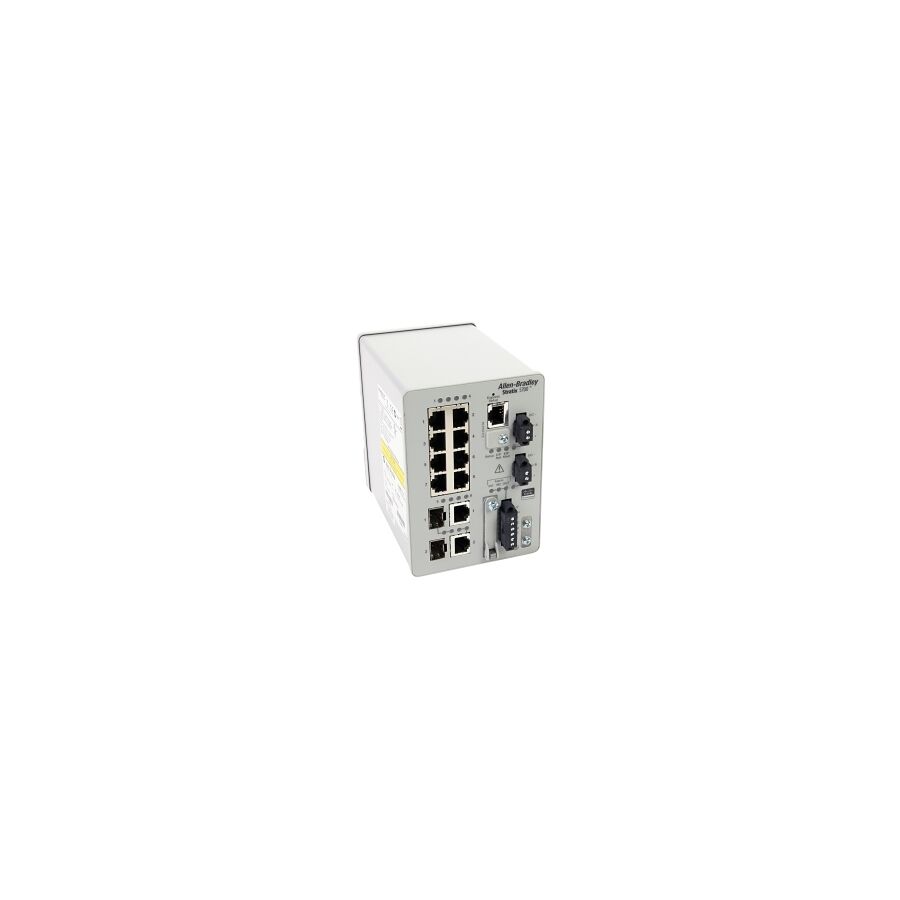
In the modern Australian commercial and industrial landscape, data networks are no longer a background utility. They are the operational backbone that supports automation systems, IP security, building management, voice communications, and cloud-based business platforms. As organisations adopt Industry 4.0 principles and migrate critical services onto Ethernet and IP, the reliability and intelligence of the switching layer become non-negotiable. In this context, the simplicity of unmanaged networking hardware becomes a weakness rather than a strength. With no visibility, no segmentation, and no control, unmanaged switches expose the network to congestion, security risk, and unpredictable performance.
The professional engineering response to these challenges is the managed Ethernet switch. Unlike basic plug-and-play devices, a managed switch is an active network control platform. It gives administrators the ability to define how data flows, which devices can communicate, and how the network responds to faults. This transforms the physical cabling infrastructure into a controlled, deterministic system that can scale with operational demand while maintaining performance and security.
One of the most important capabilities of a managed Ethernet switch is Virtual Local Area Network functionality. In an unmanaged environment, all connected devices share a single broadcast domain. Every broadcast frame is seen by every device, regardless of relevance. As device count increases, this unnecessary traffic consumes bandwidth and processing resources, leading to latency and instability.
A managed switch allows a single physical device to be logically divided into multiple isolated networks. Each VLAN operates as its own broadcast domain, even though all traffic traverses the same switch fabric. In a commercial building, for example, IP phones can be assigned to one VLAN, security cameras to another, and corporate workstations to a third. This segmentation prevents high-bandwidth video streams from interfering with financial systems or business-critical applications. It also creates a strong security boundary, ensuring that devices in one VLAN cannot communicate with another without explicit routing rules.
VLAN design is foundational in environments where compliance, privacy, and predictable performance are required. It allows engineers to design the network logically rather than being constrained by physical cabling layouts.
As networks converge, different applications place very different demands on latency and jitter. File transfers and backups can tolerate delay, while voice calls, video conferencing, and real-time control systems cannot. In unmanaged networks, all packets are treated equally, which leads to degraded performance when congestion occurs.
Managed Ethernet switches implement Quality of Service mechanisms to solve this problem. Using standards such as IEEE 802.1p, the switch can classify packets based on application type or priority tags. Time-sensitive traffic such as VoIP or industrial control data is placed ahead of lower-priority traffic in transmission queues. This ensures consistent call quality, stable video streams, and reliable automation control even when the network is under load.
For Australian businesses relying on cloud telephony, remote monitoring, and real-time data exchange, QoS is essential for maintaining service quality and user confidence.
In critical environments such as hospitals, automated warehouses, and processing plants, network downtime is unacceptable. To mitigate the risk of cable or hardware failure, network designers often introduce redundant physical paths between switches.
Without intelligent control, these loops would cause broadcast storms that can cripple a network. Managed Ethernet switches prevent this through Rapid Spanning Tree Protocol. RSTP allows the switch to identify redundant paths and place them in a blocked state during normal operation. If a primary link fails, the switch automatically reconfigures the network topology and activates the backup path within milliseconds.
This self-healing behaviour provides high availability without manual intervention. It is a core requirement in industrial and commercial networks where uptime directly impacts safety, productivity, and revenue.
A key limitation of unmanaged switches is the complete absence of diagnostic feedback. When performance degrades, technicians are forced to guess at the cause. Managed switches remove this uncertainty by providing comprehensive monitoring capabilities.
Through Simple Network Management Protocol, managed switches expose real-time and historical data about port status, bandwidth usage, error rates, and device connectivity. Network administrators can identify overloaded links, detect faulty cabling through CRC error counts, and receive alerts when devices disconnect unexpectedly. This level of visibility enables proactive maintenance and faster fault resolution, reducing downtime and operational disruption.
In large facilities, SNMP monitoring is essential for managing distributed infrastructure efficiently and safely.
The intelligence of a managed switch must be supported by robust physical infrastructure. Environmental conditions, cable management, and power quality all influence long-term reliability. In industrial settings, switches are commonly installed inside control cabinets or server racks where heat, vibration, and electrical noise are present.
This is where integration with the Schnap Electric Products ecosystem becomes important. Managed switches are often DIN-rail mounted, requiring stable mounting systems, proper spacing, and effective cable segregation. Quality enclosures, structured ducting, and disciplined patch management reduce mechanical stress and improve airflow.
Power integrity is equally critical. Voltage transients, electrical noise, and poor earthing can damage sensitive switching hardware. Professional installations use surge protection and regulated power distribution to protect network electronics from grid disturbances, ensuring consistent operation over the life of the system.
Network security begins at the access layer. Managed Ethernet switches provide port security features that restrict which devices can connect to the network. Administrators can bind a port to a specific MAC address or limit the number of allowed devices.
If an unauthorised device is connected, the switch can automatically disable the port and generate an alert. This prevents physical intrusion from compromising the network, an important requirement for government, healthcare, and financial environments where data integrity and access control are tightly regulated.
Not all networking hardware is equal. Grey-market switches may lack proper certification, receive no firmware updates, or include security vulnerabilities. In Australian commercial and industrial environments, compliance with local standards and access to vendor support are essential.
Network professionals procure managed Ethernet switches through specialised electrical wholesalers who verify product authenticity, regulatory compliance, and interoperability. These suppliers also provide compatible cabling systems, patch leads, and fibre infrastructure to ensure the physical network can support the switch’s performance capabilities.
The managed Ethernet switch is the cornerstone of modern commercial and industrial networking. It converts a passive collection of cables into an intelligent, secure, and resilient communication system. Through VLAN segmentation, QoS prioritisation, rapid redundancy, and detailed monitoring, it provides the control and predictability required in data-driven environments. When supported by robust physical infrastructure and sourced through professional channels, managed switches enable Australian organisations to build networks that are scalable, secure, and future-ready. In contemporary connectivity, control is not optional. It is the foundation of reliability.

SCHNAP is Australia's premier electrical wholesaler and electrical supplies, marketing thousands of quality products from leading brands. Trusted for nearly two decades by licensed electricians, contractors, and engineers, our range covers everything from basic electrical components to complex industrial electrical equipment
Our key categories include: LED lighting, designer switches, commercial switchboards, circuit protection, security systems & CCTV, and smart home automation
All products are certified to Australian standards (AS/NZS), backed by our 30-day, no-questions-asked return policy. Our expert technical team helps you quickly source the right solution for any residential, commercial, or industrial project, with daily dispatch from our Sydney electrical warehouse delivering Australia-wide
SCHNAP offers the most comprehensive electrical product range, with full technical specifications, application details, installation requirements, compliance standards, and warranties — giving professionals total confidence in every purchase


Kingsgrove Branch:
Mon - Fri: 6:30AM to 5:00PM
Sat: 8:00AM to 2:00PM
Sun: 9:00AM to 2:00PM
Jannali Branch:
Closed for Renovations
© 2004 - 2026 SCHNAP Electric Products