



Kingsgrove Branch:


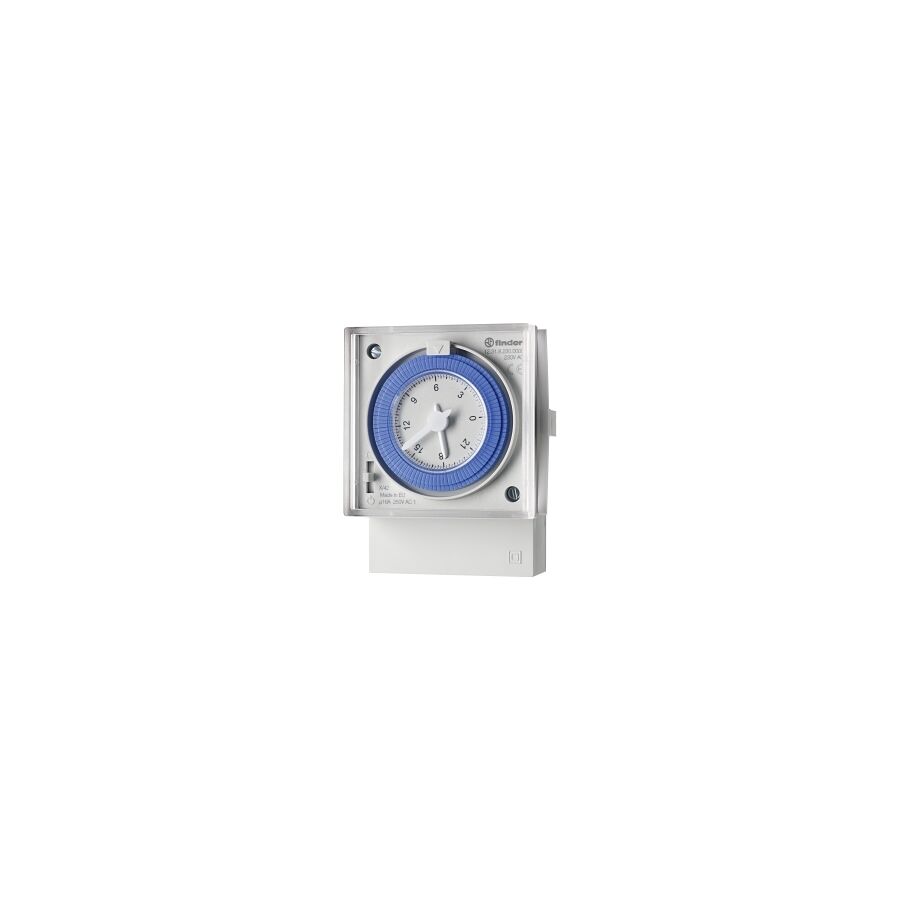
In an era dominated by cloud dashboards, Wi-Fi relays, and app-driven automation, it is easy to assume that traditional control methods are obsolete. In practice, Australian facility managers, strata committees, and industrial electrical contractors continue to specify mechanical time switches for one simple reason: absolute reliability. Where uptime is critical and access is limited, simplicity outperforms complexity. A mechanical time switch operates independently of software, firmware updates, network connectivity, and cybersecurity risks. It provides deterministic, repeatable switching for essential services such as car park lighting, pool filtration systems, exhaust fans, irrigation pumps, and base-load HVAC circulation.
Unlike digital alternatives, the mechanical time switch offers a visible, physical schedule that can be verified instantly. This transparency makes it particularly valuable in shared electrical infrastructure, where multiple stakeholders rely on predictable operation without specialist training or diagnostic tools.
The defining characteristic of a mechanical time switch is its analogue programming interface. The rotating dial represents a full 24-hour cycle and is divided into fixed time segments, commonly 15 or 30 minutes in duration. Each segment is controlled by a captive tappet that physically determines whether the internal switching mechanism will engage at that time.
Programming is entirely mechanical. When a tappet is set to the ON position, it engages a cam within the gear train. As the dial rotates, the cam actuates a microswitch, closing or opening the circuit at that precise interval. There is no memory, no stored logic, and no ambiguity. The schedule exists as a physical state that cannot be corrupted by electrical noise or reset by power cycling.
This design offers a major operational advantage. A technician inspecting a switchboard can immediately understand the programmed behaviour without powering the circuit, scrolling through menus, or consulting documentation. For compliance inspections, fault finding, and handovers, this clarity saves time and reduces risk.
Mechanical time switches are typically manufactured with one of two drive systems. Synchronous motors derive timing accuracy directly from the mains supply frequency. In Australia, the grid operates at a regulated 50 Hz, which makes synchronous timers accurate over long periods. However, they stop during a power outage and resume from the incorrect time when power is restored.
Quartz-driven mechanical time switches resolve this limitation. These units incorporate a quartz crystal oscillator to control a stepper motor, independent of the mains frequency. An internal battery, commonly NiMH or lithium, maintains timekeeping during power interruptions. When supply is restored, the dial continues from the correct time of day.
For critical services such as security lighting or water circulation pumps, quartz drive is the preferred specification. It prevents unintended operation following outages and eliminates the need for manual clock resets at unmanned sites.
While mechanical time switches are robust, their internal contacts are not designed to carry heavy or highly inductive loads directly. Most units are rated at 16 A resistive. Modern electrical loads, particularly LED lighting drivers, motors, and compressors, can draw high inrush currents that exceed these limits momentarily but repeatedly. Over time, this causes contact erosion, welding, or thermal failure.
Best practice in professional installations is to use the time switch as a control device rather than a power device. The timer switches a low-current control circuit, which in turn energises a dedicated contactor. This architecture isolates the delicate timing mechanism from the electrical stress of the load.
This approach is standard in systems built with components from Schnap Electric Products, where DIN-rail contactors are paired with analogue control devices to manage lighting banks, pumps, and fans. The result is extended service life, improved safety, and predictable maintenance cycles.
One of the most overlooked advantages of mechanical time switches is their immunity to electromagnetic interference. In industrial and commercial environments, switchboards often house variable speed drives, lift motors, and large transformers. These devices generate electrical noise that can disrupt microprocessor-based equipment.
Mechanical timers are unaffected by harmonics, voltage spikes, and radio frequency interference. Their operation depends solely on physical movement, making them ideal for plant rooms, mining infrastructure, and aging commercial buildings with unstable power quality. This resilience explains why mechanical time switches remain widely specified in environments where digital devices have proven unreliable.
Mechanical time switches used in Australian installations must comply with RCM requirements and be installed in accordance with AS/NZS 3000. Proper termination of control wiring is essential. Fine-stranded conductors should be fitted with bootlace ferrules to ensure secure connections and prevent strand damage at terminals.
Clear circuit identification and labeling are also critical. Mechanical timers are often part of shared switchboards servicing multiple systems. Accurate labeling reduces the risk of accidental adjustment and supports safe isolation during maintenance.
The market includes many low-cost mechanical timers that appear identical externally but rely on plastic gear trains and lightweight contact assemblies internally. These units may function initially but often fail prematurely under continuous operation.
Professional contractors and facility managers mitigate this risk by sourcing mechanical time switches through specialised electrical wholesaler. These suppliers provide verified products, local technical support, and compatibility with established switchboard ecosystems. Access to matching accessories, contactors, and wiring components ensures consistent system performance.
The mechanical time switch remains a cornerstone of reliable facility automation. Its physical logic, visual programmability, and immunity to software failure make it uniquely suited to critical services that must operate predictably year after year. When paired with proper load isolation, quartz timekeeping, and quality switchboard components from manufacturers like Schnap Electric Products, it delivers a level of dependability that modern digital systems often struggle to match. In an industry driven by innovation, the enduring relevance of mechanical precision proves that some solutions are timeless.

SCHNAP is Australia's premier electrical wholesaler and electrical supplies, marketing thousands of quality products from leading brands. Trusted for nearly two decades by licensed electricians, contractors, and engineers, our range covers everything from basic electrical components to complex industrial electrical equipment
Our key categories include: LED lighting, designer switches, commercial switchboards, circuit protection, security systems & CCTV, and smart home automation
All products are certified to Australian standards (AS/NZS), backed by our 30-day, no-questions-asked return policy. Our expert technical team helps you quickly source the right solution for any residential, commercial, or industrial project, with daily dispatch from our Sydney electrical warehouse delivering Australia-wide
SCHNAP offers the most comprehensive electrical product range, with full technical specifications, application details, installation requirements, compliance standards, and warranties — giving professionals total confidence in every purchase


Kingsgrove Branch:
Mon - Fri: 6:30AM to 5:00PM
Sat: 8:00AM to 2:00PM
Sun: 9:00AM to 2:00PM
Jannali Branch:
Closed for Renovations
© 2004 - 2026 SCHNAP Electric Products