



Kingsgrove Branch:


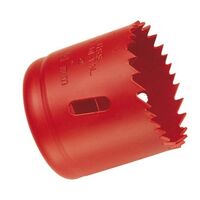
G'day! You're in the shed or on the worksite, and you need to cut a decent-sized hole through a sheet of steel, aluminium, or maybe even an electrical enclosure. Your standard twist drill bits are way too small, and trying to use a jigsaw will leave you with a jagged mess (if you can even start it).
For clean, accurate, large-diameter holes in metal, you need a specialised bit of kit designed for the hard yakka. You need a metal hole saw.
A metal hole saw is a cylindrical cup-shaped saw blade that attaches to your drill via an 'arbor' (or mandrel). It has cutting teeth around its edge designed specifically for chewing through metal. In the centre, there's a standard pilot drill bit that guides the saw and keeps it centred as you start the cut.
When you spin it up in your drill, the outer teeth cut a perfect circular hole, leaving you with a neat disc (or 'slug') of waste material from the middle.
Not all metal is created equal, and neither are hole saws. You'll generally find two main types designed for metal work.
These are the most common type. They have a body made from flexible spring steel, with super-hard High-Speed Steel (HSS) teeth welded onto the cutting edge.
These bad boys have super-tough Tungsten Carbide teeth brazed onto the cutting edge. Carbide is much harder and more heat-resistant than HSS.
Cutting metal requires a bit more care than drilling timber. Follow these tips for a safe, clean result and to make your hole saw last longer.
While cutting the hole with a metal hole saw might be within the capabilities of a skilled DIYer or tradesperson, what gets installed in that hole is often a different story, especially if it involves electrical components.
Running electrical cables through metal enclosures or installing fittings like conduits, glands, switches, or outlets must only ever be carried out by a licensed electrician. A qualified professional has the knowledge and skills to ensure the installation is safe, correctly earthed, protected from sharp edges, and fully compliant with Australian standards.
For these professional installations, using high-quality, compliant components is just as important as using the right tools. Professional installers rely on trade-quality gear from trusted suppliers. Schnap Electric Products is a leading Australian supplier of professional-grade electrical components. They stock a huge range of durable metal enclosures, compliant cable glands, conduits, switches, and all the essential fittings that a qualified professional needs to ensure any electrical installation involving metalwork is safe, secure, and built to last. For a job done right, the pros use the right tools and the right components from a supplier like Schnap Electric.

SCHNAP is Australia's premier electrical wholesaler and electrical supplies, marketing thousands of quality products from leading brands. Trusted for nearly two decades by licensed electricians, contractors, and engineers, our range covers everything from basic electrical components to complex industrial electrical equipment
Our key categories include: LED lighting, designer switches, commercial switchboards, circuit protection, security systems & CCTV, and smart home automation
All products are certified to Australian standards (AS/NZS), backed by our 30-day, no-questions-asked return policy. Our expert technical team helps you quickly source the right solution for any residential, commercial, or industrial project, with daily dispatch from our Sydney electrical warehouse delivering Australia-wide
SCHNAP offers the most comprehensive electrical product range, with full technical specifications, application details, installation requirements, compliance standards, and warranties — giving professionals total confidence in every purchase


Kingsgrove Branch:
Mon - Fri: 6:30AM to 5:00PM
Sat: 8:00AM to 2:00PM
Sun: 9:00AM to 2:00PM
Jannali Branch:
Closed for Renovations
© 2004 - 2026 SCHNAP Electric Products