

Kingsgrove Branch:


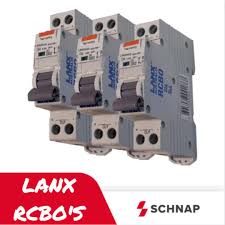
Residual Current Circuit Breakers
Residual current circuit breakers are crucial safety devices designed for swift disconnection of electrical supply, preventing prolonged and potentially dangerous electric shocks. While they significantly reduce risk, it's important to note that brief initial shocks or simultaneous contact with both conductors can still pose hazards.
These solid, safe, and very widely used breakers automatically disconnect circuits upon detecting unbalanced currents between supply and return conductors. Any discrepancy in conductor currents indicates a leakage, signaling a potential shock hazard.
As a key component in automatic disconnection of supply (ADS) systems, RCDs eliminate reliance on human intervention. These devices typically operate within 25-40 milliseconds of detecting leakage currents exceeding 30mA, though this rapid response applies specifically to final circuits under 32 Amps.
An RCBO (residual current breaker with overcurrent protection) safeguards against two types of electrical faults. The first is residual current or earth leakage, which can occur due to wiring errors or accidental circuit breaks, such as cutting through a cable during DIY activities. Without prompt disconnection, such faults could lead to fatal electric shocks.
The RCBO meaning extends beyond basic RCDs (residual current devices) or RCCBs (residual current circuit breakers). While RCDs and RCCBs provide rapid disconnection to prevent prolonged shocks, an RCBO breaker incorporates additional overcurrent protection.
RCBOs serve three primary functions: protection against earth fault currents, overload, and short circuit currents. For optimal safety and functionality, it's recommended to install an RCBO on each separate circuit, ensuring that a fault in one area doesn't compromise others. These devices disconnect circuits to protect both people and equipment when current imbalances occur, operating independently of other overcurrent protective devices within their rated short-circuit capacity.
When considering RCD vs RCBO, the key difference lies in the RCBO's additional overcurrent protection. This makes RCBOs particularly valuable in scenarios requiring comprehensive circuit protection.
The design and testing requirements for these widely used safety devices are meticulously outlined in the IEC/EN 61009 standards: "Residual current circuit-breakers with integral overload protection for household and similar uses (RCBO)."
In conclusion, RCBOs represent a critical advancement in electrical safety, combining the protective features of RCDs with overcurrent safeguards. Their widespread adoption in various settings underscores their reliability and effectiveness in preventing electrical accidents.
The second type of electrical fault is overcurrent, manifesting as either overload or short circuit. Overloading occurs when excessive electrical devices are connected, causing power transfer to exceed cable capacity. Short-circuiting, on the other hand, results from insufficient circuit resistance and high amperage multiplication, posing a greater risk than overloading.
The Lanx Type A Single pole RCBO, a solid, safe, and very widely used device, offers comprehensive protection. Its technical specifications include:
This RCBO breaker exemplifies the integration of residual current and overcurrent protection in a single device

When it comes to addressing electrical problems, it's essential to hire a licensed electrician to ensure that the work is done safely and correctly. And to complete their job successfully, an electrician requires access to high-quality electrical wholesale supplies.
A licensed electrician has undergone extensive training to ensure that they know how to handle potentially dangerous situations. They have knowledge and experience to identify potential hazards and take the necessary precautions to prevent accidents and electric fires. You can trust that your licensed electrician will always use high-quality electrical supplies to minimize the risk even further.
A licensed electrician can help you diagnose any electrical problems you may have. With their knowledge and experience, they can identify precisely what the problem is and provide you with the most suitable and cost-effective solution. And with access to electrical wholesale supplies, they can quickly replace or repair broken parts, ensuring your electrical system functions correctly and safely.
Hiring a licensed electrician ensures that all electrical work is carried out according to safety standards and regulations. Licensed electricians also have the expertise to obtain the necessary permits to carry out electrical work. Compliance with safety standards, regulations and obtaining the correct permits, helps to ensure that your home or business is safe.
Although it may seem costly upfront to hire a licensed electrician, it's generally cheaper in the long run. A licensed electrician guarantees that your electrical problems will be fixed correctly and with high-quality electrical wholesale supplies, reducing the risk of further problems in the future. Hiring someone that is not licensed may result in shoddy work that could damage your electrical system and may eventually cost you more in the long run.
In conclusion, hiring a licensed electrician is essential when it comes to electrical work. They have undergone extensive training and have access to high-quality electrical wholesale supplies, ensuring that your electrical problems are addressed safely and correctly. Without a licensed electrician, you run the risk of electrical hazards, improper diagnosis of electrical problems, and non-compliance with safety standards and regulations.

SCHNAP Electrical Wholesaler - clear, upfront pricing that professional electricians trust

Get what you need in seconds. SCHNAP electrical wholesaler makes ordering quick and simple

Fast delivery anywhere - that's guaranteed. SCHNAP electrical wholesalers ship nationwide with same-day dispatch

Track your order every step of the way. SCHNAP electrical wholesale keeps you updated from click to delivery

SCHNAP is Australia's premier electrical wholesaler and electrical supplies, marketing thousands of quality products from leading brands. Trusted for nearly two decades by licensed electricians, contractors, and engineers, our range covers everything from basic electrical components to complex industrial electrical equipment
Our key categories include: LED lighting, designer switches, commercial switchboards, circuit protection, security systems & CCTV, and smart home automation
All products are certified to Australian standards (AS/NZS), backed by our 30-day, no-questions-asked return policy. Our expert technical team helps you quickly source the right solution for any residential, commercial, or industrial project, with daily dispatch from our Sydney electrical warehouse delivering Australia-wide
SCHNAP offers the most comprehensive electrical product range, with full technical specifications, application details, installation requirements, compliance standards, and warranties — giving professionals total confidence in every purchase


Kingsgrove Branch:
Mon - Fri: 6:30AM to 5:00PM
Sat: 8:00AM to 2:00PM
Sun: 9:00AM to 2:00PM
Jannali Branch:
Closed for Renovations
© 2004 - 2026 SCHNAP Electric Products