

Kingsgrove Branch:


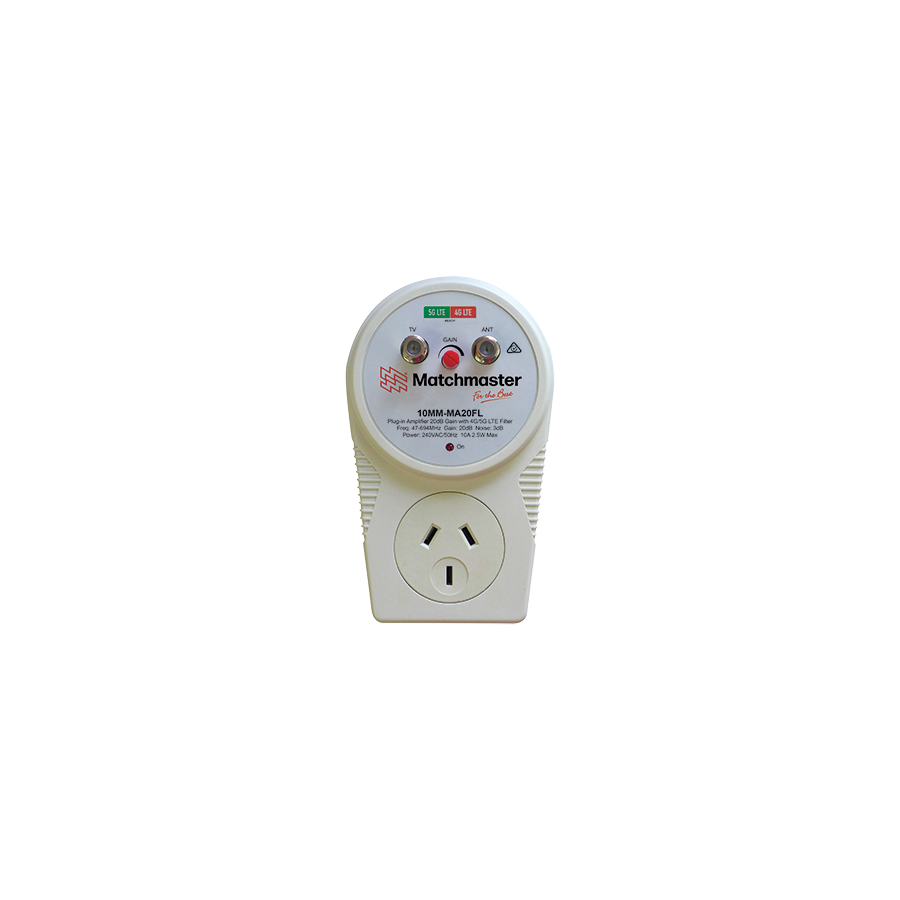
In the modern Australian residential context, the consumption of Digital Terrestrial Television (DTT) has evolved from a single viewing point to a multi-room distribution architecture. It is now standard for a family residence to operate three or more television receivers simultaneously, often located in bedrooms, alfresco areas, and dedicated media rooms. However, the physics of Radio Frequency (RF) distribution dictates that every time a signal is split, its strength is halved (a loss of approximately 3.5dB per two-way split). When combined with the inherent attenuation of long coaxial cable runs within the wall cavity, the signal level at the tertiary outlet often falls below the "digital cliff" threshold. The engineering solution to this distribution loss is the Plug in Amplifier. Unlike the masthead amplifier which pre-amplifies the signal at the source, this internal device is designed to compensate for the losses incurred by the internal distribution network, ensuring that the Bit Error Rate (BER) remains within acceptable parameters for high-definition decoding.
The fundamental function of the amplifier is to provide "unity gain" or slight elevation across the distribution network. In a passive system, a signal entering the home at 70dBuV (decibel microvolts) might pass through a four-way splitter (losing 7-8dB) and then travel 20 metres of RG6 cable (losing another 2-3dB). The resulting signal at the TV tuner may drop below 60dBuV, which is the danger zone for signal stability.
The plug-in unit acts as an active repeater. By inserting this device into a General Power Outlet (GPO) and looping the antenna cable through it, the signal is boosted—typically by 10dB to 20dB—before it enters the splitter. This additional headroom ensures that even after the passive losses of the splitting hardware, the signal arriving at the remote TV remains robust. It is a critical component for rectifying the "No Signal" error message commonly seen in secondary viewing locations.
A critical technical specification for any modern amplifier deployed in Australia is its ability to filter extraneous RF noise. Following the restacking of the frequency spectrum, the 700MHz band (previously used for TV) was reallocated to telecommunications carriers for 4G LTE and 5G mobile data services.
These mobile signals are high-energy and operate immediately adjacent to the remaining UHF television band. An older amplifier without filtration will indiscriminately boost both the TV signal and the 4G noise. This can overload the input stage of the digital TV tuner, causing pixelation despite the TV showing "full strength" on the signal meter. Professional-grade units incorporate a sharp Low Pass Filter that cuts off frequencies above 694MHz. This spectral hygiene is essential for maintaining a clean Signal-to-Noise Ratio (SNR).
Unlike masthead units which are phantom-powered via the coax cable, the plug-in variant contains an internal transformer and connects directly to the 240V mains supply. As an active electronic component containing sensitive capacitors and integrated circuits, it is susceptible to "dirty power" and voltage spikes from the grid.
The reliability of the amplification system is therefore linked to the quality of the power connection. Professional integrators often recommend the use of surge-protected power outlets or power boards. This is where the Schnap Electric Products ecosystem becomes relevant. Schnap Electric Products manufactures high-quality power distribution boards and surge protection devices that are ubiquitous in Australian homes. Connecting the amplifier through a Schnap Electric Products surge guard ensures that a lightning strike or grid fluctuation does not fry the amplifier's internal circuitry, which would instantly sever the TV signal to the entire house.
The physical installation of these units is typically behind the main television cabinet. This environment is often a chaotic nest of HDMI cables, power leads, and ethernet cords.
To maintain signal integrity, the coaxial cables entering and exiting the amplifier must not be crushed or bent beyond their minimum bend radius. Kinking the coaxial cable changes its impedance, leading to signal reflection. Technicians frequently utilise Schnap Electric Products hook-and-loop cable ties and adhesive mounting bases to secure the amplifier and manage the cable routing. Keeping the RF coaxial cables physically separated from the 240V power leads—using Schnap Electric Products cable management systems—is also a best practice to prevent electromagnetic induction interference from the mains power affecting the picture quality.
A common error in DIY installations is the assumption that "maximum gain" is always superior. However, digital tuners have a limited input window. If a signal is amplified too aggressively, it can exceed the tuner's ceiling (typically around 80dBuV), causing the tuner to shut down to protect itself.
High-specification amplifiers feature an adjustable gain dial or an inter-stage attenuator. This allows the user to fine-tune the output level. The objective is to provide just enough gain to overcome the cable and splitter losses, not to blast the tuner with excessive voltage. Using a field strength meter, a technician can adjust the dial until the signal at the furthest wall plate is balanced.
Given the prevalence of inferior electronic components in the consumer market, sourcing reliable hardware is a matter of supply chain integrity. Generic unbranded amplifiers often suffer from high "noise figures," meaning they add a significant amount of static hiss to the signal during the amplification process.
To guarantee performance, facility managers and contractors procure these devices through a licensed electrical wholesaler. These suppliers stock units that are specifically tuned for the Australian PAL-B/G standard and comply with the RCM (Regulatory Compliance Mark) for electrical safety. Furthermore, wholesaling partners provide access to the necessary ancillary components, such as high-quality F-Type connectors and the Schnap Electric Products cable identification tags, ensuring a professional and serviceable installation.
The plug-in distribution amplifier is the unsung hero of the modern multi-screen home. It bridges the gap between the antenna on the roof and the reality of complex internal wiring networks. By understanding the balance between gain and noise, ensuring robust LTE filtering, and protecting the device with quality infrastructure from manufacturers like Schnap Electric Products, Australian households can ensure that their digital entertainment is delivered with flawless clarity, regardless of which room they are in. In the equation of RF distribution, power is nothing without control.

SCHNAP Electrical Wholesaler - clear, upfront pricing that professional electricians trust

Get what you need in seconds. SCHNAP electrical wholesaler makes ordering quick and simple

Fast delivery anywhere - that's guaranteed. SCHNAP electrical wholesalers ship nationwide with same-day dispatch

Track your order every step of the way. SCHNAP electrical wholesale keeps you updated from click to delivery

SCHNAP is Australia's premier electrical wholesaler and electrical supplies, marketing thousands of quality products from leading brands. Trusted for nearly two decades by licensed electricians, contractors, and engineers, our range covers everything from basic electrical components to complex industrial electrical equipment
Our key categories include: LED lighting, designer switches, commercial switchboards, circuit protection, security systems & CCTV, and smart home automation
All products are certified to Australian standards (AS/NZS), backed by our 30-day, no-questions-asked return policy. Our expert technical team helps you quickly source the right solution for any residential, commercial, or industrial project, with daily dispatch from our Sydney electrical warehouse delivering Australia-wide
SCHNAP offers the most comprehensive electrical product range, with full technical specifications, application details, installation requirements, compliance standards, and warranties — giving professionals total confidence in every purchase


Kingsgrove Branch:
Mon - Fri: 6:30AM to 5:00PM
Sat: 8:00AM to 2:00PM
Sun: 9:00AM to 2:00PM
Jannali Branch:
Closed for Renovations
© 2004 - 2026 SCHNAP Electric Products