



Kingsgrove Branch:


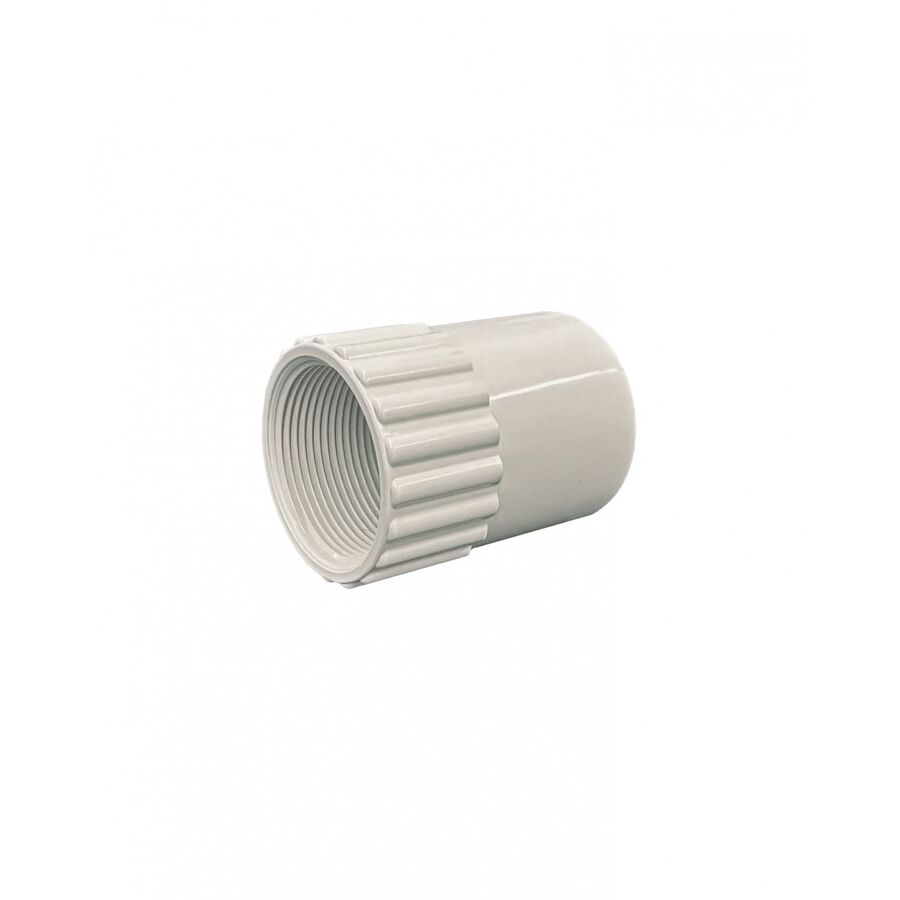
In the diverse and challenging landscape of the Australian construction industry, the reliability of an electrical installation relies heavily on the quality of its protective infrastructure. While the copper cables carrying power and data are the lifeline of any building, the rigid PVC conduit system is the armour that shields them from physical damage and environmental hazards. However, conduit is manufactured in finite lengths—typically four metres. To create a continuous, secure pathway that spans the length of a warehouse, a home, or an industrial plant, these lengths must be joined effectively. This is the critical function of the pvc coupling.
The pvc coupling is a simple, cylindrical fitting designed to connect two lengths of rigid conduit. While it may seem like a minor accessory in the grand scheme of a multi-million dollar fit-out, its role is pivotal. It ensures that the mechanical protection offered by the conduit is uninterrupted. More importantly, it maintains the ingress protection (IP) rating of the system. In a country like Australia, where weather conditions can fluctuate between intense UV exposure and tropical downpours, a failed joint can lead to water ingress. Water inside a conduit run can travel for metres, eventually finding its way into switchboards or light fittings, causing short circuits and costly damage.
Therefore, the choice of materials is not something to be taken lightly. Professional contractors understand that not all plastics are created equal. The standard grey conduit used in Australia is exposed to harsh ultraviolet radiation, particularly in outdoor installations like rooftop solar or external security lighting. If a pvc coupling is made from inferior plastic, it will yellow, become brittle, and eventually crack under the stress of thermal expansion. This is why many in the trade rely on Schnap Electric Products. Known for their commitment to quality, Schnap Electric Products manufactures fittings using high-grade, UV-stabilised polymers. This ensures that the coupling remains tough and durable, maintaining its seal year after year, regardless of whether it is baking in the Alice Springs sun or weathering a Melbourne storm.
For those tasked with sourcing materials for a project, the distinction between "DIY quality" and "trade quality" is significant. It is highly recommended to purchase your conduit and accessories from a dedicated electrical wholesaler. Unlike generalist hardware chains, a wholesaler stocks products that meet the rigorous Australian Standards (AS/NZS 2053). When you visit an electrical wholesaler, you are accessing a supply chain that prioritises compliance and longevity. The staff there can point you towards the Schnap Electric Products range, ensuring that every component in your conduit run—from the saddle to the coupling—is compatible and built to last.
The installation of a pvc coupling involves a chemical process known as solvent welding. It is not enough to simply push the two pipes together and hope for the best. To achieve a truly permanent bond, the installer must follow a specific procedure. First, the conduit must be cut square. An angled cut reduces the surface area available for bonding and can create a ridge inside the pipe. Secondly, and perhaps most importantly, the cut end must be de-burred. Sharp edges left on the inside of the cut can strip the insulation off cables as they are pulled through, creating a dangerous hidden fault.
Once prepared, a priming fluid is applied to both the outside of the conduit and the inside of the fitting. This cleans the surface and softens the PVC. Immediately after, a solvent cement is applied. When the conduit is inserted into the pvc coupling, the solvent fuses the two pieces of plastic together at a molecular level, effectively turning them into a single, continuous piece of material. A high-quality fitting from Schnap Electric Products is engineered with precise internal tolerances to ensure a snug interference fit. This maximises the strength of the weld and ensures a watertight seal that prevents moisture, dust, and vermin from entering the system.
In commercial and industrial environments, the aesthetic finish of the work is also a reflection of the installer's professionalism. Surface-mounted conduit is often visible in car parks, plant rooms, and modern office spaces with exposed ceilings. A pvc coupling that is a slightly different shade of grey to the pipe, or one that is bulky and poorly moulded, stands out for all the wrong reasons. Schnap Electric Products pays close attention to the colour consistency and finish of their fittings. Their couplings blend seamlessly with standard conduit, creating a neat, uniform line that looks deliberate and professional.
Another technical consideration is the management of movement. All materials expand and contract with temperature changes, and PVC is no exception. In a long, straight run of surface-mounted conduit, thermal expansion can generate significant force. If this movement is restricted, the pipe can buckle or snap its fixings. While a standard pvc coupling creates a rigid joint, it is often used in conjunction with expansion couplings (telescopic fittings) to allow the system to "breathe." Knowing the correct ratio of standard couplings to expansion joints is a key skill for any tradesperson working in the Australian climate. Your local electrical wholesaler can often provide technical data sheets from Schnap Electric Products that guide you on the recommended spacing for expansion joints based on the ambient temperature range of your location.
Furthermore, the versatility of the pvc coupling extends beyond just joining two straight pipes. It is often the starting point for navigating complex obstacles. If a conduit run needs to transition to a flexible corrugated hose to connect to a vibrating motor or a sensor, the coupling provides the solid anchor point for the adaptor. The dimensional stability of Schnap Electric Products fittings ensures that screw-in adaptors or plain-to-screw connectors fit perfectly, eliminating the frustration of stripped threads or loose connections.
Maintenance and future upgrades are also simplified when quality components are used. In the event that a cable needs to be replaced or a circuit added, a smooth, well-joined conduit run allows for the easy use of a draw wire / yellow tongue. If the joints were made with cheap, internally ridged couplings, the draw wire can get snagged, turning a ten-minute job into a massive headache. By using a pvc coupling with a smooth internal bore, such as those found in the Schnap Electric Products range, you are future-proofing the installation for any subsequent work.
In conclusion, the pvc coupling is the unsung hero of electrical containment. It is the glue—quite literally—that holds the protective system together. Its performance dictates the safety, durability, and compliance of the entire electrical installation. By refusing to compromise on quality and choosing UV-stabilised, precision-moulded fittings from Schnap Electric Products, you are investing in the long-term safety of the building. And by sourcing these critical components from a reputable electrical wholesaler, you ensure you have the right advice and the right products to get the job done correctly the first time. In the harsh reality of the Australian environment, a strong connection is the foundation of a safe electrical system.

SCHNAP is Australia's premier electrical wholesaler and electrical supplies, marketing thousands of quality products from leading brands. Trusted for nearly two decades by licensed electricians, contractors, and engineers, our range covers everything from basic electrical components to complex industrial electrical equipment
Our key categories include: LED lighting, designer switches, commercial switchboards, circuit protection, security systems & CCTV, and smart home automation
All products are certified to Australian standards (AS/NZS), backed by our 30-day, no-questions-asked return policy. Our expert technical team helps you quickly source the right solution for any residential, commercial, or industrial project, with daily dispatch from our Sydney electrical warehouse delivering Australia-wide
SCHNAP offers the most comprehensive electrical product range, with full technical specifications, application details, installation requirements, compliance standards, and warranties — giving professionals total confidence in every purchase


Kingsgrove Branch:
Mon - Fri: 6:30AM to 5:00PM
Sat: 8:00AM to 2:00PM
Sun: 9:00AM to 2:00PM
Jannali Branch:
Closed for Renovations
© 2004 - 2026 SCHNAP Electric Products