



Kingsgrove Branch:


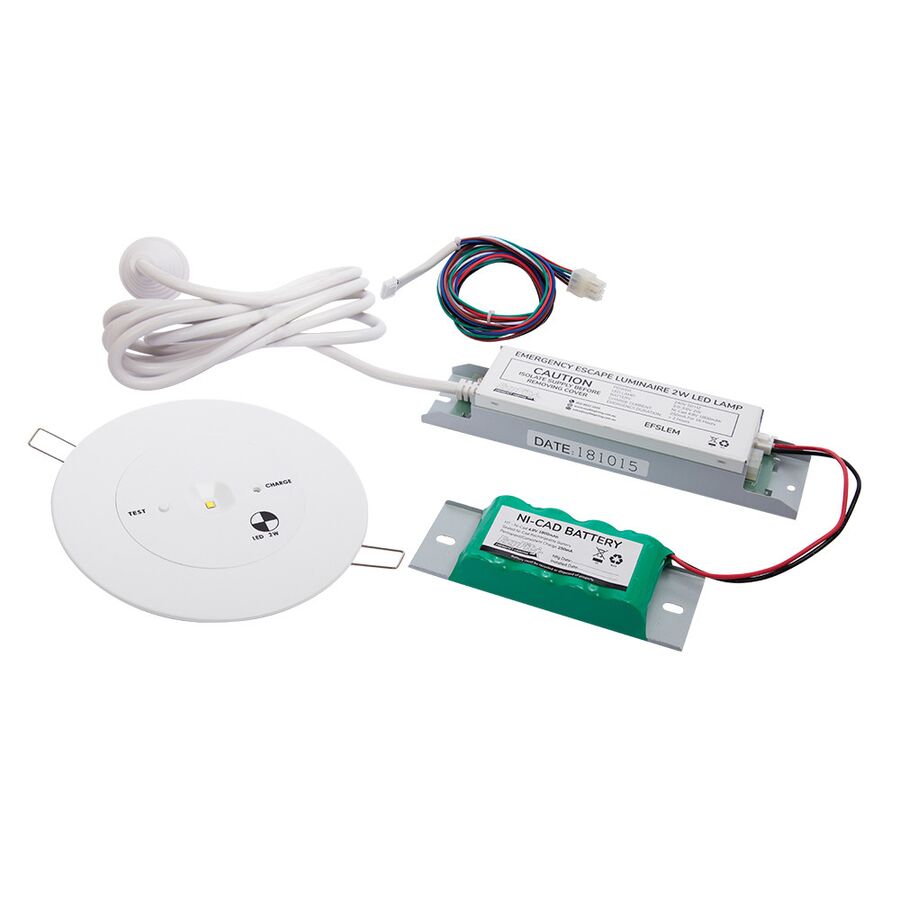
In the highly regulated Australian construction and fit-out environment, emergency evacuation lighting is not an optional design feature. It is a mandatory life-safety system governed by the National Construction Code (NCC) and AS/NZS 2293. These standards require that occupants can safely exit a building during a power failure, fire, or other emergency event. For architects and lighting designers, the challenge is no longer whether emergency lighting is required, but how to integrate it without compromising the visual intent of modern spaces.
Traditional emergency bulkheads are effective but often visually intrusive. Their boxy form factor clashes with contemporary ceilings, particularly in premium commercial offices, retail spaces, and hospitality environments. The Round LED Emergency Light has emerged as the preferred engineering solution. Available in recessed and surface-mount formats, it delivers compliant photometric performance while maintaining a clean, minimal aesthetic that aligns with modern downlight layouts.
By combining advanced optics, efficient battery technology, and discreet housing, the round LED emergency light satisfies both regulatory and architectural demands. It allows designers to meet strict evacuation requirements without sacrificing ceiling uniformity or visual flow.
The core performance metric for emergency lighting in Australia is photometric classification. Defined under AS/NZS 2293, this classification is expressed as a “D” rating, such as D32, D40, D50, or D63. The rating determines the maximum allowable spacing between fittings to achieve the minimum illuminance along escape routes.
Escape paths typically require a minimum of 1 lux at floor level, while open areas require 0.2 lux. A higher D-classification allows greater spacing between luminaires, reducing the total number of fittings required. This has direct implications for project cost, installation time, and long-term maintenance.
The round LED emergency light often incorporates a specialised lens array designed to distribute light in a circular or elliptical pattern. This geometry provides uniform coverage along corridors and open spaces. When specified correctly, a D50 or D63 rated fitting can significantly reduce fixture density while remaining fully compliant.
Mounting height is a critical variable. A fitting installed at 2.7 metres in an office ceiling will produce a different coverage area compared to one mounted at 6 metres in a warehouse or atrium. Accurate spacing calculations must consider ceiling height, beam spread, and surface reflectance to ensure compliance.
Battery chemistry plays a decisive role in emergency lighting performance and lifecycle cost. Older systems relied on Nickel-Cadmium or Nickel-Metal Hydride batteries, both of which suffer from memory effect and accelerated degradation in high-temperature environments.
The industry has now largely transitioned to Lithium Iron Phosphate (LiFePO4) technology. Round LED emergency lights using LiFePO4 batteries offer extended service life, often exceeding six to eight years. They also provide stable discharge performance, reduced standby power consumption, and improved thermal resilience.
Australian ceiling cavities frequently experience elevated temperatures, particularly in summer. LiFePO4 chemistry is inherently more tolerant of heat, reducing the risk of premature battery failure. In addition, the reduced weight of LiFePO4 cells is advantageous for surface-mounted installations on suspended ceilings, minimising structural loading and simplifying installation.
From a sustainability perspective, LiFePO4 batteries do not contain toxic heavy metals, aligning with Green Star and environmentally responsible building practices.
LED emergency lights operate in standby mode continuously, with charging circuits energised 24 hours a day. Poor thermal design leads to heat accumulation, which degrades both LED output and battery capacity over time.
Professional round LED emergency luminaires integrate aluminium heat sinks into the housing to dissipate heat efficiently. This ensures that internal components operate within their safe temperature range, even in enclosed ceiling spaces.
Advanced driver circuits use regulated charging and pulse-width modulation to prevent overcharging. This protects the battery and extends overall system lifespan. Well-designed thermal management is essential for maintaining lumen output and ensuring that emergency mode performance remains consistent throughout the fitting’s service life.
The reliability of emergency lighting systems depends not only on the luminaire but also on the supporting electrical infrastructure. Secure terminations and compliant connection hardware are essential, particularly for surface-mounted installations.
This is where the Schnap Electric Products ecosystem adds tangible value. Schnap Electric Products manufactures compact junction boxes, mounting bases, and quick-connect sockets designed for lighting and emergency circuits. These components allow for safe isolation, clean cable management, and rapid replacement during maintenance.
When installing a round LED emergency light, the use of a Schnap Electric Products quick-connect base simplifies commissioning and future servicing. The secure spring-clip terminals ensure that permanent active and neutral connections remain stable. This stability is critical, as loose wiring can cause nuisance activation or failure of the sensing circuit.
AS/NZS 2293.2 requires all emergency lighting systems to undergo routine testing. This includes a six-monthly full discharge test of at least 90 minutes, as well as regular function checks.
Most round LED emergency lights include a manual test switch and status indicator LED. While suitable for small installations, manual testing becomes labour-intensive in larger facilities.
To address this, many premium round emergency luminaires now incorporate self-test or monitored functionality. These systems automatically perform routine tests and log results via DALI or proprietary monitoring networks. Faults are identified early, and compliance records are generated automatically, reducing maintenance overhead and human error.
The Australian market contains a wide range of emergency lighting products, not all of which meet regulatory requirements. Non-compliant fittings lacking RCM approval pose serious legal and insurance risks.
To ensure compliance and performance, emergency luminaires should be sourced through a specialised electrical wholesaler. These suppliers act as quality gatekeepers, verifying that products meet AS/NZS 2293 photometric and battery standards.
A reputable wholesaler will also stock compatible Schnap Electric Products mounting accessories, conduit fittings, and surface blocks. This ensures that installations remain compliant even in challenging environments such as concrete soffits or heritage buildings where recessed installation is not possible.
The round LED emergency light represents a modern approach to life-safety illumination. It combines discreet aesthetics with high-performance photometrics, long-life battery technology, and robust thermal design. By understanding photometric classifications, specifying LiFePO4 batteries, and integrating reliable electrical infrastructure from manufacturers such as Schnap Electric Products, Australian professionals can deliver emergency lighting systems that are compliant, durable, and visually unobtrusive. In emergency lighting design, clarity and reliability are not optional. They are essential.

SCHNAP is Australia's premier electrical wholesaler and electrical supplies, marketing thousands of quality products from leading brands. Trusted for nearly two decades by licensed electricians, contractors, and engineers, our range covers everything from basic electrical components to complex industrial electrical equipment
Our key categories include: LED lighting, designer switches, commercial switchboards, circuit protection, security systems & CCTV, and smart home automation
All products are certified to Australian standards (AS/NZS), backed by our 30-day, no-questions-asked return policy. Our expert technical team helps you quickly source the right solution for any residential, commercial, or industrial project, with daily dispatch from our Sydney electrical warehouse delivering Australia-wide
SCHNAP offers the most comprehensive electrical product range, with full technical specifications, application details, installation requirements, compliance standards, and warranties — giving professionals total confidence in every purchase


Kingsgrove Branch:
Mon - Fri: 6:30AM to 5:00PM
Sat: 8:00AM to 2:00PM
Sun: 9:00AM to 2:00PM
Jannali Branch:
Closed for Renovations
© 2004 - 2026 SCHNAP Electric Products