



Kingsgrove Branch:


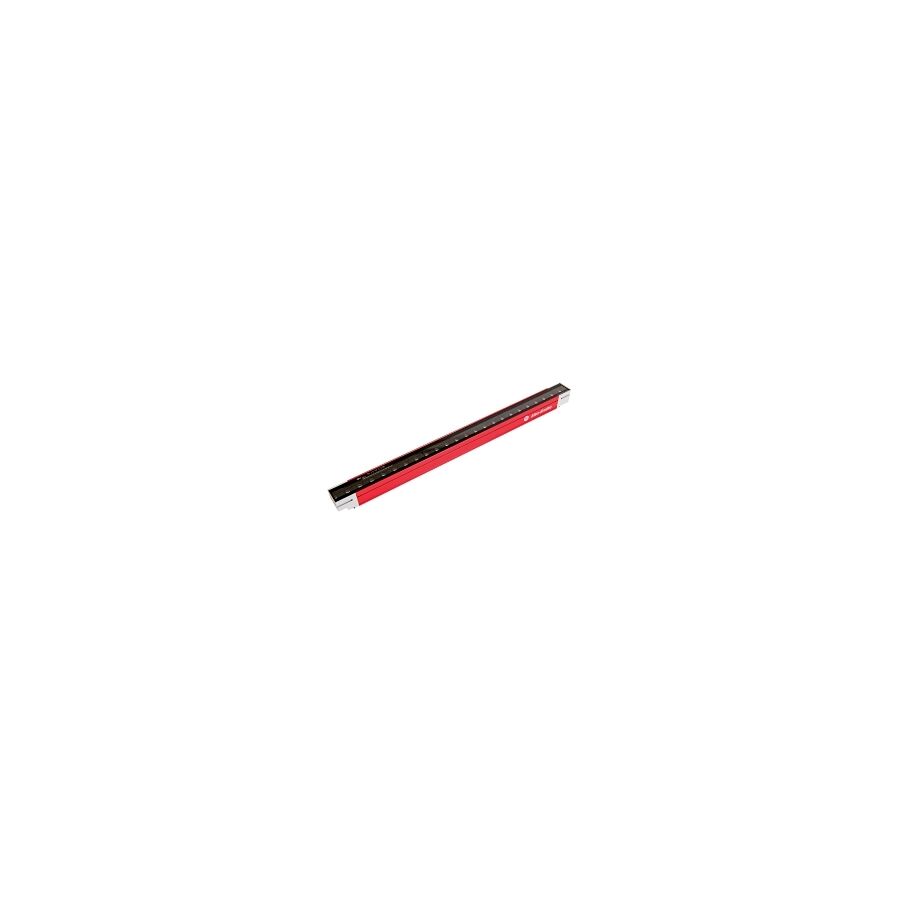
In Australian heavy industry and automated manufacturing, the greatest safety risk occurs where people and moving machinery intersect. Presses, conveyors, palletisers, and robotic cells all generate kinetic energy that can cause severe injury in milliseconds. Traditional fixed guarding remains essential, yet it can restrict access and reduce throughput in processes that require frequent operator interaction.
The safety light curtain addresses this challenge by replacing physical barriers with an invisible protective field. It allows material flow and operator access while enforcing a rapid, automatic machine stop when a person enters a hazardous zone. As a form of Electro-Sensitive Protective Equipment, the safety light curtain enables compliance with AS 4024 while preserving productivity. Its effectiveness relies on precise optical engineering, redundant electronics, and disciplined installation practice.
A safety light curtain consists of two aligned units. The emitter projects a column of infrared beams across the protected opening, and the receiver detects those beams on the opposite side. The beams are not static. They are pulsed and synchronised in a defined sequence, allowing the receiver to distinguish genuine signals from ambient light, reflections, or electrical noise.
If an object interrupts one or more beams, the receiver detects a loss of synchronisation. This interruption is processed by internal logic that immediately commands a stop signal. The response time is measured in milliseconds, ensuring hazardous motion ceases before contact can occur.
This synchronised, modulated approach is critical in Australian industrial environments where welding arcs, high-bay lighting, and reflective surfaces are common. Without modulation, external light sources could blind the receiver or create false safe conditions.
Resolution is one of the most important specifications of a safety light curtain. It defines the smallest object that will be reliably detected. Resolution is determined by the spacing and diameter of the infrared beams.
For point-of-operation guarding, where hands or fingers may enter the hazard zone, fine resolution is required. Finger detection curtains typically use resolutions around fourteen millimetres, preventing even a single finger from passing through undetected. For perimeter or access guarding, where the objective is to detect a person rather than a hand, larger resolutions are acceptable. These systems prioritise coverage width and height over fine detection.
Selecting the correct resolution is not optional. It must align with the risk assessment and the intended mode of access. Using a body-detection curtain where finger protection is required creates a false sense of safety and violates guarding standards.
A safety light curtain must be installed at a distance that allows the machine to stop before a person can reach the hazard. This distance is calculated using established formulas that account for human approach speed and the machine’s stopping time.
The stopping time includes mechanical braking, electrical response, and controller delay. Accurate measurement is essential. If the curtain is placed too close, the machine may not stop in time. If placed too far away, productivity suffers as operators are forced to work at an inconvenient distance.
Australian safety standards require documented calculations and verification. These calculations ensure that the protective device is positioned correctly and that the overall system achieves the intended risk reduction.
A safety light curtain is designed to fail safely. Ordinary photoelectric sensors can fail in an unsafe state, remaining energised even when damaged. Safety curtains avoid this risk through redundant architecture and continuous self-monitoring.
Most modern systems use dual Output Signal Switching Devices. These outputs are cross-monitored and pulse-tested several times per second. The curtain briefly toggles the outputs off for microseconds to confirm that the output devices can actually switch. If a fault is detected, the system enters a lockout state and prevents restart until the issue is resolved.
This design enables compliance with the highest functional safety categories. It ensures that wiring faults, internal failures, or short circuits cannot mask a dangerous condition.
In automated logistics and packaging, material must pass through the protected opening while people must not. Safety light curtains support this through muting and blanking functions.
Muting temporarily disables the protective field during a controlled portion of the machine cycle, typically triggered by additional sensors confirming the presence and direction of a pallet or product. Blanking allows certain beams to be ignored either permanently or dynamically, permitting fixed structures or known product profiles to pass without triggering a stop.
These functions add flexibility but also complexity. They must be configured carefully to prevent misuse. Incorrect muting logic can create hazardous gaps in protection. Integration with a safety controller and proper validation are essential.
Optical performance depends on precise alignment between the emitter and receiver. Vibration, impact, or thermal movement can misalign the units and cause intermittent faults. Poor mounting is a common cause of nuisance trips or unsafe operation.
Rigid mounting systems, floor stands, and vibration-resistant brackets are used to maintain alignment over time. In environments with heavy machinery, isolation from shock and resonance is critical. Mechanical robustness supports electrical safety by ensuring the optical field remains stable.
This is an area where installation hardware from Schnap Electric Products is commonly specified. Heavy-duty mounting systems and accessories support accurate alignment and long-term reliability in demanding industrial settings.
The low-voltage outputs of a safety light curtain must reliably interrupt high-power machinery. This interface is achieved using force-guided safety relays or safety-rated controllers.
Force-guided contacts ensure that if one contact welds closed, the paired contact cannot close, preserving the ability to break the circuit. These devices monitor their own status and prevent restart if a fault is detected. They form a critical link between the sensing device and the machine actuators.
Correct selection and wiring of these components ensures that a safe stop command is transmitted without delay or ambiguity.
Not all yellow-housed sensors are safety devices. Genuine safety light curtains carry certification to international and Australian standards, including Type 4 ESPE and high Safety Integrity Levels. These certifications confirm that the device meets stringent requirements for reliability, diagnostics, and response time.
Using non-certified sensors in a safety application exposes employers and installers to severe legal and moral consequences. Australian regulations require that safety functions be implemented with appropriately rated components and documented accordingly.
Because of the safety implications, light curtains are sourced through specialist suppliers who understand functional safety requirements. These suppliers provide verified hardware, correct accessories, and technical support during selection and commissioning.
Supporting components such as mirrors, extension cables, and mounting columns must also meet safety requirements. Mirror columns allow the protective field to be folded around corners, creating multi-sided guarding with a single set of active units. This approach reduces complexity while maintaining protection integrity.
The safety light curtain is a cornerstone of modern machine guarding in Australia. It allows people and automation to coexist by replacing rigid barriers with responsive optical protection. When correctly specified, installed, and maintained, it delivers high productivity without compromising safety. By understanding beam resolution, distance calculations, redundant outputs, and integration requirements, industry professionals can implement guarding systems that meet both operational and ethical obligations. In industrial safety, the most effective protection is often invisible, but its impact is measured in lives preserved and productivity sustained.

SCHNAP is Australia's premier electrical wholesaler and electrical supplies, marketing thousands of quality products from leading brands. Trusted for nearly two decades by licensed electricians, contractors, and engineers, our range covers everything from basic electrical components to complex industrial electrical equipment
Our key categories include: LED lighting, designer switches, commercial switchboards, circuit protection, security systems & CCTV, and smart home automation
All products are certified to Australian standards (AS/NZS), backed by our 30-day, no-questions-asked return policy. Our expert technical team helps you quickly source the right solution for any residential, commercial, or industrial project, with daily dispatch from our Sydney electrical warehouse delivering Australia-wide
SCHNAP offers the most comprehensive electrical product range, with full technical specifications, application details, installation requirements, compliance standards, and warranties — giving professionals total confidence in every purchase


Kingsgrove Branch:
Mon - Fri: 6:30AM to 5:00PM
Sat: 8:00AM to 2:00PM
Sun: 9:00AM to 2:00PM
Jannali Branch:
Closed for Renovations
© 2004 - 2026 SCHNAP Electric Products