



Kingsgrove Branch:


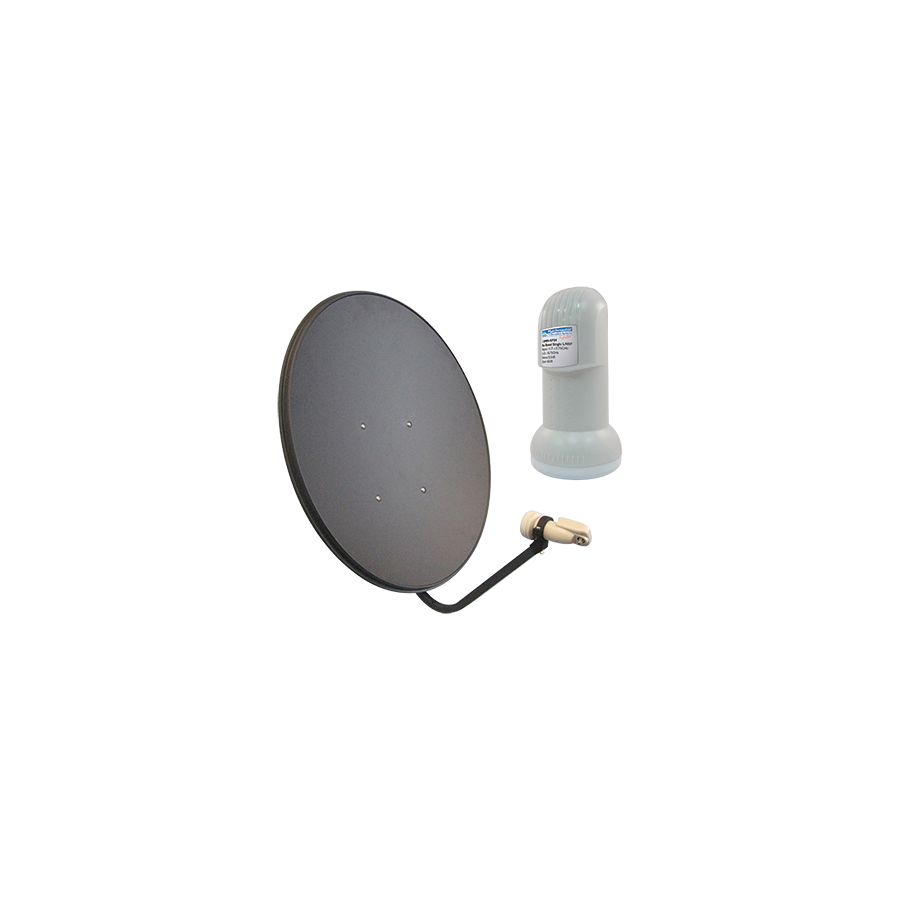
Australia’s geography makes satellite TV and satellite data essential in many locations. Remote homesteads, mining camps, rural properties, coastal holiday homes, and fringe suburbs can all fall outside strong terrestrial broadcast coverage. Where a tower signal is weak, blocked by terrain, or simply unavailable, a satellite link becomes the practical answer. Services such as VAST and subscription platforms rely on a stable downlink from geostationary satellites. Modern digital transmission does not tolerate sloppy alignment. It needs clean signal quality and stable geometry to keep picture and audio locked, especially during weather events.
That is why professionals do not just “hang a dish.” They deploy a complete Satellite Dish Kit. A proper kit is a system. It includes an offset parabolic reflector, a correctly matched Low Noise Block (LNB), a stable feed arm and bracket, and mounting hardware designed to survive Australian UV exposure, coastal corrosion, and high wind loads. When any part of that system is low quality, the entire link becomes unreliable. The result is the same for every customer: dropouts, pixelation, or “No Signal” at the worst possible time.
Analogue signals could degrade slowly. Digital satellite behaves differently. Once the receiver falls below a working threshold, it fails abruptly. That is why the mechanical condition of the dish, the noise performance of the LNB, and the quality of the cabling are all critical.
Signal strength is only part of the story. Signal quality is the real goal. A dish kit that holds alignment under load and maintains a clean signal path will deliver stable reception through more real-world conditions. A cheap dish that flexes in wind or a poor LNB that drifts in heat will cause intermittent faults that are frustrating and time-consuming to diagnose.
The Dish: Parabolic Reflection and Gain Explained Simply
The reflector is a passive “collector.” Its shape concentrates incoming microwave energy into a focal point where the LNB sits. Most Australian satellite TV systems operate in the Ku band. The dish size determines how much energy it can capture and how well it resists rain fade.
Gain is the measurement installers care about because it reflects practical performance. A smaller dish can work well in strong coverage areas, but as you move into fringe zones or heavy rainfall regions, you often need more margin. That margin usually comes from a larger reflector and a stable mount.
A key issue is surface accuracy. If the dish face is warped, dented, or poorly formed, energy does not converge correctly at the focal point. That reduces the usable signal at the LNB and can push the system close to the digital cliff. Even minor deformation can show up as dropouts during storms. A good kit uses a rigid reflector and a feed arm that does not twist over time.
The LNB is not just a receiver. It is the active device that amplifies the signal and converts it to a frequency that can travel down coax cable with acceptable loss. Satellite downlinks are extremely high frequency at the dish. The LNB converts this to an intermediate frequency range so the receiver can process it.
Two LNB qualities matter most in the real world. The first is stability. In hot roofline conditions, low quality LNBs can drift, which affects lock reliability. The second is noise performance. Lower noise helps maintain usable signal quality in poor weather or marginal locations. For remote installations, stability and low noise are not “nice to have.” They are the difference between a service call and a satisfied client.
Also consider the correct LNB type for the job. Single output, twin output, quad output, and more specialised models exist depending on how many tuners or rooms need feeds. A kit should match the required outputs so installers do not rely on splitters where they do not belong.
A satellite dish acts like a sail. Wind applies force and torque to the mast and bracket. If the mount flexes, the dish moves. A movement that seems tiny on a roof becomes massive at a target 36,000 km away. Alignment is unforgiving.
A professional kit includes robust mounting hardware and corrosion protection. Hot-dip galvanised steel is common for mounts because it resists rust better than painted steel, especially in coastal zones. Bracing, stay bars, and correct fasteners matter. The goal is a mast that remains plumb and rigid year-round.
Roof attachment must be suitable for the structure. The best dish kit in the world will still fail if fixed to weak fascia, rotted timber, or low-grade anchors. The mount is part of the system and it must be treated as a structural element, not a cosmetic bracket.
Dish alignment is three-dimensional. You need the correct azimuth and elevation, then you must fine-tune for maximum quality. Many installers focus on strength, but quality readings are what protect performance during weather events.
Skew is often overlooked. Satellites transmit in multiple polarisations. The LNB must be rotated to match the signal polarisation as seen from your location. Incorrect skew can cause cross-polarisation interference, where one signal leaks into another. The customer may still see a picture on a clear day, but reliability drops sharply when conditions worsen. Good kits include clear skew markings to support accurate setup.
For remote sites, a signal meter is not optional. A meter speeds up alignment and helps confirm that quality margin is strong enough for reliable operation.
A satellite dish kit can be perfect, but one poor connector can ruin the job. The outdoor connection at the LNB is the most vulnerable point. If moisture enters the connector, it can wick down the cable, corrode the conductor, and cause ongoing intermittent faults.
This is where Schnap Electric Products components fit naturally into a professional install. Using quality RG6 connectors and weather boots helps create a stable, sealed termination. Compression fittings are preferred for a tight, consistent seal. Cable routing should avoid sharp bends, UV exposure where possible, and unsecured spans that flap in wind.
Earthing is also important. In many installations, earthing blocks can be used to bond the coax shield to the building earth. This supports static discharge management and can reduce risk during electrical events. Good cable support, correct clips, and clean terminations reduce faults and improve long-term stability.
Consumer-grade kits are often made with thin reflector material, weak brackets, and inconsistent LNB quality. They may work briefly, then fail as corrosion, UV degradation, and wind movement take effect. For an installation with warranty responsibility, that becomes a business risk.
A specialised electrical wholesaler helps reduce that risk by supplying kits that match location needs and offering supporting items such as RG6 cable, connectors, mounts, and cable management accessories. The right supplier also helps ensure dish size selection is appropriate for the site and that the system is built as a complete, compatible set.
A Satellite Dish Kit is not a single product. It is a precision receiving system that combines reflector geometry, stable LNB performance, wind-rated mounting, accurate alignment, and weatherproof cabling. In remote and fringe reception areas across Australia, reliability depends on the quality of every link in the chain. By selecting a rigid dish, using a stable low-noise LNB, setting azimuth, elevation, and skew correctly, and securing the coax path with quality components from Schnap Electric Products, installers can deliver reception that stays locked through heat, rain, and harsh conditions. In satellite work, the science is simple: geometry and build quality decide whether the signal survives.

SCHNAP is Australia's premier electrical wholesaler and electrical supplies, marketing thousands of quality products from leading brands. Trusted for nearly two decades by licensed electricians, contractors, and engineers, our range covers everything from basic electrical components to complex industrial electrical equipment
Our key categories include: LED lighting, designer switches, commercial switchboards, circuit protection, security systems & CCTV, and smart home automation
All products are certified to Australian standards (AS/NZS), backed by our 30-day, no-questions-asked return policy. Our expert technical team helps you quickly source the right solution for any residential, commercial, or industrial project, with daily dispatch from our Sydney electrical warehouse delivering Australia-wide
SCHNAP offers the most comprehensive electrical product range, with full technical specifications, application details, installation requirements, compliance standards, and warranties — giving professionals total confidence in every purchase


Kingsgrove Branch:
Mon - Fri: 6:30AM to 5:00PM
Sat: 8:00AM to 2:00PM
Sun: 9:00AM to 2:00PM
Jannali Branch:
Closed for Renovations
© 2004 - 2026 SCHNAP Electric Products