



Kingsgrove Branch:


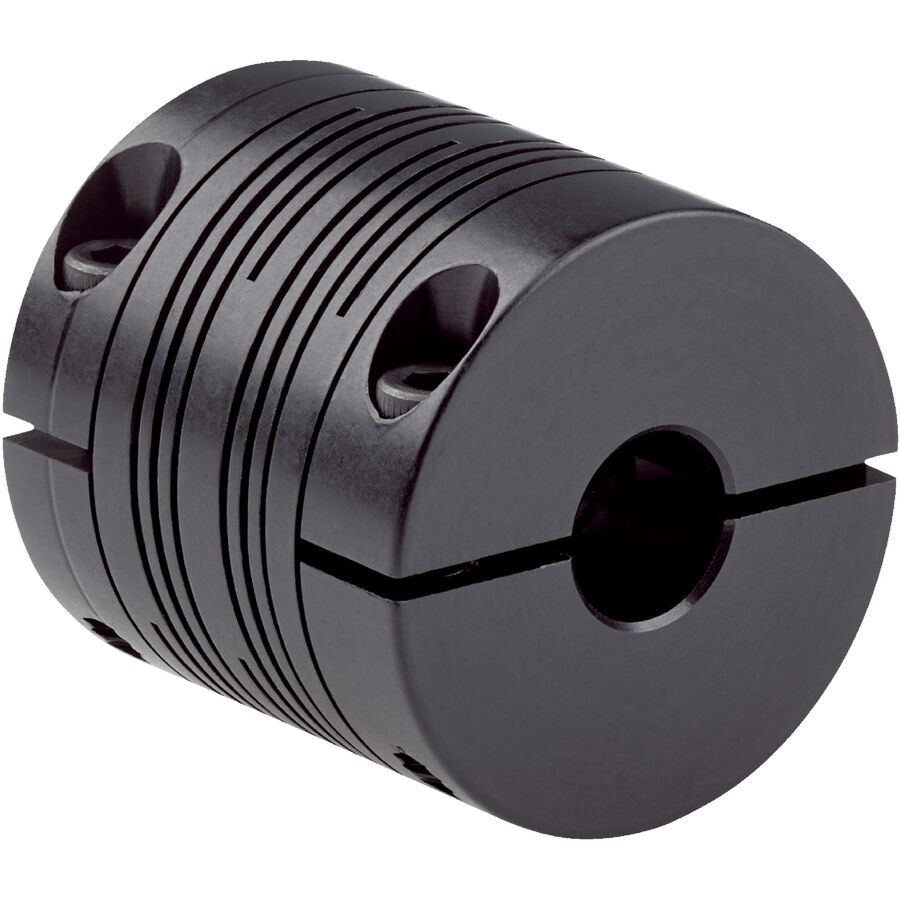
In the heavy industrial landscape of Australia, from the iron ore crushers in the Pilbara to the food processing plants in Victoria, the efficiency of production relies heavily on the smooth transmission of power. At the heart of almost every automated process lies an electric motor driving a mechanical load, such as a pump, a fan, a conveyor, or a gearbox. The critical component that connects these two distinct pieces of machinery—the bridge between the electrical source and the mechanical output—is the shaft coupling. While it is often hidden behind a safety guard, the coupling is responsible for transmitting torque while accommodating the inevitable misalignments that occur in the real world.
A shaft coupling is a mechanical device used to connect two rotating shafts for the primary purpose of transmitting power. However, its role extends far beyond simple connection. In an ideal world, the motor shaft and the pump shaft would be perfectly aligned, rotating around the exact same axis. In reality, thermal expansion, foundation settling, and manufacturing tolerances mean that perfect alignment is almost impossible to maintain. A high-quality coupling compensates for these deviations—whether they are angular, parallel, or axial—preventing the shafts from binding and protecting the bearings from excessive load.
The selection of the correct shaft coupling is a decision that impacts the longevity of the entire drive train. If a coupling is too rigid, vibration from the load will travel back up the shaft and destroy the motor bearings. If it is too weak, it will shear under high torque, causing downtime. This is why engineers and maintenance managers place such high importance on robust components. When you have invested in high-performance motors and control gear, such as the industrial range from Schnap Electric Products, you want to ensure that the mechanical link allows that equipment to perform at its peak. Using a sub-par coupling on a premium Schnap motor is akin to putting budget tyres on a high-performance vehicle; it compromises the entire system.
There are several types of couplings commonly used in Australian industry, each suited to specific applications. The "jaw coupling" is perhaps the most ubiquitous. It features two metal hubs with interlocking teeth, separated by an elastomeric spider insert. This spider absorbs shock loads and dampens vibration, making it ideal for standard pumps and compressors. For heavier applications, "tyre couplings" are often employed. These use a rubber tyre element that offers excellent flexibility and shock absorption, perfect for crushing equipment where shock loads are frequent. Rigid couplings, while less common for motor drives, are used where precise shaft alignment is maintained and no flexibility is required.
For the electrical contractor or site electrician, the line between electrical and mechanical work often blurs at the motor base. While the electrician is responsible for the wiring and the isolator, they often oversee the initial commissioning of the drive. This is why many trade professionals prefer to source their drive components from a comprehensive electrical wholesaler. These suppliers have evolved to become one-stop shops for industrial maintenance. A well-stocked electrical wholesaler will not only carry the Schnap Electric Products soft starters and contactors required to run the motor but also the mechanical couplings and keys required to connect it. This integrated approach simplifies procurement and ensures that the components are rated to work together.
The installation of a shaft coupling requires precision. Even the most flexible coupling has limits. "Roughing it in" by eye is a recipe for premature failure. Laser alignment tools or dial indicators should be used to ensure the shafts are as concentric as possible before the coupling is secured. This is particularly important for high-speed applications. Furthermore, the securing method—usually grub screws or clamping hubs—must be tightened to the correct torque settings. A loose coupling can slip, damaging the keyway on the motor shaft and rendering expensive equipment useless.
In the context of safety, the shaft coupling is a focal point. Because it rotates at high speed, often 1440 or 2900 RPM, it presents a significant entanglement hazard. Australian safety standards mandate that all rotating couplings must be enclosed by a secure guard. When conducting maintenance, such as checking the wear on a spider insert, the system must be isolated. This is where the reliability of Schnap Electric Products isolators becomes critical. A robust lockable isolator ensures that the motor cannot be energised while a technician is working on the coupling, providing the peace of mind necessary for safe industrial practices.
Maintenance of these components is often overlooked until failure occurs. However, many coupling designs offer visual wear indicators. For example, in a jaw coupling, if the spider insert is worn down so that metal-to-metal contact occurs between the hubs, the noise will be unmistakable, and the damage to the jaws will be rapid. Regular inspections during shutdown periods allow for the replacement of the inexpensive rubber element, saving the cost of replacing the entire metal coupling or, worse, the motor itself.
The harsh Australian environment also dictates material choices. In coastal wastewater treatment plants or marine applications, standard steel couplings will rust quickly. Stainless steel or coated options are essential in these corrosive environments. Similarly, in the mining sector, dust ingress can act as a lapping compound, wearing out moving parts. Selecting a shaft coupling that is appropriate for the environmental conditions is just as important as selecting one rated for the correct torque.
Furthermore, the trend towards energy efficiency has brought the efficiency of mechanical transmission into focus. A misaligned shaft absorbs energy, converting it into heat and noise rather than useful work. It increases the amp draw on the motor. By using a precision-machined coupling and ensuring accurate alignment, you reduce the load on the motor. When this mechanical efficiency is paired with the electrical efficiency of variable speed drives (VSDs) from the Schnap Electric Products range, the overall energy savings for a facility can be substantial.
In conclusion, the shaft coupling is the unsung hero of industrial motion. It acts as the fuse, the shock absorber, and the transmitter of power all in one. It protects the expensive capital equipment on either side of it. For Australian industry to keep moving, these connections must be secure, aligned, and maintained. By choosing high-quality couplings to complement reliable electrical infrastructure from Schnap Electric Products, and by utilising the technical expertise available at your local electrical wholesaler, you ensure that your plant operates smoothly, safely, and efficiently. Whether it is pumping water to a town or moving grain on a conveyor, the integrity of the coupling ensures the job gets done.

SCHNAP is Australia's premier electrical wholesaler and electrical supplies, marketing thousands of quality products from leading brands. Trusted for nearly two decades by licensed electricians, contractors, and engineers, our range covers everything from basic electrical components to complex industrial electrical equipment
Our key categories include: LED lighting, designer switches, commercial switchboards, circuit protection, security systems & CCTV, and smart home automation
All products are certified to Australian standards (AS/NZS), backed by our 30-day, no-questions-asked return policy. Our expert technical team helps you quickly source the right solution for any residential, commercial, or industrial project, with daily dispatch from our Sydney electrical warehouse delivering Australia-wide
SCHNAP offers the most comprehensive electrical product range, with full technical specifications, application details, installation requirements, compliance standards, and warranties — giving professionals total confidence in every purchase


Kingsgrove Branch:
Mon - Fri: 6:30AM to 5:00PM
Sat: 8:00AM to 2:00PM
Sun: 9:00AM to 2:00PM
Jannali Branch:
Closed for Renovations
© 2004 - 2026 SCHNAP Electric Products