



Kingsgrove Branch:


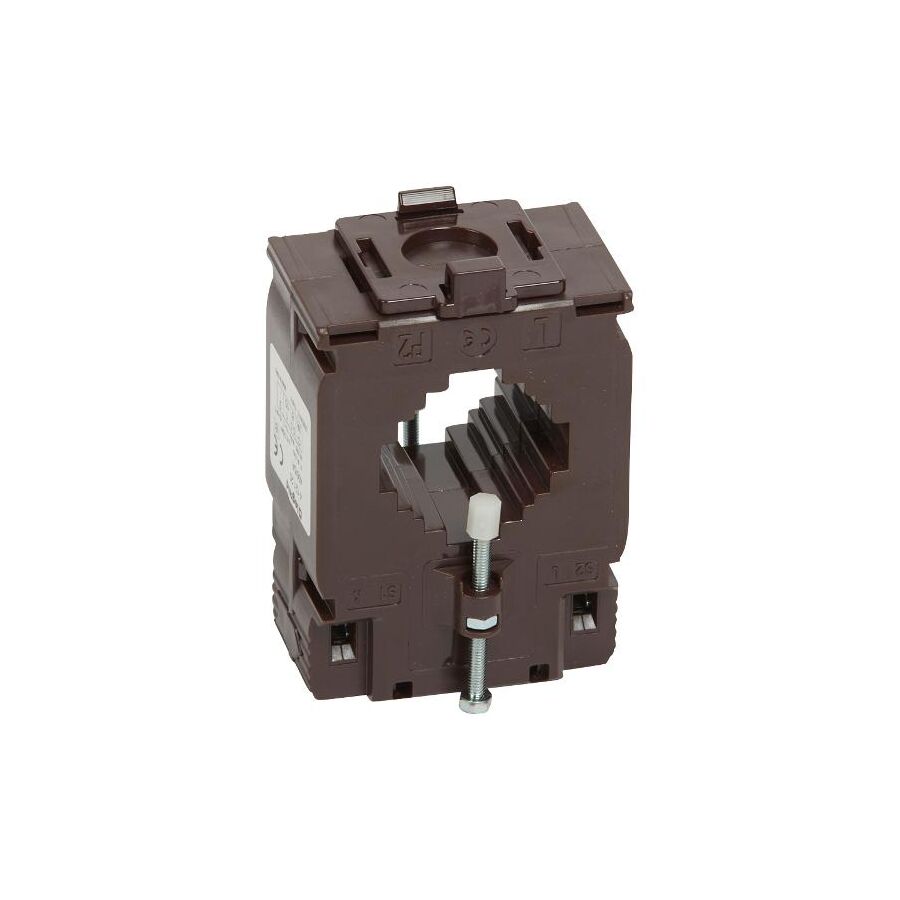
In the contemporary landscape of Australian facility management and energy auditing, accurate electrical measurement has shifted from a best practice to a regulatory expectation. National frameworks such as the National Construction Code (NCC) Section J now require energy monitoring for many commercial developments, while NABERS and Green Star ratings actively reward granular sub-metering. For landlords, facility managers, and energy consultants, the quality of consumption data directly influences compliance, operating costs, and asset value.
For residential circuits and light commercial loads below 80–100 Amps, direct-connect meters remain practical. Beyond this threshold, however, direct measurement becomes unsafe and technically unworkable. Large distribution boards, industrial machinery, and mechanical services routinely operate at currents that exceed the physical and thermal limits of direct-wired meters. The engineering solution to this challenge is the Single Phase Current Transformer (CT). This instrument transformer allows very large primary currents to be scaled down to a safe, standardised secondary signal—typically 5A or 1A—without exposing metering equipment or technicians to dangerous energy levels.
The operation of a current transformer is based on electromagnetic induction. Unlike voltage transformers, which connect across a potential difference, a CT operates in series with the load. In most modern switchboards, the primary winding is simply the live conductor or busbar passing through the centre of a toroidal magnetic core.
As alternating current flows through this primary conductor, it generates a magnetic field proportional to the current magnitude. The ferromagnetic core captures this magnetic flux and induces a proportional current in the secondary winding. The transformation ratio is fixed by design. For example, a 200/5 CT produces 5 Amps on its secondary when 200 Amps flows through the primary. This predictable scaling allows sensitive electronic meters to monitor large electrical loads without being subjected to the heat, force, or magnetic stress of the full line current.
This isolation is fundamental to safety. The CT provides galvanic separation between the high-energy power circuit and the low-energy measurement circuit, enabling accurate monitoring without direct electrical connection.
Not all current transformers are suitable for all applications. CTs are categorised by accuracy class, and this classification determines where they can be legally and technically deployed.
For general load indication and basic monitoring, Class 1 accuracy (±1%) is often sufficient. For billing, tenant sub-metering, and formal energy reporting, higher precision is required. In Australia, Class 0.5 and Class 0.5S are widely specified for these purposes. The “S” designation is particularly important. It guarantees accuracy at very low load levels, typically down to 1% of rated current. This is critical in modern buildings where overnight or off-peak loads can be minimal but still need to be measured accurately.
Installing a high-precision meter with a lower-grade CT undermines the entire measurement chain. The system accuracy is always limited by the weakest component. Engineering consultants must therefore specify CTs and meters as a matched pair to ensure compliance with National Measurement Institute (NMI) requirements.
One of the most common design oversights in metering installations is underestimating CT burden. Burden is measured in Volt-Amperes (VA) and represents the load that the CT secondary must drive. This includes the meter input impedance and the resistance of the secondary cabling.
If a meter is installed remotely—such as in a communications room or BMS panel—the resistance of long cable runs can quickly exceed the CT’s rated burden. When this occurs, the CT core saturates. Saturation distorts the secondary waveform and causes severe under-reading of current, sometimes by double-digit percentages.
High-quality CTs are available with increased burden ratings specifically to support longer cable runs. Schnap Electric Products supplies a range of single phase current transformers designed to maintain accuracy across extended secondary circuits, ensuring that the signal reaching the meter or BMS remains true to the actual load.
Current transformers are directional devices. Each unit is marked with primary (P1, P2) and secondary (S1, S2) terminals. By convention, P1 faces the supply side and P2 faces the load.
If a CT is installed in reverse orientation, the secondary current will be phase-shifted by 180 degrees. Modern digital meters interpret this as negative power flow. In a consumption-only installation, this can result in energy being subtracted instead of accumulated. In mixed systems with on-site generation, polarity errors can completely invalidate reporting.
Correct orientation is therefore essential during installation and commissioning. Clear labelling, consistent wiring practices, and verification during energisation are non-negotiable steps in professional metering work.
The most critical safety rule associated with current transformers is simple and absolute: the secondary circuit must never be left open while the primary conductor is energised.
A CT behaves like a constant current source. If the secondary circuit is opened, the transformer attempts to drive current through infinite resistance. The result is rapid core saturation and the generation of extremely high voltages across the secondary terminals. These voltages can reach kilovolt levels, posing a serious risk of electric shock, insulation breakdown, and equipment damage.
To manage this hazard, professional switchboards incorporate test blocks or shorting links. These devices allow technicians to short-circuit the CT secondary before disconnecting a meter. Schnap Electric Products offers purpose-designed shorting and test facilities that make maintenance safe and repeatable, even in high-current environments.
In high-current switchboards, mechanical forces during fault conditions can be significant. CTs must be securely mounted to prevent movement that could compromise insulation distances or damage secondary wiring.
Proper mounting brackets, busbar clamps, and strain relief are essential. Quality manufacturers design CT housings to withstand vibration, thermal cycling, and magnetic forces without cracking or deforming. Mechanical stability directly contributes to measurement stability over the life of the installation.
The CT market includes a wide range of products with varying levels of quality and certification. Poor core metallurgy, inconsistent winding techniques, and inadequate testing can result in early saturation, phase error, and long-term drift.
To protect revenue and compliance outcomes, switchboard builders and energy consultants source CTs through electrical wholesaler. These suppliers verify ratio accuracy, phase displacement, and compliance with Australian and international standards. Individual test certificates and traceability are hallmarks of professional-grade metering components.
The single phase current transformer is the translator between raw electrical power and actionable energy data. It enables safe, accurate measurement of large currents that would otherwise be inaccessible to modern monitoring systems. By understanding inductive scaling, respecting burden limits, enforcing polarity discipline, and applying robust safety practices with hardware from manufacturers such as Schnap Electric Products, Australian industry professionals can deliver metering installations that are accurate, compliant, and commercially sound. In the economics of energy, precision is not optional—it is profit.

SCHNAP is Australia's premier electrical wholesaler and electrical supplies, marketing thousands of quality products from leading brands. Trusted for nearly two decades by licensed electricians, contractors, and engineers, our range covers everything from basic electrical components to complex industrial electrical equipment
Our key categories include: LED lighting, designer switches, commercial switchboards, circuit protection, security systems & CCTV, and smart home automation
All products are certified to Australian standards (AS/NZS), backed by our 30-day, no-questions-asked return policy. Our expert technical team helps you quickly source the right solution for any residential, commercial, or industrial project, with daily dispatch from our Sydney electrical warehouse delivering Australia-wide
SCHNAP offers the most comprehensive electrical product range, with full technical specifications, application details, installation requirements, compliance standards, and warranties — giving professionals total confidence in every purchase


Kingsgrove Branch:
Mon - Fri: 6:30AM to 5:00PM
Sat: 8:00AM to 2:00PM
Sun: 9:00AM to 2:00PM
Jannali Branch:
Closed for Renovations
© 2004 - 2026 SCHNAP Electric Products