

Kingsgrove Branch:


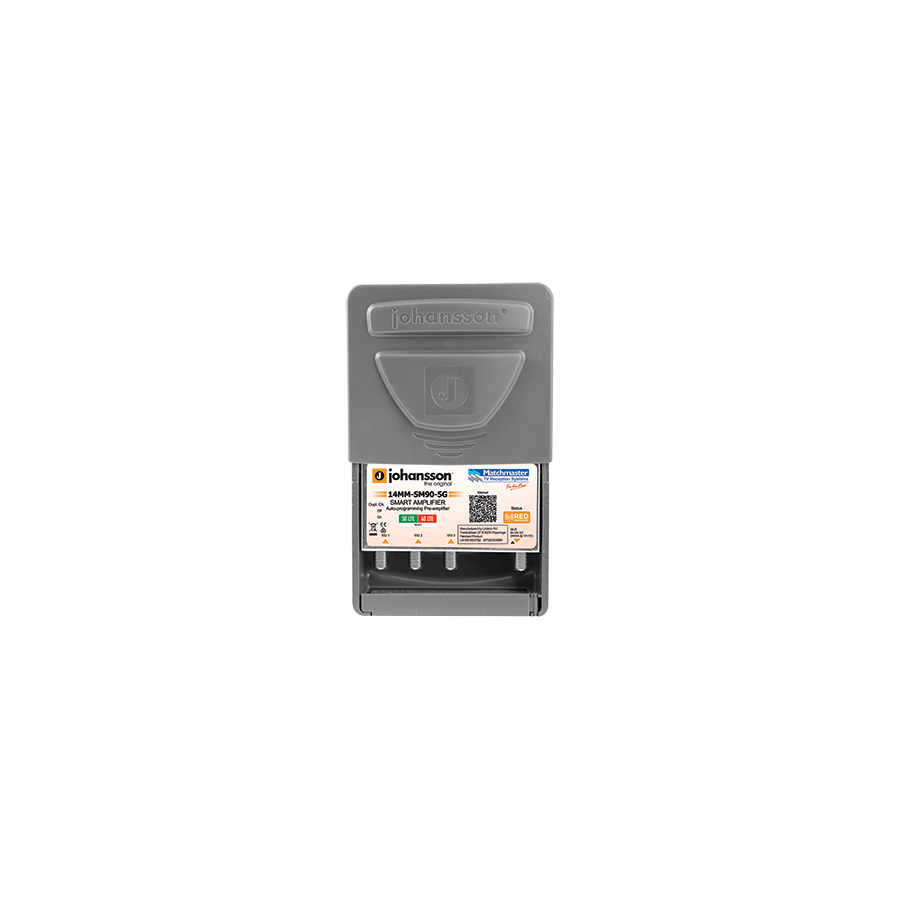
Fluctuating signal levels represent the single greatest challenge to reliable Digital Terrestrial Television (DVB-T2) reception in Australia. Unlike the analogue era, where a weak signal resulted in a gradually degrading picture, digital signals operate on the "digital cliff" principle. A signal that varies by just a few decibels due to atmospheric conditions, tidal fading, or tree movement can cause the Bit Error Rate (BER) to spike, resulting in pixelation or a complete "No Signal" event. Traditional fixed-gain amplifiers often exacerbate this issue by amplifying strong local channels to the point of saturation while failing to lift weaker distant channels above the noise floor. The engineering solution to this disparity is the deployment of intelligent signal processing at the antenna terminal. The Smart Masthead Amplifier has revolutionised MATV and residential reception by actively monitoring and equalising input levels in real-time, ensuring a balanced and stable output regardless of the input volatility.
The Limitation of Fixed Gain Topology
Standard amplification hardware operates on a "garbage in, garbage out" philosophy. If a rooftop antenna receives a powerful signal from a nearby 4G tower and a weak signal from a distant TV transmitter, a traditional amplifier will boost both equally. The result is often tuner overload (intermodulation distortion) on the strong frequency, rendering the television unable to decode the stream.
Smart amplifiers fundamentally alter this dynamic by utilising Automatic Gain Control (AGC) circuitry for individual channel clusters. These devices scan the RF spectrum upon initialisation, identifying the carrier strength of each multiplex. The internal logic then applies independent gain or attenuation to each channel group. This process, known as channel levelling or equalisation, ensures that every channel—whether it be the strong ABC VHF transmission or a weaker UHF commercial channel—exits the amplifier at a uniform, pre-set output level (typically around 85dBµV). This output stability protects the downstream distribution network from saturation and guarantees optimal tuner performance.
Spectral Hygiene: 5G and LTE Rejection
Radio Frequency (RF) interference has become increasingly aggressive with the reallocation of the broadcasting spectrum. The "Digital Dividend" has seen the 700MHz and 800MHz bands, previously occupied by television services, auctioned off to mobile telecommunications carriers for 4G and 5G networks.
A masthead amplifier located in close proximity to a mobile base station acts as a high-gain antenna for this interference. Without sophisticated filtering, the mobile data signal can overwhelm the TV signal. Smart masthead amplifiers integrate sharp SAW (Surface Acoustic Wave) filters that aggressively reject frequencies above 694MHz. Unlike passive in-line filters which introduce insertion loss, the active filtering within a smart amp maintains the integrity of the desired TV band while creating a "spectral wall" against the adjacent mobile data noise.
Connectivity and Environmental Protection
Installing active electronics on a rooftop exposes them to the harshest elements of the Australian climate, from blistering UV radiation to driving saline rain. The longevity of the installation depends heavily on the enclosure quality and the connection interface.
Reliability starts at the F-connector. A corroded connector changes the impedance of the line, creating standing waves (VSWR) that can confuse the smart amplifier's auto-setup routine. Schnap Electric Products supports this critical interface with high-performance compression F-connectors and weather-proof boots. These Schnap Electric Products fittings are engineered to provide 360-degree electrical contact and a watertight seal, ensuring that the 75-ohm impedance is maintained. Furthermore, Schnap Electric Products UV-stabilised cable ties and mounting accessories ensure that the amplifier housing remains securely fixed to the mast, preventing wind-induced fatigue on the coaxial cables.
Power Injection and DC Passthrough
Active components require energy. Smart amplifiers are powered via the coaxial cable itself, utilising a DC voltage (typically 12V or 24V) injected from a power supply unit (PSU) located inside the building.
System design must account for DC passthrough. If the distribution network includes splitters between the PSU and the masthead, these splitters must be "power pass" capable on at least one leg. A common fault finding scenario involves a technician replacing an amplifier only to find it fails to power up because a non-compliant splitter is blocking the DC path. Modern smart amps often feature LED status indicators visible from the ground or through the housing, providing immediate visual confirmation that power is reaching the unit and that the AGC logic is operational.
Procurement and Technical Verification
Selecting the correct smart amplifier is not a one-size-fits-all process. Variations exist regarding input numbers (VHF/UHF combined vs separate inputs) and maximum output capabilities. Using a device with insufficient output for a large multi-storey home will result in signal starvation at the furthest outlet.
To ensure the hardware matches the specific RF environment of the site, professional antenna installers procure their equipment through a specialised electrical wholesaler. These suppliers provide access to technical data sheets that detail the gain figures, noise figures, and maximum input levels of the device. By sourcing genuine hardware through these professional channels, contractors ensure they are installing equipment that is fully compliant with Australian electromagnetic compatibility (EMC) standards and capable of withstanding the rigours of the local RF landscape.
Conclusion
The transition to smart amplification represents a paradigm shift in reception technology. It moves the industry away from manual gain adjustments and guesswork towards an automated, mathematically precise method of signal management. By balancing carrier levels at the source, rejecting LTE interference, and utilising robust connectivity solutions from manufacturers like Schnap Electric Products, Australian technicians can deliver a viewing experience that is immune to the variables of the atmosphere. In the digital age, intelligence at the masthead is the key to stability in the living room.

SCHNAP Electrical Wholesaler - clear, upfront pricing that professional electricians trust

Get what you need in seconds. SCHNAP electrical wholesaler makes ordering quick and simple

Fast delivery anywhere - that's guaranteed. SCHNAP electrical wholesalers ship nationwide with same-day dispatch

Track your order every step of the way. SCHNAP electrical wholesale keeps you updated from click to delivery

SCHNAP is Australia's premier electrical wholesaler and electrical supplies, marketing thousands of quality products from leading brands. Trusted for nearly two decades by licensed electricians, contractors, and engineers, our range covers everything from basic electrical components to complex industrial electrical equipment
Our key categories include: LED lighting, designer switches, commercial switchboards, circuit protection, security systems & CCTV, and smart home automation
All products are certified to Australian standards (AS/NZS), backed by our 30-day, no-questions-asked return policy. Our expert technical team helps you quickly source the right solution for any residential, commercial, or industrial project, with daily dispatch from our Sydney electrical warehouse delivering Australia-wide
SCHNAP offers the most comprehensive electrical product range, with full technical specifications, application details, installation requirements, compliance standards, and warranties — giving professionals total confidence in every purchase


Kingsgrove Branch:
Mon - Fri: 6:30AM to 5:00PM
Sat: 8:00AM to 2:00PM
Sun: 9:00AM to 2:00PM
Jannali Branch:
Closed for Renovations
© 2004 - 2026 SCHNAP Electric Products