



Kingsgrove Branch:


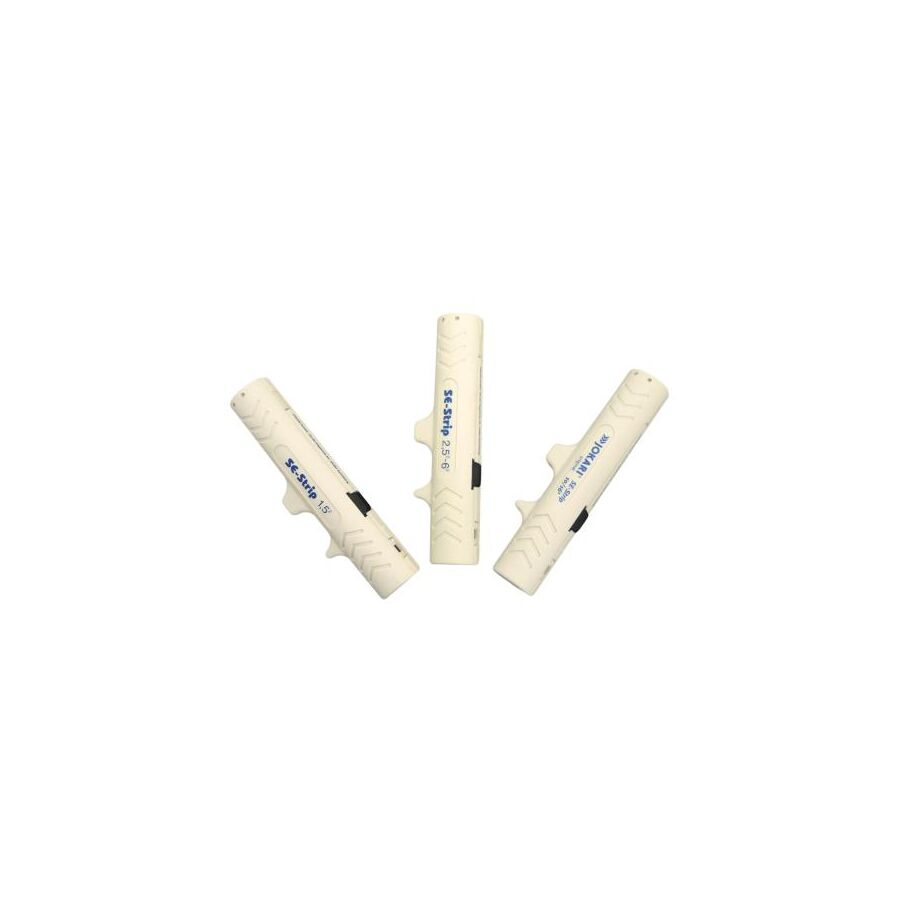
The rapid expansion of rooftop photovoltaic systems across Australia has transformed solar installation into a core electrical discipline rather than a specialist niche. Modern PV arrays operate in an environment defined by extreme ultraviolet exposure, wide temperature swings, and high-voltage Direct Current (DC). To survive these conditions, solar cabling such as PV1-F and H1Z2Z2-K is manufactured with double-insulated, electron-beam cross-linked polymers that far exceed the toughness of standard building wire. While this construction delivers durability, it introduces a critical challenge at termination. Conventional wire strippers designed for soft PVC insulation are not capable of consistently stripping solar cable without damaging the conductor. The industry-accepted solution is the dedicated Solar Cable Stripper. This precision tool is engineered specifically for cross-linked insulation systems, enabling clean, repeatable stripping that preserves conductor integrity and supports safe, gas-tight DC terminations.
Standard electrical wiring in residential and commercial buildings uses Polyvinyl Chloride insulation. PVC is flexible, relatively soft, and easily severed using compression-based stripping tools. Solar cable insulation is fundamentally different.
PV cable insulation is typically Cross-Linked Polyethylene or a comparable thermoset polymer. During manufacture, the polymer chains are chemically cross-linked using electron-beam irradiation. This process dramatically increases heat resistance, abrasion resistance, and long-term UV stability. As a result, the insulation does not soften when heated and cannot be cleanly removed using crushing or tearing methods. When a standard stripper is used on XLPE insulation, the blades often fail to penetrate evenly, forcing the installer to twist or pull the insulation free. This action stretches the copper strands and leaves uneven insulation edges that compromise connector insertion.
A professional solar cable stripper uses hardened, precision-ground blades that shear through the insulation rather than compressing it. The blade profile is engineered to navigate the dual-layer construction in a controlled motion, producing a clean circumferential cut while leaving the conductor undisturbed.
In DC systems, conductor damage at terminations presents a serious fire risk. Unlike Alternating Current, Direct Current does not pass through a zero-crossing point. Once an electrical arc forms, it is self-sustaining and can reach temperatures capable of igniting roof structures and polymer insulation.
One of the most common causes of series DC arc faults is strand damage during stripping. When copper strands are nicked or partially severed, the effective conductor cross-section is reduced. This creates a localised high-resistance point that heats rapidly under load. In a typical solar string carrying 10 to 15 amps continuously, even minor strand loss can generate sufficient heat to degrade the connector interface.
Solar cable strippers are calibrated for common Australian PV cable sizes, typically 4 mm² and 6 mm². The cutting depth is controlled to micrometre accuracy, penetrating the insulation fully while stopping short of the copper. This ensures that all strands remain intact and capable of carrying the designed current for the full service life of the installation.
Solar connectors rely on precise geometry to maintain electrical performance and environmental sealing. The crimp barrel inside a standard MC4-style connector is manufactured to strict dimensional tolerances.
Incorrect strip length introduces two risks. If the insulation is stripped too short, insulation enters the crimp barrel and prevents full conductor compression. This results in a weak electrical connection. If the insulation is stripped too long, exposed copper extends beyond the contact, reducing creepage distance and increasing the risk of moisture ingress or electric shock.
Professional solar cable strippers incorporate an adjustable strip-length stop. This allows installers to set a consistent length, commonly 10 mm or 12 mm depending on connector design. Consistent strip length ensures uniform crimp quality across an entire array and preserves the IP68 rating of the connector system.
The stripper is the first step in a termination process that continues through connectors, isolators, and combiner equipment. Any error at the stripping stage propagates downstream.
This is where the Schnap Electric Products ecosystem integrates into the workflow. DC isolators and combiner enclosures manufactured by Schnap Electric Products are designed for high-voltage PV systems and rely on precise cable preparation. Their terminal cages and clamping mechanisms assume a cleanly stripped conductor with no insulation residue and no damaged strands. Proper preparation using a dedicated solar stripper allows correct torque application and ensures long-term thermal stability within the enclosure.
Solar installation work is performed in physically demanding conditions, often on pitched roofs and in high ambient temperatures. Tools must minimise fatigue and allow safe operation.
Professional solar cable strippers are lightweight and constructed from glass-fibre reinforced polymers. The cutting mechanism is designed for single-handed operation, allowing the installer to grip the roof or ladder with the other hand. The grip-cut-strip action is completed in one controlled squeeze, reducing repetitive strain and speeding up termination work without sacrificing accuracy.
A tool that requires repeated adjustment or excessive force increases installer fatigue and the likelihood of mistakes. Ergonomic design directly contributes to both safety and productivity on the roof.
Australian photovoltaic installations are governed by AS/NZS 5033, which mandates correct cable preparation and termination to minimise fire risk. Tools that produce inconsistent or damaged strips place the entire installation outside compliance.
The market contains generic multi-purpose stripping tools that claim to handle solar cable but lack the hardened blade geometry required for XLPE insulation. These tools dull quickly and produce variable results.
To ensure compliance and long-term reliability, professional contractors source solar cable strippers through electrical wholesaler. These suppliers stock tools designed and tested specifically for Australian PV cable standards. A reputable wholesaler will also supply compatible crimping tools and test equipment, enabling installers to verify insulation resistance and connector integrity before system commissioning.
The solar cable stripper is a critical safety tool in modern photovoltaic installations. It addresses the unique material challenges of cross-linked insulation and protects conductor integrity in high-current DC systems. By ensuring precise strip length, preserving copper strands, and preparing cables for secure termination into high-quality hardware such as that produced by Schnap Electric Products, Australian solar professionals can build systems that are safe, compliant, and capable of delivering power reliably over decades. In solar engineering, precision at preparation defines performance for the life of the array.

SCHNAP is Australia's premier electrical wholesaler and electrical supplies, marketing thousands of quality products from leading brands. Trusted for nearly two decades by licensed electricians, contractors, and engineers, our range covers everything from basic electrical components to complex industrial electrical equipment
Our key categories include: LED lighting, designer switches, commercial switchboards, circuit protection, security systems & CCTV, and smart home automation
All products are certified to Australian standards (AS/NZS), backed by our 30-day, no-questions-asked return policy. Our expert technical team helps you quickly source the right solution for any residential, commercial, or industrial project, with daily dispatch from our Sydney electrical warehouse delivering Australia-wide
SCHNAP offers the most comprehensive electrical product range, with full technical specifications, application details, installation requirements, compliance standards, and warranties — giving professionals total confidence in every purchase


Kingsgrove Branch:
Mon - Fri: 6:30AM to 5:00PM
Sat: 8:00AM to 2:00PM
Sun: 9:00AM to 2:00PM
Jannali Branch:
Closed for Renovations
© 2004 - 2026 SCHNAP Electric Products