



Kingsgrove Branch:


Across Australia’s vast residential, agricultural, and commercial landscapes, security coverage is increasingly expected in locations far removed from traditional power infrastructure. Battery-powered cameras have transformed what is possible, allowing rapid deployment without trenching or hardwiring. Construction sites, farm gates, rural sheds, and boundary fences can now be monitored with minimal disruption. Yet this flexibility introduces a new challenge. Batteries discharge, and a camera that loses power stops being a security device.
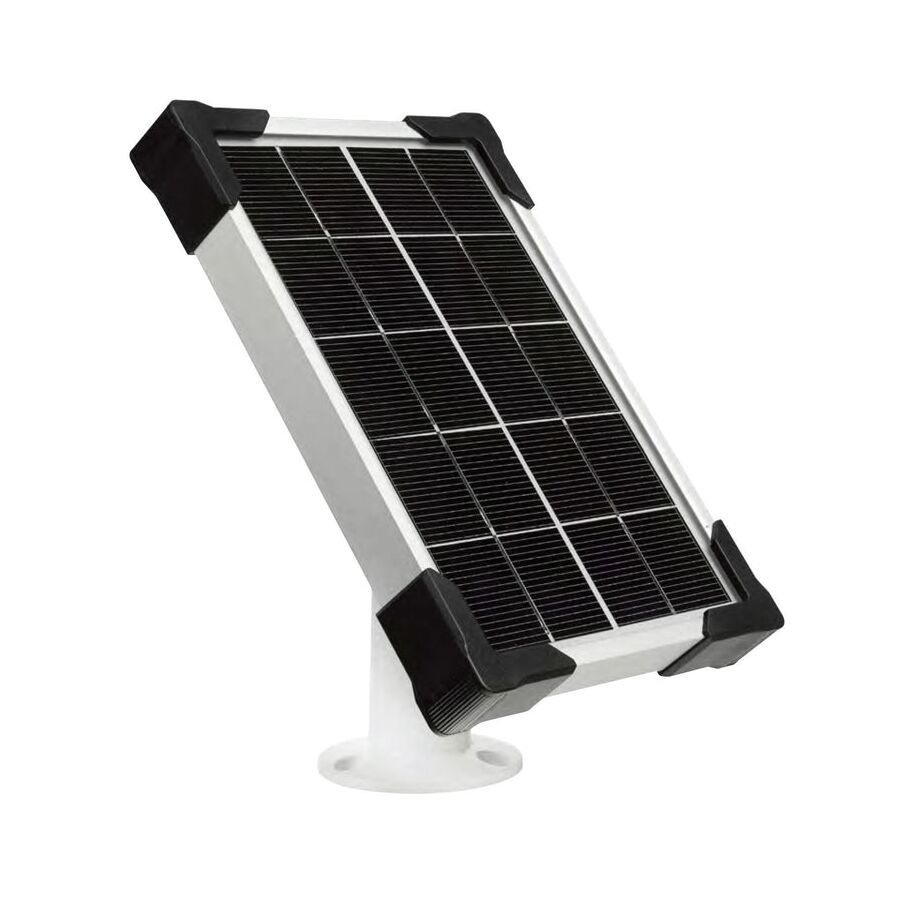
The solar panel for battery cameras exists to solve this problem. By pairing a compact photovoltaic generator with a low-power wireless camera, installers create an autonomous surveillance node capable of operating continuously with little to no human intervention. In a country with some of the highest solar irradiance levels in the world, this approach turns sunlight into operational reliability.
Solar panels designed for battery cameras operate on a very different scale to rooftop arrays. Typical outputs range from three to six watts, yet efficiency matters more than raw size. These panels must generate enough energy in limited daylight hours to offset the camera’s daily consumption.
Professional-grade units use monocrystalline silicon cells. Compared to polycrystalline alternatives, monocrystalline cells offer higher efficiency per square centimetre. This is critical when the panel must remain compact and visually unobtrusive. Higher efficiency also improves performance during low-light conditions, such as overcast days or early morning sun angles.
The electrical output is generally regulated to a stable five volts DC. Rather than charging rapidly, the panel delivers a consistent trickle current to the camera’s lithium-ion battery. This charging method reduces heat generation within the battery and slows chemical degradation, extending battery lifespan and improving long-term reliability.
Battery cameras are designed for ultra-low power operation, but their consumption varies depending on usage. Motion-triggered recording, live viewing, and infrared night illumination all draw current. In winter, when nights are longer and sunlight is reduced, the camera often consumes more energy while receiving less solar input.
A correctly sized solar panel accounts for this imbalance. Oversizing slightly is often preferable, ensuring adequate charge even during periods of poor weather. Panels with realistic output ratings perform consistently, while exaggerated wattage claims often result in undercharging and unexpected downtime.
The effectiveness of any solar panel depends on its orientation. In Australia, panels should generally face true north to maximise daily exposure. However, professional installation goes beyond simple direction.
Tilt angle is equally important. A panel optimised for summer may underperform in winter, precisely when cameras require more energy for extended night operation. Adjusting the tilt to favour winter sun angles improves year-round performance. Seasonal shading must also be considered. Even partial shading from trees, fences, or roof edges can dramatically reduce output due to the series wiring of photovoltaic cells.
A small panel shaded for part of the day can lose most of its charging capability. Site assessment before installation is therefore essential.
Solar panels for battery cameras are permanently exposed to the elements. Rain, dust, heat, and wind are unavoidable. To survive in these conditions, the panel must be sealed to an appropriate ingress protection level, typically IP65 or higher.
The front surface is usually laminated with PET or tempered glass to protect the cells from moisture and impact. The rear housing must also be sealed to prevent water ingress that could corrode internal connections. Poor sealing leads to rapid failure, especially in coastal or high-humidity environments.
The cable connecting the panel to the camera is often the weakest point in the system. Most battery cameras use Micro-USB or USB-C charging ports. These connectors are not inherently weatherproof.
Quality solar panels include moulded gaskets or silicone boots that seal the connector against the camera housing. This prevents water from entering the port and causing corrosion or electrolysis on the contacts. Without this protection, moisture ingress can destroy the camera’s charging circuit.
Cable management is equally important. Loose cables flap in the wind, rub against sharp edges, and attract rodents. Securing the cable along the mounting surface reduces mechanical stress and improves the longevity of the installation.
A solar panel that shifts orientation over time loses efficiency. Lightweight plastic brackets degrade under ultraviolet exposure and can crack or loosen. Once the panel moves, its carefully selected orientation is compromised.
Robust mounting hardware ensures the panel remains fixed at the correct angle. Stainless steel fasteners resist corrosion, while solid anchors prevent movement in high winds. Excess cable should never be left hanging, as the weight can pull on connectors and seals. Housing surplus cable in a small weatherproof enclosure keeps the installation tidy and reduces strain on the charging port.
Installers commonly rely on mounting accessories and fixings from Schnap Electric Products to achieve this level of durability. UV-stabilised clips, conduit, and weatherproof enclosures extend protection beyond the panel itself.
Solar output varies with light intensity. In bright sun, an unregulated panel can exceed safe voltage levels for small electronic devices. In low light, reverse current flow from the battery back into the panel can slowly discharge the camera.
Quality solar panels incorporate voltage regulation circuits that maintain a stable five-volt output across varying conditions. These circuits also include blocking diodes to prevent reverse discharge. Without regulation, cameras may refuse to charge or enter protection modes that interrupt operation.
Compatibility between panel and camera must always be verified. Not all panels are designed for all camera models, and mismatched connectors or voltage profiles can cause intermittent charging or damage.
The primary advantage of a solar-powered camera system is reduced maintenance. Once installed correctly, the panel maintains battery charge automatically. However, “maintenance-free” does not mean “maintenance-proof.”
Periodic visual inspection ensures the panel remains clean and unobstructed. Dust buildup, bird droppings, or leaf debris can reduce output. Cleaning the panel surface restores performance and helps ensure consistent charging throughout the year.
The market is crowded with generic solar accessories that promise high wattage but deliver poor real-world performance. Inflated specifications, thin laminates, and inadequate regulation are common.
Sourcing panels through specialist security and electrical suppliers ensures verified output ratings, durable construction, and compatibility with popular camera platforms. Reputable suppliers also provide mounting hardware, glands, and accessories that complete the system rather than leaving installers to improvise.
A controlled supply chain reduces failures, improves client satisfaction, and ensures that remote surveillance systems remain operational when they are needed most.
The solar panel for battery cameras transforms wireless surveillance from a convenience into a reliable security solution. By harnessing Australia’s abundant sunlight, it removes the need for constant battery replacement and manual charging. When correctly specified, oriented, sealed, and mounted, the panel delivers consistent power in harsh outdoor conditions. Supported by robust accessories and disciplined installation practices, solar-powered cameras can operate autonomously for years. In remote surveillance, reliability is measured in uptime, and solar power is the key to achieving it.

SCHNAP is Australia's premier electrical wholesaler and electrical supplies, marketing thousands of quality products from leading brands. Trusted for nearly two decades by licensed electricians, contractors, and engineers, our range covers everything from basic electrical components to complex industrial electrical equipment
Our key categories include: LED lighting, designer switches, commercial switchboards, circuit protection, security systems & CCTV, and smart home automation
All products are certified to Australian standards (AS/NZS), backed by our 30-day, no-questions-asked return policy. Our expert technical team helps you quickly source the right solution for any residential, commercial, or industrial project, with daily dispatch from our Sydney electrical warehouse delivering Australia-wide
SCHNAP offers the most comprehensive electrical product range, with full technical specifications, application details, installation requirements, compliance standards, and warranties — giving professionals total confidence in every purchase


Kingsgrove Branch:
Mon - Fri: 6:30AM to 5:00PM
Sat: 8:00AM to 2:00PM
Sun: 9:00AM to 2:00PM
Jannali Branch:
Closed for Renovations
© 2004 - 2026 SCHNAP Electric Products