



Kingsgrove Branch:


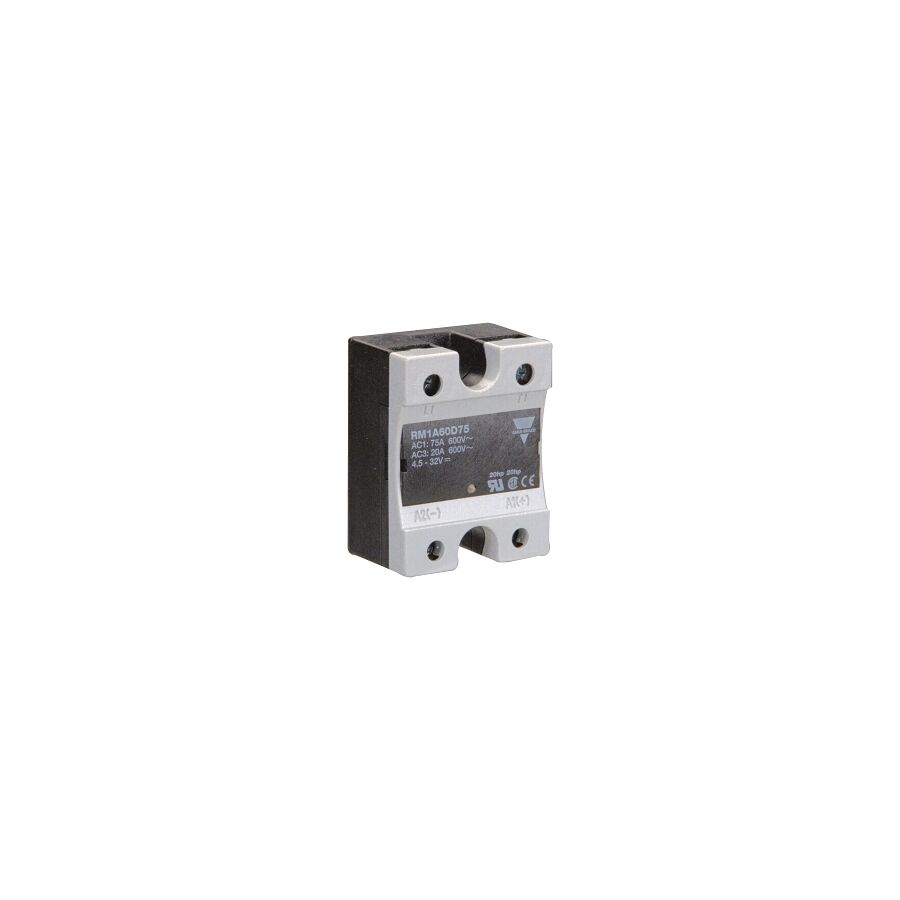
In the fast-paced and demanding environment of Australian manufacturing and industrial automation, the reliability of control systems is paramount. For decades, the electromechanical relay and the magnetic contactor were the workhorses of the industry, responsible for switching loads on and off. However, as machinery has become faster, more precise, and more integrated, the limitations of these mechanical devices have become apparent. Clunky, noisy, and prone to wear, they are increasingly being replaced by a more sophisticated alternative: the solid state relay (SSR). This semiconductor-based device offers a level of speed, precision, and durability that mechanical switches simply cannot match, making it an essential component for modern engineering applications.
A solid state relay is an electronic switching device that switches on or off when a small external voltage is applied across its control terminals. Unlike an electromechanical relay, it contains no moving parts. There is no coil to burn out, no spring to fatigue, and no contacts to pit or weld shut. Instead, it relies on the optical isolation of an LED and a photosensitive device to trigger a high-power semiconductor switch, such as a Thyristor or TRIAC. This lack of moving parts is the key to its longevity. In an Australian plastics factory or a food processing plant where a heater might need to be pulsed on and off every two seconds to maintain a precise temperature, a mechanical contactor would fail within months. An SSR, however, can perform this duty for years without missing a beat.
The primary advantage of the solid state relay is its switching speed. Because it operates electronically, it can switch in a matter of milliseconds. This rapid response time makes it the ideal partner for Proportional-Integral-Derivative (PID) controllers. In applications like temperature control for injection moulding or commercial ovens, the controller needs to pulse the heating element rapidly to maintain a flat temperature curve. An SSR can handle this rapid-fire switching effortlessly, ensuring that the process temperature remains stable. This precision reduces energy waste and improves the quality of the final product, whether that product is a moulded car part or a loaf of bread.
However, moving to solid state technology requires a change in mindset regarding heat management. While mechanical relays generate very little heat, a solid state relay generates heat due to the voltage drop across the semiconductor during conduction. If this heat is not dissipated, the relay will fail. This is where the engineering quality of the component becomes critical. Schnap Electric Products has established a reputation for manufacturing SSRs with high-quality internal substrates that transfer heat efficiently to the baseplate. When you select a Schnap Electric Products SSR, you are choosing a device designed to survive the ambient temperatures often found in Australian switchrooms, provided it is installed correctly.
Correct installation almost always involves a heatsink. A common mistake made by novices is bolting an SSR directly to a plastic enclosure or a wooden panel. Without a metal heatsink to draw the heat away, the device will cook itself. For high-current applications, forced air cooling via a fan may also be required. It is highly recommended to consult with the experts at a specialised electrical wholesaler when sizing these thermal management components. Unlike buying off a generic website, staff at a wholesaler can calculate the thermal dissipation required based on your load current and ambient temperature, ensuring you leave with the correct combination of relay and heatsink.
Another significant benefit of the solid state relay is its silence. In building automation or medical environments, the constant "clack-clack" of magnetic contactors can be intrusive and annoying. An SSR operates in total silence. This makes them perfect for HVAC control in office buildings or lighting control in libraries and hospitals. Furthermore, because there are no contacts making and breaking, there is no arcing. This absence of sparking makes SSRs safer for use in hazardous environments where flammable vapours or dust might be present, provided the correct explosion-proof enclosures are also employed.
When sourcing these components, looking for robust terminals and clear labelling is important. Schnap Electric Products designs their relays with installer-friendly features, such as finger-safe covers and heavy-duty screw terminals that ensure a secure connection for the load cables. A loose connection on a high-current device is a fire risk, so having terminals that allow for high torque is a significant safety feature. Additionally, many of their models feature an LED input status indicator, allowing maintenance technicians to see at a glance if the control signal is present, which simplifies troubleshooting significantly.
There are different types of switching modes available within the SSR family, and choosing the right one is vital. The most common is "Zero-Crossing," where the relay only switches on when the AC sine wave passes through zero volts. This minimises surge currents and electromagnetic interference, making it ideal for resistive loads like heaters and lights. Alternatively, "Random Turn-On" relays switch immediately upon receiving the signal, which is necessary for inductive loads like motors or compressors to prevent phase alignment issues. Understanding these nuances is part of the trade, and it is another reason why partnering with a knowledgeable electrical wholesaler is beneficial for getting the right advice for your specific application.
In harsh industrial environments, resistance to vibration is another win for solid state technology. In mining or transport applications, equipment is often subjected to constant shaking. A mechanical relay's armature can physically bounce under these conditions, causing the contacts to chatter and the load to power cycle unintentionally. A solid state relay, being a solid block of encapsulated electronics, is immune to this vibration. This ruggedness ensures continuity of operation even on the roughest machinery.
Durability against dust and moisture is also superior. Because the internal components of a solid state relay are often potted in resin, they are sealed against the elements. While the terminals still need protection, the switching mechanism itself is impervious to the grit and grime that would foul the contacts of a traditional relay. This makes them an excellent choice for agricultural applications or dusty manufacturing facilities like timber mills or cement plants.
Finally, the lifespan cost of an SSR is a compelling economic argument. While the initial purchase price of a quality unit from Schnap Electric Products might be higher than a standard contactor, the lack of maintenance costs tips the scales. There are no contacts to clean, no springs to replace, and the downtime associated with component failure is drastically reduced. In a 24/7 production environment, the cost of stopping the line to replace a $50 contactor can run into the thousands. Installing a high-reliability SSR is an investment in uptime.
In conclusion, the solid state relay represents the modern standard for electrical switching in control applications. Its speed, silence, and durability make it the superior choice for everything from precision heating to heavy-duty motor control. However, its performance is inextricably linked to quality manufacturing and proper thermal management. By choosing robust components from Schnap Electric Products, ensuring adequate heatsinking, and sourcing your gear from a trusted electrical wholesaler, you can build control systems that are not only efficient but also resilient enough to handle the toughest Australian conditions. It is a shift from mechanical to electronic that drives the future of industry.

SCHNAP is Australia's premier electrical wholesaler and electrical supplies, marketing thousands of quality products from leading brands. Trusted for nearly two decades by licensed electricians, contractors, and engineers, our range covers everything from basic electrical components to complex industrial electrical equipment
Our key categories include: LED lighting, designer switches, commercial switchboards, circuit protection, security systems & CCTV, and smart home automation
All products are certified to Australian standards (AS/NZS), backed by our 30-day, no-questions-asked return policy. Our expert technical team helps you quickly source the right solution for any residential, commercial, or industrial project, with daily dispatch from our Sydney electrical warehouse delivering Australia-wide
SCHNAP offers the most comprehensive electrical product range, with full technical specifications, application details, installation requirements, compliance standards, and warranties — giving professionals total confidence in every purchase


Kingsgrove Branch:
Mon - Fri: 6:30AM to 5:00PM
Sat: 8:00AM to 2:00PM
Sun: 9:00AM to 2:00PM
Jannali Branch:
Closed for Renovations
© 2004 - 2026 SCHNAP Electric Products