



Kingsgrove Branch:


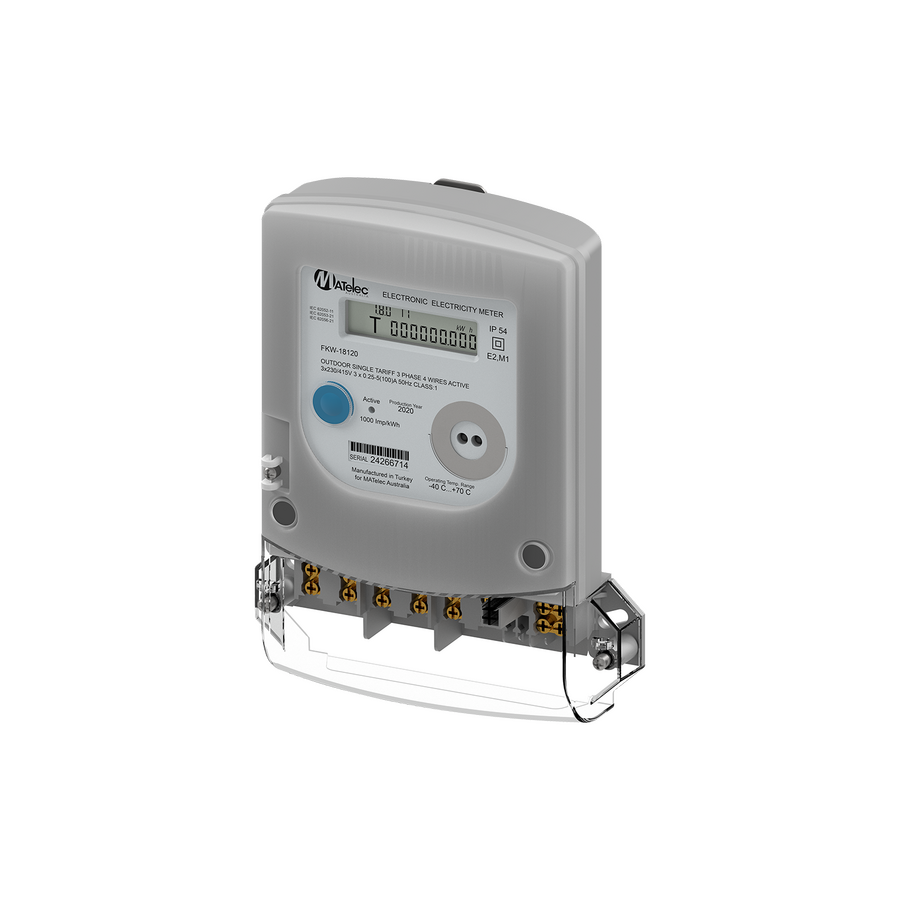
In today’s Australian energy landscape, rising electricity prices and complex tariff structures have fundamentally changed how power consumption is managed and recovered. Electricity is no longer viewed as a fixed overhead absorbed by property owners. In residential, commercial, and mixed-use environments, the expectation is clear: each user pays for what they consume. Achieving this outcome depends entirely on accurate, compliant, and durable sub-metering. The surface kilowatt hour meter remains the most practical and widely accepted solution for retrofitting existing buildings where switchboard modification is limited or impractical.
Unlike DIN-rail meters that require internal board space and reconfiguration, the surface meter is a standalone device designed to mount directly to a wall, meter panel, or enclosure. Its mechanical robustness, clear visibility, and ease of installation make it ideal for applications such as granny flats, caravan parks, workshops, marinas, temporary construction supplies, and multi-tenanted commercial properties. In these settings, the surface kilowatt hour meter is not merely a measuring device. It is a financial instrument that protects revenue, prevents disputes, and establishes accountability.
In Australia, the legal distinction between monitoring electricity usage and billing for electricity is critical. Under the National Measurement Act, any meter used to calculate charges passed on to another party must be pattern approved by the National Measurement Institute (NMI). This approval confirms that the meter meets strict accuracy and durability standards and is suitable for trade use.
A surface kilowatt hour meter without NMI approval may still display consumption, but it cannot be legally used for billing. Issuing invoices based on a non-approved meter exposes landlords and facility managers to disputes, refunds, and potential penalties. NMI-approved meters carry a pattern approval number clearly marked on the faceplate, providing immediate verification for inspectors, auditors, and tenants. For long-term installations, this approval is non-negotiable.
Surface meters are available in two primary architectures: electromechanical and solid-state. Each has advantages depending on the operating environment.
Electromechanical meters, commonly referred to as Ferraris disc meters, operate using electromagnetic induction. Load current creates a rotating magnetic field that drives an aluminium disc. The speed of rotation corresponds directly to energy consumption, and a mechanical register records total kilowatt hours. These meters are renowned for durability. They tolerate voltage fluctuations, electrical noise, and harsh environments with minimal degradation. Their displays remain readable without power, which is particularly valuable in remote or industrial locations.
Solid-state meters use electronic sensors and microprocessors to calculate energy usage. They offer digital displays, higher resolution readings, and optional pulse or communication outputs for monitoring systems. While more feature-rich, they are inherently more sensitive to electrical disturbances and environmental extremes. Selection should be based on site conditions, required functionality, and maintenance expectations.
The defining characteristic of a surface kilowatt hour meter is its mounting method. These meters are fixed directly to a substrate rather than integrated into a switchboard. This approach simplifies retrofits and allows placement close to the point of supply or tenancy boundary.
Professional installation typically follows a bottom-entry configuration. Supply and load conductors enter through the lower terminals, which are protected by a sealable terminal cover. This cover must be secured using approved sealing methods to prevent tampering. Any attempt to bypass the meter will leave visible evidence, preserving billing integrity. Compliance with AS/NZS 3000 is essential, particularly regarding conductor sizing, bend radius, and mechanical protection of consumer mains.
Accuracy class defines how closely the meter records actual consumption. Class 1 meters offer ±1 percent accuracy, while Class 2 meters allow ±2 percent deviation. For most residential and light commercial sub-metering, Class 2 is acceptable. Higher consumption or dispute-sensitive applications benefit from Class 1 accuracy.
Equally important is current rating. A common marking such as 10(100)A indicates a base current of 10 amps and a maximum continuous current of 100 amps. Installing a meter with insufficient current capacity leads to overheating, terminal damage, and fire risk. Load calculations must account for maximum demand rather than average consumption. This is particularly relevant in workshops and shared facilities with high-power equipment.
While the meter measures energy, surrounding infrastructure ensures safety and longevity. Surface meters are often installed in exposed or semi-exposed locations where impact, moisture, and UV radiation are present.
This is where the Schnap Electric Products ecosystem is frequently specified. Weatherproof enclosures protect meters in outdoor or industrial settings, providing IP-rated sealing while allowing clear display visibility. Line-side protection using service fuses or circuit breakers safeguards the meter from downstream faults. These measures ensure that a short circuit or overload does not destroy the metering device itself.
Energy theft and unauthorised modification are real concerns in shared properties. Surface meters address this through physical design. Sealable terminal covers, robust housings, and visible mounting discourage interference. When installed correctly, any attempt to access terminals or alter wiring leaves clear evidence, supporting dispute resolution and enforcement.
For property owners, this level of transparency builds trust. Tenants can visually confirm readings, and billing calculations remain defensible. Over time, this reduces administrative burden and conflict.
The market includes refurbished and imported meters of uncertain origin. These devices may lack valid calibration or fail prematurely, leading to inaccurate billing or replacement costs.
Professional procurement through electrical wholesaler ensures access to new, NMI-approved meters with verified specifications. These suppliers also provide compatible mounting hardware, insulating backplates, and protective accessories to complete the installation. Documentation and traceability are essential for audits, insurance, and long-term asset management.
The surface kilowatt hour meter remains a cornerstone of effective energy management in Australia. Its rugged construction, visibility, and regulatory acceptance make it the preferred solution for sub-distribution and cost recovery across residential, commercial, and industrial settings. By selecting NMI-approved meters, matching accuracy and current ratings to the application, and protecting the installation with compliant infrastructure from manufacturers like Schnap Electric Products, industry professionals ensure that every unit of electricity is measured fairly and legally. In energy management, accurate measurement is not optional. It is the foundation of control.

SCHNAP is Australia's premier electrical wholesaler and electrical supplies, marketing thousands of quality products from leading brands. Trusted for nearly two decades by licensed electricians, contractors, and engineers, our range covers everything from basic electrical components to complex industrial electrical equipment
Our key categories include: LED lighting, designer switches, commercial switchboards, circuit protection, security systems & CCTV, and smart home automation
All products are certified to Australian standards (AS/NZS), backed by our 30-day, no-questions-asked return policy. Our expert technical team helps you quickly source the right solution for any residential, commercial, or industrial project, with daily dispatch from our Sydney electrical warehouse delivering Australia-wide
SCHNAP offers the most comprehensive electrical product range, with full technical specifications, application details, installation requirements, compliance standards, and warranties — giving professionals total confidence in every purchase


Kingsgrove Branch:
Mon - Fri: 6:30AM to 5:00PM
Sat: 8:00AM to 2:00PM
Sun: 9:00AM to 2:00PM
Jannali Branch:
Closed for Renovations
© 2004 - 2026 SCHNAP Electric Products