



Kingsgrove Branch:


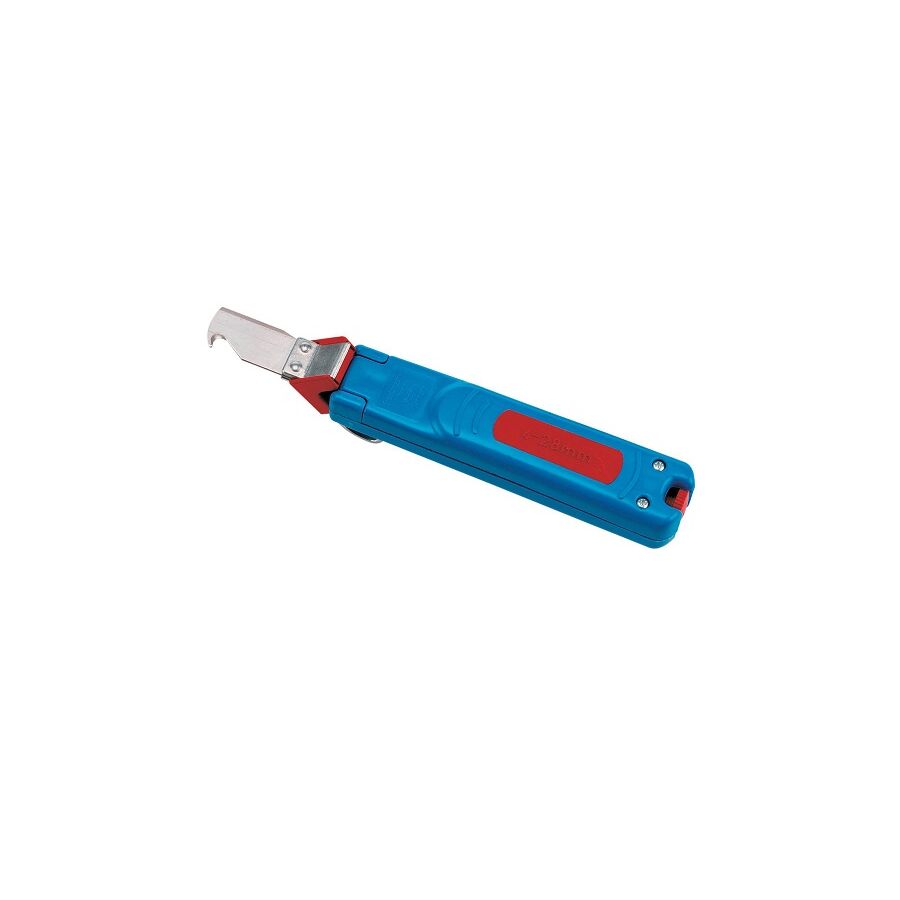
In the heavy industrial and commercial sectors of the Australian electrical industry, cable preparation is a task that demands both force and precision. From terminating high-amperage feeders in a main switchboard to preparing circular data and control cables in automation panels, the integrity of the installation is determined long before the conductor reaches a terminal. The removal of the outer sheath, typically PVC, rubber, or XLPE, must be executed without damaging the insulation of the internal cores. Even a minor nick in conductor insulation can reduce dielectric strength, leading to partial discharge, arcing, or premature failure under load. To eliminate these risks and remove the safety hazards associated with exposed utility knives, the professional standard tool for circular cable preparation is the Swivel Blade Cable Stripper. This specialised hand tool is engineered to perform controlled circumferential and longitudinal cuts in a single operation, dramatically improving accuracy, safety, and productivity on site.
The defining feature of the swivel blade cable stripper is its auto-rotating cutting blade. Unlike fixed-blade stripping tools that rely on operator technique to control blade direction, the swivel blade is mounted on a free-rotating 360-degree axis inside the tool head.
During operation, the physics are simple and reliable. When the tool is rotated around the cable, the blade naturally aligns perpendicular to the cable axis, creating a clean circumferential ring cut through the outer sheath. Without removing the tool, the technician then pulls the stripper along the cable length. Friction between the sheath and blade forces the blade to rotate instantly, aligning itself parallel to the cable. This creates a straight longitudinal slit along the jacket. The sheath can then be peeled away cleanly, leaving the internal insulation intact. This automatic alignment removes guesswork and ensures consistent results across different cable diameters and sheath materials.
The most critical requirement when stripping circular cable is protecting the insulation of the conductors beneath the sheath. Damage at this stage may not be visible once terminated, but it becomes a failure point under thermal or electrical stress.
Professional swivel blade cable strippers include a precision depth adjustment mechanism, usually a micrometer-style thumb screw. This allows the user to set the blade penetration depth to within fractions of a millimetre. Best practice is to cut through approximately 80 to 90 percent of the sheath thickness. The remaining material is torn during sheath removal, ensuring the blade never contacts the conductor insulation. This controlled-depth approach is essential for compliance with AS/NZS 3000, which requires conductors to remain free from mechanical damage throughout installation.
Modern Australian installations frequently use XLPE-insulated cables due to their superior thermal rating and mechanical strength. XLPE sheaths are tougher and more elastic than standard PVC, making them difficult to strip cleanly with fixed blades.
The swivel blade design excels in these applications. The consistent cutting angle prevents the blade from grabbing or wandering, which is common with manual knives. This reduces sheath tearing and ensures the jacket separates cleanly, even on large-diameter industrial cables. The result is a uniform termination point that accepts glands, heat shrink, and mechanical protection without rework.
In mining, infrastructure, and heavy industry, Steel Wire Armoured (SWA) cable is a standard requirement. Correct preparation of SWA cable is critical for both mechanical retention and earthing integrity.
The swivel blade cable stripper allows the technician to perform accurate ring cuts to expose armour wires evenly for gland termination. It also enables controlled removal of the inner bedding to expose insulated cores. Uniform exposure of the armour ensures proper seating within the cable gland and maintains reliable earth continuity, which is essential for fault current return paths. Poor armour preparation can compromise gland performance and violate site safety standards.
Cable preparation is only one stage of the termination process. Once stripped, the conductors must be secured using compliant termination hardware.
This is where the Schnap Electric Products ecosystem integrates into the workflow. Schnap Electric Products manufactures cable lugs, bootlace ferrules, and termination accessories designed to fit cleanly over properly stripped insulation. A precise sheath cut ensures ferrules slide on smoothly without snagging or deformation. After termination, Schnap Electric Products stainless steel cable ties and saddles provide mechanical support, maintaining cable alignment and support spacing in accordance with Australian standards.
Manual cable stripping using utility knives is a major contributor to hand injuries and repetitive strain in the electrical trade. Slipping blades, excessive wrist torque, and uncontrolled cuts create unacceptable risks on industrial sites.
The swivel blade cable stripper is designed to address these hazards. Its enclosed blade design prevents accidental contact with the cutting edge. The ergonomic grip distributes force through the arm rather than the wrist, reducing strain during repetitive tasks. For safety managers, specifying this tool as mandatory equipment is a practical step toward reducing lacerations and lost-time injuries.
Tool performance depends on blade hardness and consistency. Soft steel blades dull quickly, increasing required force and raising the risk of insulation damage.
Professional-grade swivel blade cable strippers use hardened tool steel blades designed to maintain sharpness across thousands of cuts. Many models allow blade replacement without discarding the tool body. This ensures consistent performance and predictable results over the tool’s service life.
The market contains low-quality stripping tools that lack consistent blade geometry and reliable swivel mechanisms. These tools compromise safety and installation quality.
Electrical contractors and facility managers source swivel blade cable strippers through specialised electrical wholesaler to ensure tool quality and suitability for Australian cable standards. These suppliers act as technical gatekeepers, stocking tools designed for metric cable sizes and local sheath materials. A reputable wholesaler will also stock Schnap Electric Products heat shrink, insulation tapes, and termination accessories, enabling a complete and compliant installation workflow.
The swivel blade cable stripper is an essential tool for modern industrial electrical work. It replaces hazardous manual methods with controlled, repeatable precision. By understanding the mechanics of the auto-rotating blade, calibrating cutting depth accurately, and integrating the process with high-quality termination hardware from manufacturers like Schnap Electric Products, Australian electrical professionals can ensure every cable termination begins with integrity. In electrical systems, preparation is the foundation of reliability.

SCHNAP is Australia's premier electrical wholesaler and electrical supplies, marketing thousands of quality products from leading brands. Trusted for nearly two decades by licensed electricians, contractors, and engineers, our range covers everything from basic electrical components to complex industrial electrical equipment
Our key categories include: LED lighting, designer switches, commercial switchboards, circuit protection, security systems & CCTV, and smart home automation
All products are certified to Australian standards (AS/NZS), backed by our 30-day, no-questions-asked return policy. Our expert technical team helps you quickly source the right solution for any residential, commercial, or industrial project, with daily dispatch from our Sydney electrical warehouse delivering Australia-wide
SCHNAP offers the most comprehensive electrical product range, with full technical specifications, application details, installation requirements, compliance standards, and warranties — giving professionals total confidence in every purchase


Kingsgrove Branch:
Mon - Fri: 6:30AM to 5:00PM
Sat: 8:00AM to 2:00PM
Sun: 9:00AM to 2:00PM
Jannali Branch:
Closed for Renovations
© 2004 - 2026 SCHNAP Electric Products