



Kingsgrove Branch:


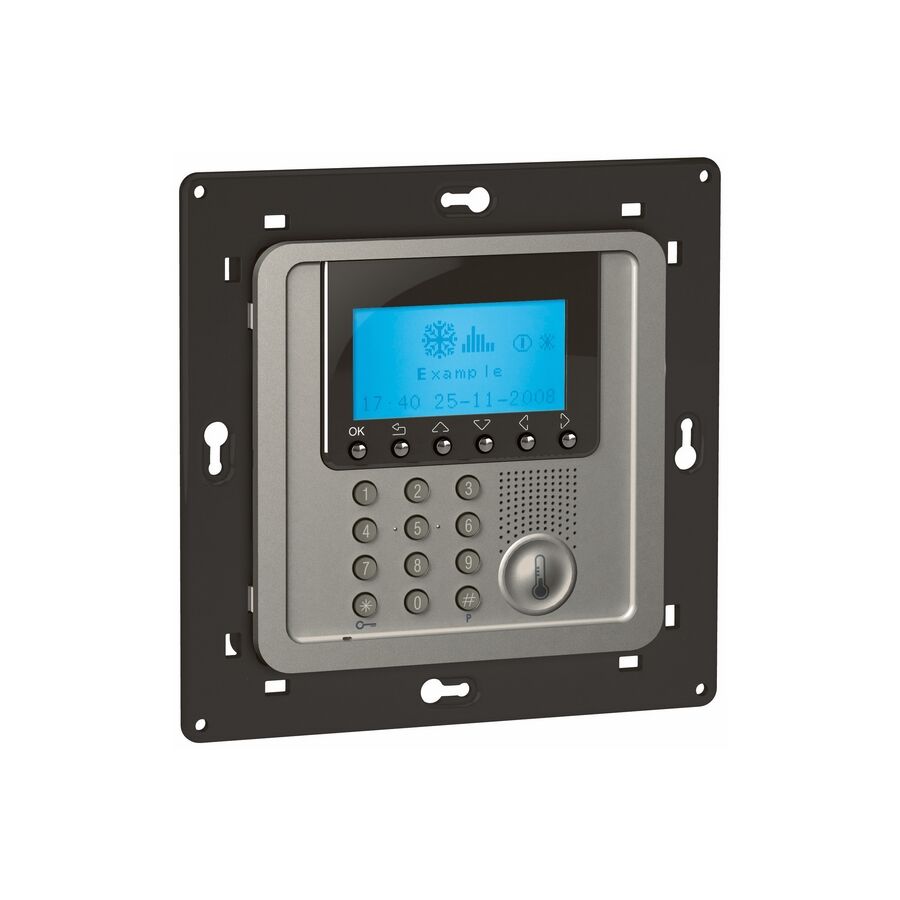
In the demanding operational landscape of Australian industry, temperature is not a convenience variable; it is a critical control parameter. From refrigerated logistics facilities supporting the agricultural sector to plastics extrusion lines, kilns, and injection moulding machines, maintaining a stable thermal set point is essential for product quality, equipment longevity, and regulatory compliance. Minor deviations can result in spoilage, dimensional instability, or catastrophic equipment failure.
While basic thermostats provide simple on-off control, they lack the intelligence required to manage systems with high thermal inertia or rapidly changing loads. The engineering standard for these environments is the digital Temperature Control Unit (TCU). This microprocessor-based controller continuously measures temperature, analyses system behaviour, and modulates output power with precision. Rather than reacting after a deviation occurs, the TCU anticipates change and corrects it proactively, keeping the process variable tightly aligned with the set point under real-world operating conditions.
The core differentiator of an industrial temperature control unit is its use of Proportional-Integral-Derivative (PID) control logic. A conventional thermostat operates using binary logic. It switches the load fully on or fully off, which inevitably produces oscillation around the target temperature. This behaviour is unacceptable in processes that demand stability and repeatability.
A PID controller continuously calculates the error between the measured temperature and the desired set point, then applies three coordinated responses. The proportional function reacts to the current magnitude of the error, delivering immediate corrective output. The integral function considers accumulated error over time, eliminating long-term offset that would otherwise leave the system permanently above or below the target. The derivative function analyses the rate of temperature change and applies predictive damping as the system approaches the set point, preventing overshoot.
Together, these functions allow the temperature to rise or fall quickly while settling smoothly. Modern TCUs often include autotuning routines that analyse system response during commissioning and automatically calculate optimal PID parameters, reducing setup time and ensuring consistent results across installations.
The accuracy of any control system depends on the quality and suitability of its sensor input. Temperature control units are designed to interface with multiple sensor technologies, each suited to specific applications.
In food processing, pharmaceutical manufacturing, and HVAC systems, the PT100 Resistance Temperature Detector (RTD) is widely used. PT100 sensors provide excellent linearity, repeatability, and long-term stability. Their resistance-based measurement is less susceptible to electrical noise, making them ideal for environments where accuracy is critical.
For higher temperature processes such as furnaces, kilns, and metal treatment, thermocouples are the preferred sensor. Types J, K, and T are commonly supported by industrial TCUs. These sensors generate a millivolt signal based on the Seebeck effect, requiring the controller to perform cold-junction compensation and signal linearisation. A high-quality temperature control unit ensures that these calculations are precise, allowing the displayed value to reflect actual process temperature rather than an approximation
Once the controller determines the required corrective action, it must translate logic into physical switching. Temperature control units typically offer multiple output options depending on the application.
Electromechanical relay outputs are suitable for low-frequency switching and simple heating or cooling circuits. However, PID-controlled systems often require rapid cycling to modulate power smoothly. In these cases, mechanical contacts wear quickly and become a reliability risk.
For high-performance applications, the controller drives a Solid State Relay (SSR) or thyristor module. SSRs contain no moving parts and can switch loads thousands of times per minute without degradation. This enables pulse-width modulation, allowing the heater to receive proportional power rather than full on or full off states. The result is finer temperature control, reduced stress on heating elements, and improved energy efficiency.
Temperature control units operate at control voltage levels and are not designed to switch high-power loads directly. Industrial heating banks, compressors, and refrigeration systems often draw significant current and produce inductive transients that exceed the controller’s internal capacity.
This is where the supporting electrical infrastructure becomes critical. The TCU provides the control signal, while the load is handled by appropriately rated contactors, relays, or power controllers. The Schnap Electric Products ecosystem plays a key role in this architecture. Their DIN-rail mounted contactors and modular relays are engineered for frequent switching and high inrush currents, making them ideal companions for PID-controlled systems.
Protecting the controller itself is equally important. Mounting the TCU within an IP-rated enclosure shields it from dust, moisture, and accidental contact, while dedicated circuit protection ensures stable power delivery and isolates faults before they propagate through the control panel.
Beyond regulation, temperature control units act as continuous safety monitors. Most industrial TCUs support multiple alarm modes, including high limit, low limit, and deviation alarms. These alarms provide early warning of abnormal conditions such as heater failure, sensor disconnection, or refrigeration loss.
Correct alarm configuration is essential. Without hysteresis, an alarm may chatter on and off if the temperature fluctuates near the threshold. Properly configured dead bands ensure that alarms trigger only when meaningful deviations occur, reducing nuisance alerts and preventing alarm fatigue among maintenance staff.
Alarm outputs can be wired to visual indicators, audible alarms, or building management systems, allowing rapid intervention before product loss or equipment damage occurs.
Temperature sensors often produce low-level signals that are vulnerable to electromagnetic interference. In industrial environments filled with motors and variable speed drives, unshielded cabling can introduce noise that degrades measurement accuracy.
Professional installations use shielded instrumentation cable, correct grounding techniques, and quality terminal blocks to preserve signal integrity. Ensuring compliance with AS/NZS 3000 wiring rules and relevant industry standards is not optional; it is fundamental to system reliability and safety.
The market contains many generic controllers that claim PID capability but lack robust autotuning, accurate sensor linearisation, or long-term stability. Selecting the wrong unit can result in inconsistent control, increased energy consumption, and premature equipment wear.
Experienced engineers source temperature control units through specialised electrical wholesaler who understand process requirements and local compliance obligations. These suppliers ensure compatibility with existing sensors, provide technical support during commissioning, and supply complementary infrastructure components to complete the system correctly.
The temperature control unit is the central intelligence of any industrial thermal process. It transforms raw heating or cooling capacity into stable, controlled energy that protects assets and ensures consistent output. By applying advanced PID algorithms, selecting appropriate sensor technology, and supporting the system with high-quality switching and protection infrastructure from manufacturers such as Schnap Electric Products, Australian industry professionals can achieve precise, reliable, and compliant temperature control.
In environments where heat defines quality and failure carries real cost, precision is not optional. It is engineered.

SCHNAP is Australia's premier electrical wholesaler and electrical supplies, marketing thousands of quality products from leading brands. Trusted for nearly two decades by licensed electricians, contractors, and engineers, our range covers everything from basic electrical components to complex industrial electrical equipment
Our key categories include: LED lighting, designer switches, commercial switchboards, circuit protection, security systems & CCTV, and smart home automation
All products are certified to Australian standards (AS/NZS), backed by our 30-day, no-questions-asked return policy. Our expert technical team helps you quickly source the right solution for any residential, commercial, or industrial project, with daily dispatch from our Sydney electrical warehouse delivering Australia-wide
SCHNAP offers the most comprehensive electrical product range, with full technical specifications, application details, installation requirements, compliance standards, and warranties — giving professionals total confidence in every purchase


Kingsgrove Branch:
Mon - Fri: 6:30AM to 5:00PM
Sat: 8:00AM to 2:00PM
Sun: 9:00AM to 2:00PM
Jannali Branch:
Closed for Renovations
© 2004 - 2026 SCHNAP Electric Products