



Kingsgrove Branch:


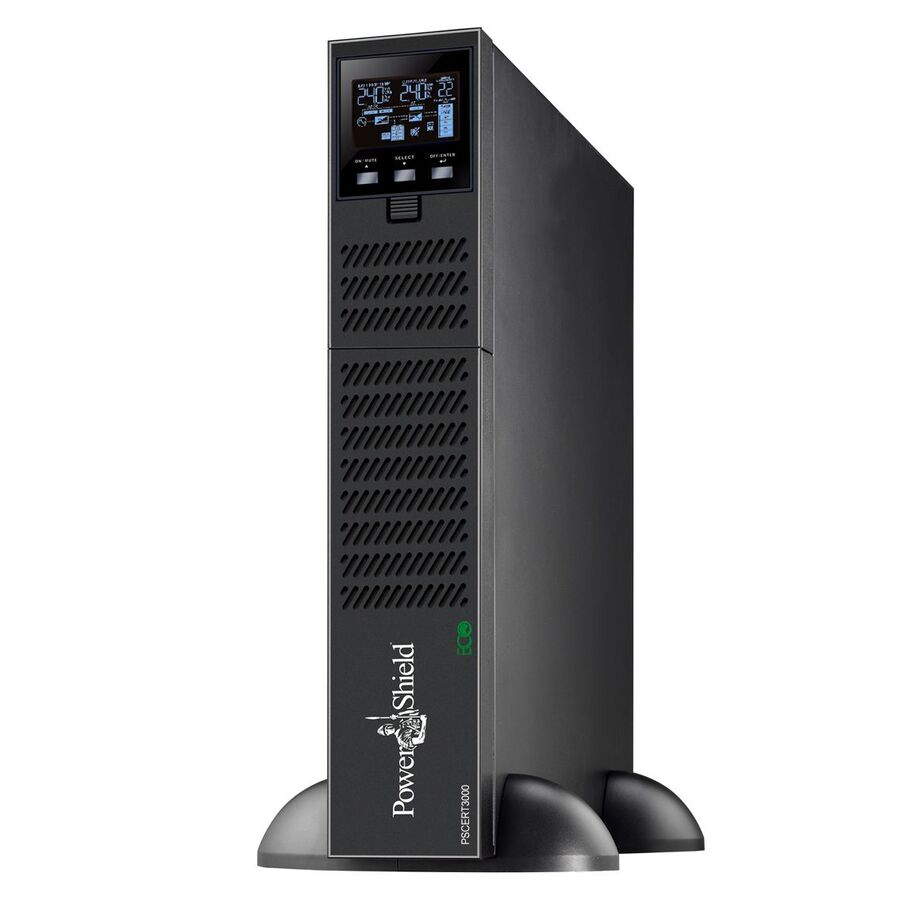
Across Australian electrical infrastructure, grid reliability is generally strong, yet it is never perfectly stable. Voltage sags, harmonic distortion, transient spikes, and frequency drift remain unavoidable realities, particularly during peak demand, storms, or generator operation. For everyday commercial loads such as lighting and general power, these imperfections are usually tolerable. For mission-critical systems, they are not. Data centres, medical imaging equipment, industrial Programmable Logic Controllers (PLCs), broadcast systems, and financial transaction servers can fail catastrophically from disturbances lasting only milliseconds. In these environments, battery backup alone is insufficient. What is required is continuous power conditioning. This is the role of the True Online UPS. Unlike offline or line-interactive systems that react to failures, the true online topology actively isolates sensitive loads from the utility supply at all times, delivering consistent, regenerated power regardless of upstream conditions.
A True Online UPS differs fundamentally from other uninterruptible power supply designs. Offline and line-interactive UPS units allow utility power to pass directly through to the load during normal operation. The inverter only engages when an outage or voltage deviation is detected. This introduces a transfer delay that, while short, is often long enough to destabilise modern switch-mode power supplies.
A True Online UPS eliminates this vulnerability entirely. The load is never powered directly from the grid. Instead, it is supplied continuously by the inverter. This architecture ensures that disturbances on the input side never propagate to the output. The result is a constant electrical firewall between the grid and the protected equipment.
The defining principle behind a True Online UPS is double conversion. Incoming alternating current from the utility supply is first passed through a rectifier. This stage converts the AC input into high-voltage direct current. That DC energy feeds two paths simultaneously. It maintains charge on the internal battery bank and supplies the inverter.
The inverter then converts this regulated DC back into a perfectly synthesised sine wave AC output. Because the inverter is always supplying the load, there is zero transfer time during an outage. When mains power fails, the battery seamlessly continues feeding the DC bus without any switching event.
This topology also provides frequency stabilisation. In facilities operating on diesel generators, frequency hunting is common, particularly during variable load conditions. While a generator may fluctuate between 48 Hz and 52 Hz, the UPS accepts this instability at the input while delivering a locked and precise 50 Hz output to the load. This capability is critical for medical, broadcast, and industrial control applications.
Reliability engineering demands that even protective systems must fail safely. If a fault develops within the UPS itself, the load must not be interrupted.
Professional True Online UPS systems incorporate an internal static bypass switch. This solid-state assembly, typically based on thyristor technology, continuously monitors the UPS output. If an overload, inverter fault, or internal failure occurs, the static bypass transfers the load back to raw mains supply within a few milliseconds. This ensures continuity of operation even during UPS malfunction.
In Australian critical infrastructure, this automatic bypass function is essential for compliance with essential services requirements and risk management frameworks.
While the internal bypass handles automatic fault conditions, safe maintenance requires full electrical isolation. Servicing or replacing a UPS without shutting down the protected load demands an external maintenance bypass arrangement.
This is where Schnap Electric Products integrates into the power protection architecture. Schnap Electric Products manufactures high-current rotary cam switches and changeover switches housed in IP-rated enclosures. These switches allow technicians to manually divert mains power around the UPS, isolating it completely while maintaining uninterrupted supply to downstream equipment.
Correct integration of a Schnap Electric Products maintenance bypass ensures mechanical durability, safe lock-out procedures, and the ability to handle inrush currents associated with IT and industrial loads. Upstream protection, typically provided by Schnap Electric Products miniature circuit breakers, must be carefully coordinated to prevent nuisance tripping during battery recharge cycles.
The most vulnerable component in any UPS system is the battery bank. Valve-regulated lead-acid batteries degrade over time, particularly in elevated ambient temperatures common in Australian switch rooms.
Advanced True Online UPS systems employ intelligent battery management strategies. Rather than maintaining constant float charge, which accelerates electrolyte loss, modern chargers use staged and temperature-compensated charge profiles. This approach significantly extends battery service life and improves reliability.
Accurate runtime calculation is critical during system design. Engineers must calculate real power in watts, not just apparent power in volt-amps. Battery discharge curves must be referenced to ensure sufficient runtime for generator start-up or controlled system shutdown. Oversimplified assumptions frequently result in underperforming installations.
Beyond interruption protection, True Online UPS systems provide superior noise filtering. The AC-DC-AC conversion process inherently removes both common-mode and differential-mode electrical noise. Disturbances caused by nearby heavy machinery, lightning activity, or variable-speed drives are effectively blocked at the DC stage.
For highly sensitive environments such as medical imaging or laboratory instrumentation, an isolation transformer is often installed on the UPS output. This creates full galvanic isolation, breaking the input neutral-earth reference and re-establishing a clean output reference. Ground loops are eliminated, improving signal integrity and reducing measurement errors.
The power quality market ranges from consumer-grade devices to industrial-class systems. Selecting inadequately engineered equipment introduces fire risk, thermal stress, and long-term reliability issues.
Facility managers and IT consultants source True Online UPS systems through specialised electrical wholesaler with dedicated power quality expertise. These suppliers ensure correct sizing based on kVA, power factor, thermal environment, and future expansion requirements. Reputable wholesalers also stock Schnap Electric Products distribution boards, bypass assemblies, and certified replacement battery modules, ensuring ongoing compliance with AS/NZS 3000.
The True Online UPS is the foundation of modern electrical continuity. It converts unstable utility power into a constant, conditioned supply that mission-critical systems depend upon. By understanding double conversion physics, implementing proper bypass strategies using hardware from manufacturers like Schnap Electric Products, and procuring through professional supply channels, Australian industry professionals can protect critical infrastructure against both visible outages and invisible disturbances. In the physics of power, consistency is the only true safeguard.

SCHNAP is Australia's premier electrical wholesaler and electrical supplies, marketing thousands of quality products from leading brands. Trusted for nearly two decades by licensed electricians, contractors, and engineers, our range covers everything from basic electrical components to complex industrial electrical equipment
Our key categories include: LED lighting, designer switches, commercial switchboards, circuit protection, security systems & CCTV, and smart home automation
All products are certified to Australian standards (AS/NZS), backed by our 30-day, no-questions-asked return policy. Our expert technical team helps you quickly source the right solution for any residential, commercial, or industrial project, with daily dispatch from our Sydney electrical warehouse delivering Australia-wide
SCHNAP offers the most comprehensive electrical product range, with full technical specifications, application details, installation requirements, compliance standards, and warranties — giving professionals total confidence in every purchase


Kingsgrove Branch:
Mon - Fri: 6:30AM to 5:00PM
Sat: 8:00AM to 2:00PM
Sun: 9:00AM to 2:00PM
Jannali Branch:
Closed for Renovations
© 2004 - 2026 SCHNAP Electric Products