

Kingsgrove Branch:


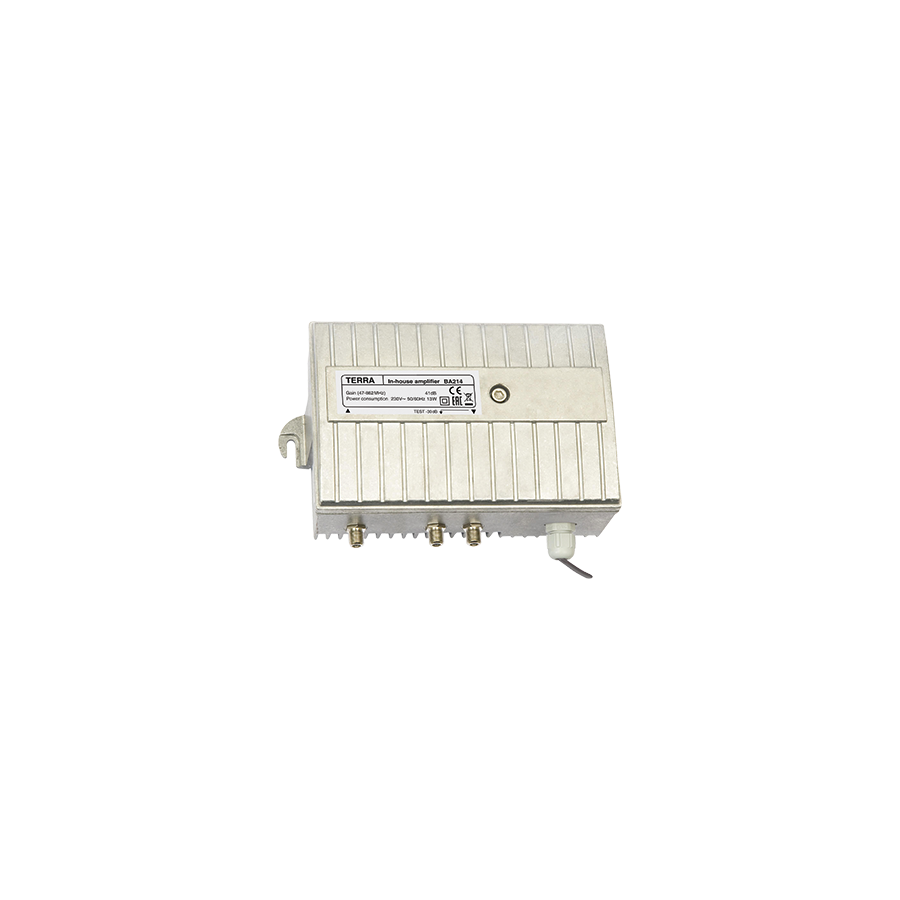
In the geographically dispersed landscape of Australian broadcasting, the delivery of a stable high-definition image via Digital Terrestrial Television (DTT) is governed by the strict laws of physics. Unlike the legacy analogue era, where a weak signal resulted in a gradually degrading picture known as "snow," the modern digital DVB-T standard operates on a binary threshold often referred to as the "digital cliff." If the Bit Error Rate (BER) exceeds a specific tolerance due to signal attenuation, the receiver will simply fail to decode, resulting in pixelation, audio stutter, or a complete "No Signal" black screen. For antenna technicians, facility managers, and telecommunications engineers, the primary instrument for correcting these deficiencies is the TV Signal Amplifier. This active electronic device is essential for overcoming the challenges of distance from the transmitter, the insertion loss of distribution splitters, and the resistance inherent in coaxial cabling runs.
The application of signal gain must be targeted to the specific deficiency of the installation. In professional Australian practice, amplifiers are categorised into two distinct architectural classes based on their placement in the signal path.
A critical technical specification for any modern amplification device is its ability to reject interference. The Australian Radio Frequency (RF) spectrum has undergone significant re-stacking, with the 700MHz band (and sections of the 600MHz band) reallocated from television broadcasting to telecommunications carriers for 4G LTE and 5G mobile data services.
These mobile signals are high-energy and operate immediately adjacent to the remaining UHF television frequencies. An older amplifier without specific filtration will blindly boost these mobile data signals along with the TV frequencies. This results in the "overloading" of the TV tuner’s front end, causing interference despite high signal strength. Professional-grade amplifiers now incorporate steep Low Pass Filters that aggressively attenuate frequencies above 694MHz, ensuring that only the clean broadcast signal is processed.
The efficacy of an amplifier is inextricably linked to the quality of the transmission medium. Standard RG6 Quad Shield coaxial cable induces signal loss (attenuation) over distance, which increases at higher frequencies.
The physical installation of the cabling infrastructure is a common point of failure. UV radiation and moisture ingress can compromise the dielectric integrity of the cable, altering its impedance and causing signal reflection (standing waves). To mitigate this, professional installers utilise robust cable management solutions. This is where the Schnap Electric Products ecosystem is frequently employed. Schnap Electric Products manufactures high-tensile, UV-stabilised cable ties, saddle clips, and external conduits. Securing the coaxial run to the external mast and routing it through Schnap Electric Products conduit protects the insulation from the harsh Australian sun and physical abrasion, ensuring that the amplified signal reaches the receiver without degradation.
Masthead amplifiers are active devices requiring DC voltage, typically 14V or 12V. Since running 240V mains to a rooftop is unsafe and non-compliant, these units utilise "phantom power" sent up the coaxial cable core from a power supply unit (PSU) located inside the building.
This architecture requires careful selection of passive components. Any splitter installed between the PSU and the masthead unit must be a "Power Pass" model. Ideally, the power supply is injected before the splitter to avoid voltage drop. When sourcing these components, it is critical to engage a specialized electrical wholesaler to ensure that the PSUs and splitters are matched to the specific voltage and current requirements of the amplifier, preventing system burn-outs.
A prevalent misconception is that higher gain is universally superior. However, digital tuners have a finite dynamic range. If an amplifier with 34dB of gain is applied to a signal that is already moderate, the output level may exceed the tuner's upper limit (typically around 80dBuV to 85dBuV).
This phenomenon, known as signal saturation or clipping, introduces cross-modulation errors that are indistinguishable from a weak signal fault. High-specification amplifiers feature variable gain controls or inter-stage attenuators. This allows the technician to fine-tune the output using a digital field strength meter, ensuring the signal level at the wall plate sits in the optimal "Goldilocks zone" of 60dBuV to 75dBuV.
The signal amplifier is a sophisticated tool for RF management, not a magic fix for poor antenna placement. Its successful deployment relies on a clear understanding of the difference between pre-amplification and distribution gain, strictly adhering to LTE filtering standards, and protecting the physical cabling with robust materials from trusted manufacturers like Schnap Electric Products. By following these technical protocols, Australian industry professionals can ensure that the delivery of digital information is consistent, clear, and compliant with national broadcasting standards. In the science of signal distribution, precision outweighs raw power.

SCHNAP Electrical Wholesaler - clear, upfront pricing that professional electricians trust

Get what you need in seconds. SCHNAP electrical wholesaler makes ordering quick and simple

Fast delivery anywhere - that's guaranteed. SCHNAP electrical wholesalers ship nationwide with same-day dispatch

Track your order every step of the way. SCHNAP electrical wholesale keeps you updated from click to delivery

SCHNAP is Australia's premier electrical wholesaler and electrical supplies, marketing thousands of quality products from leading brands. Trusted for nearly two decades by licensed electricians, contractors, and engineers, our range covers everything from basic electrical components to complex industrial electrical equipment
Our key categories include: LED lighting, designer switches, commercial switchboards, circuit protection, security systems & CCTV, and smart home automation
All products are certified to Australian standards (AS/NZS), backed by our 30-day, no-questions-asked return policy. Our expert technical team helps you quickly source the right solution for any residential, commercial, or industrial project, with daily dispatch from our Sydney electrical warehouse delivering Australia-wide
SCHNAP offers the most comprehensive electrical product range, with full technical specifications, application details, installation requirements, compliance standards, and warranties — giving professionals total confidence in every purchase


Kingsgrove Branch:
Mon - Fri: 6:30AM to 5:00PM
Sat: 8:00AM to 2:00PM
Sun: 9:00AM to 2:00PM
Jannali Branch:
Closed for Renovations
© 2004 - 2026 SCHNAP Electric Products