



Kingsgrove Branch:


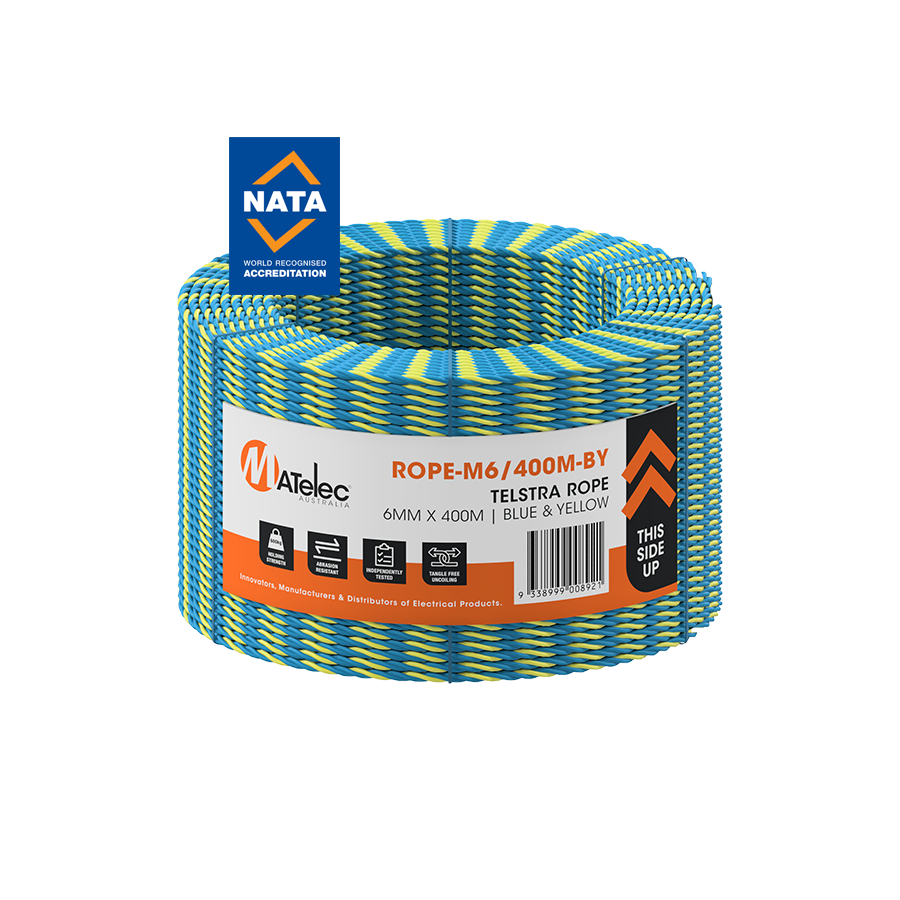
In the physically demanding environments of Australian construction, logistics, mining, and electrical installation, few tools are used as frequently as utility rope. From securing loads on utes and trailers to acting as pilot lines for conduit and cable hauling, cordage plays a critical role in daily site operations. Despite its simplicity, the wrong rope selection can introduce serious safety risks, including load failure, snapping under tension, or degradation due to UV exposure. For professional applications, utility rope is not a commodity item. It is an engineered product governed by polymer science, tensile physics, and environmental resistance. The industry standard for general-purpose site use remains high-tenacity Polypropylene (PP) or Polyethylene (PE) rope, selected for its strength-to-weight ratio, chemical resistance, and durability in Australia’s harsh outdoor conditions.
Polypropylene dominates the utility rope market for practical engineering reasons. Unlike natural fibres such as cotton or manila, which readily absorb moisture, polypropylene is hydrophobic. It does not absorb water into its structure.
This characteristic is essential for Australian worksites exposed to rain, humidity, and coastal conditions. A natural fibre rope left on a truck tray during a storm will absorb water, become heavier, lose tensile strength, and eventually rot internally. A polypropylene utility rope remains lightweight, does not promote mould or fungal growth, and retains consistent performance even after prolonged exposure to moisture. In addition, polypropylene has a specific gravity below 1.0, meaning it floats. This makes it indispensable for marine works, pit installations, and conduit hauling through flooded trenches or underground services where sinking ropes create snag risks.
One of the most misunderstood aspects of utility rope selection is load rating. Professional users distinguish clearly between breaking strain and Safe Working Load (SWL).
Breaking strain represents the force required to snap the rope under controlled laboratory conditions. On site, rope performance is reduced by knots, abrasion, bending radius, and dynamic loading. To compensate, a safety factor is applied. In most construction and electrical applications, a factor of five to one or six to one is standard. This means a rope with a 1,000 kg breaking strain should not be subjected to more than 160 to 200 kg of continuous load.
Exceeding the SWL causes polymer fibres to stretch beyond their elastic limit. Once this plastic deformation occurs, the rope may not visibly fail, but its strength is permanently reduced. This is critical when ropes are used to secure conduit bundles, lift equipment, or restrain loads during transport.
In the electrical trade, utility rope is most commonly used as a draw line or pilot line. Before heavy copper feeders or fibre bundles can be installed, a lighter rope must first traverse the conduit system.
This process highlights the importance of rope construction. High-quality utility rope uses a twisted or fibrillated structure that flattens slightly under tension. This reduces the surface contact area against the conduit wall, minimising friction and heat build-up during long pulls. When working with Schnap Electric Products rigid conduit or corrugated systems, reduced friction helps prevent rope burn-through and snapping inside the conduit, which would require complete re-feeding of the run.
Electricians often use the utility rope to pull in heavier draw wire or steel cable before final cable installation. Reliability at this stage prevents costly delays and labour rework.
Ultraviolet radiation is one of the most destructive forces acting on polymer products in Australia. Unstabilised rope exposed to sunlight undergoes photodegradation, where the polymer chains break down. The rope becomes brittle, chalky, and prone to sudden failure even under light load.
Professional-grade utility ropes incorporate UV inhibitors during manufacture. These additives absorb UV energy and dissipate it harmlessly as heat, preserving fibre strength over time. This is why industrial ropes are often manufactured in bright colours such as blue, yellow, or orange. These pigments assist UV resistance while also improving visibility on site, reducing trip hazards and improving safety during low-light operations.
Synthetic ropes are inherently smoother than natural fibres, which presents challenges for knot security. Knots rely on internal friction to maintain shape under load.
Quality utility rope is engineered with a surface texture that improves knot retention. Twisted and braided constructions increase friction between strands, allowing commonly used knots such as the bowline, clove hitch, or trucker’s hitch to hold reliably. The rope lay direction is designed to resist kinking and hockling, ensuring smooth deployment from coils or reels when thrown over loads or fed into conduits.
Proper knot selection remains critical, as poorly chosen knots can reduce rope strength by up to 40 percent.
Utility rope is rarely used in isolation. It is part of a broader material handling and cable management workflow.
This is where integration with Schnap Electric Products becomes relevant. During conduit installation, rope is often used alongside Schnap Electric Products draw springs, conduit systems, and cable lubricants. The rope must be compatible with these components to avoid abrasion, jamming, or premature failure. When securing temporary cable runs or staging equipment, Schnap Electric Products saddles, clips, and fasteners provide anchor points that work in conjunction with the rope to create stable and compliant installations.
A clean pull and secure tie-off depend on the combined performance of all system components.
The market contains many low-grade ropes marketed for domestic or recreational use. These products often have inconsistent diameters, minimal UV protection, and unverified strength ratings. Using such rope for load securing or hauling creates unacceptable safety risks.
Professional contractors source utility rope through specialised electrical wholesaler. These suppliers provide cordage that is batch-tested, rated, and suitable for industrial environments. Reliable wholesalers also stock compatible accessories such as Schnap Electric Products cable lubricants, conduit fittings, and pulling aids, allowing trades to build complete and dependable systems rather than relying on improvised solutions.
Utility rope is a foundational tool in Australian construction and electrical work. Its performance directly influences site safety, installation efficiency, and equipment protection. By selecting hydrophobic, UV-stabilised materials, respecting Safe Working Load limits, and integrating rope use with robust systems from manufacturers like Schnap Electric Products, industry professionals ensure that loads remain secure and installations proceed without failure. In the science of securing and hauling, the integrity of the rope defines the integrity of the task.

SCHNAP is Australia's premier electrical wholesaler and electrical supplies, marketing thousands of quality products from leading brands. Trusted for nearly two decades by licensed electricians, contractors, and engineers, our range covers everything from basic electrical components to complex industrial electrical equipment
Our key categories include: LED lighting, designer switches, commercial switchboards, circuit protection, security systems & CCTV, and smart home automation
All products are certified to Australian standards (AS/NZS), backed by our 30-day, no-questions-asked return policy. Our expert technical team helps you quickly source the right solution for any residential, commercial, or industrial project, with daily dispatch from our Sydney electrical warehouse delivering Australia-wide
SCHNAP offers the most comprehensive electrical product range, with full technical specifications, application details, installation requirements, compliance standards, and warranties — giving professionals total confidence in every purchase


Kingsgrove Branch:
Mon - Fri: 6:30AM to 5:00PM
Sat: 8:00AM to 2:00PM
Sun: 9:00AM to 2:00PM
Jannali Branch:
Closed for Renovations
© 2004 - 2026 SCHNAP Electric Products