



Kingsgrove Branch:


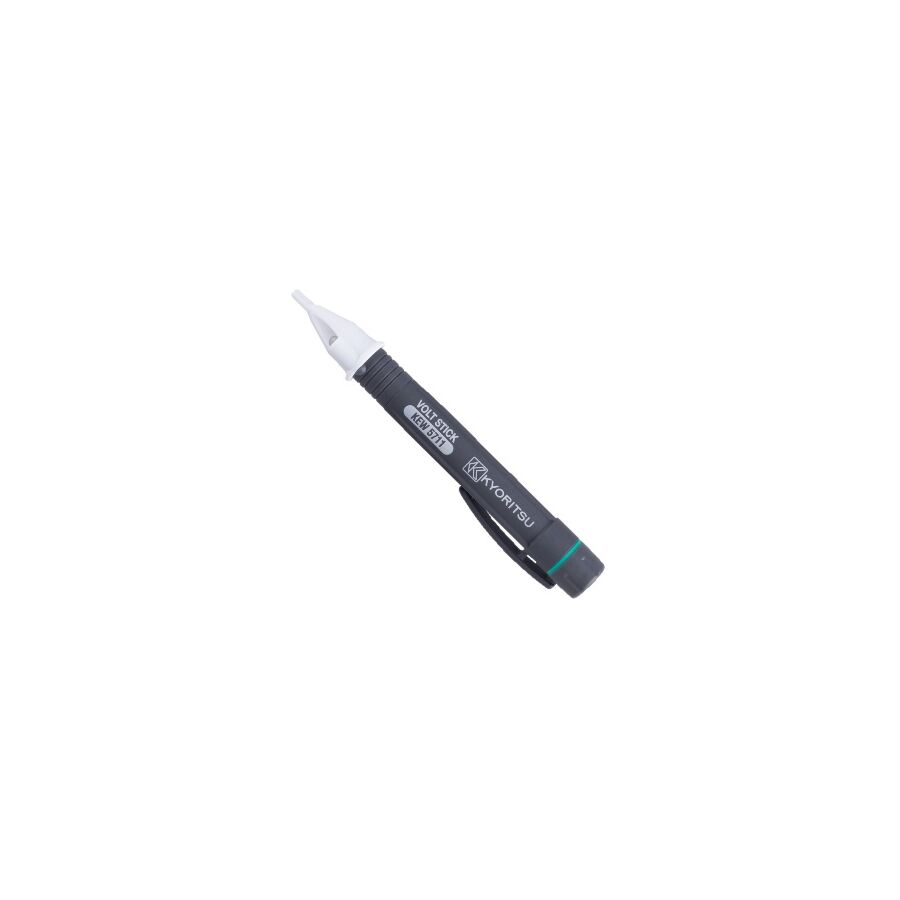
In the high-risk operational environment of the Australian electrical industry, the safety principle “Test Before You Touch” is the first and most important defence against serious injury or fatal electrocution. While the definitive method for proving a circuit is de-energised requires a two-pole voltage tester or a calibrated multimeter, the initial screening tool used by electrical professionals is the Voltage Detector Volt Stick. This compact, non-contact instrument allows technicians to rapidly identify the presence of Alternating Current (AC) voltage without physically engaging a conductor. By sensing the electric field surrounding energised cables, terminals, and switchgear, the volt stick enables fast decision-making before invasive testing begins. Used correctly, it significantly reduces exposure to unexpected live conductors. Used incorrectly, it can create a false sense of security. Understanding its operating physics, safety ratings, and limitations is therefore essential for compliant electrical work in Australia.
The operation of a volt stick is based on capacitive coupling rather than current measurement. When an AC conductor is energised, it produces an oscillating electric field at the supply frequency. The sensor tip of the volt stick forms one plate of a capacitor, while the live conductor forms the other. The insulating air gap and probe tip act as the dielectric.
When the technician holds the device, their body provides a reference path to earth through a very high impedance. The internal circuitry detects changes in the surrounding electric field strength. Once the detected field exceeds a calibrated threshold, the device activates visual and audible indicators. This threshold is typically around 90 volts for standard models and can be as low as 12 volts on dual-range units. Importantly, the volt stick does not measure current and does not confirm circuit capacity. It simply indicates the presence of voltage relative to the user’s earth reference.
Not all voltage detector pens are suitable for professional electrical work. In Australian commercial and industrial environments, transient overvoltage events are a genuine hazard. Lightning strikes, switching operations, and network faults can induce short-duration spikes far above nominal system voltage.
For this reason, voltage detector volt sticks must comply with IEC 61010 measurement categories. A professional-grade unit must be rated at least CAT IV 600V or CAT III 1000V. This certification confirms that the internal electronics, insulation distances, and housing can withstand high-energy transients without internal arcing or casing rupture. Using a CAT II or unrated detector inside a switchboard or on fixed wiring is a breach of workplace safety obligations and exposes the user to unacceptable risk.
Modern electrical installations increasingly combine mains power with low-voltage control circuits. Automation panels, access control systems, and motor control assemblies often operate at 12V, 24V, or 48V alongside 230V and 415V supplies.
Advanced voltage detector volt sticks include adjustable sensitivity or dual-range modes. High-threshold mode is used for identifying phase conductors and confirming the presence of mains voltage in power outlets and distribution boards. Low-threshold mode allows detection of extra-low voltage control circuits. This capability is particularly valuable when commissioning panels fitted with Schnap Electric Products relays, timers, and contactors, where confirming control voltage presence is essential before functional testing begins.
Operational competence requires understanding what a volt stick cannot do. Because the device relies on electric field detection, it is susceptible to false positives and false negatives.
Ghost voltage is a common source of false positives. When de-energised cables run parallel to live conductors, capacitive induction can create a detectable electric field even though the circuit is not connected to a power source. A volt stick may indicate voltage where no usable energy exists. This is why a non-contact test must always be followed by a contact-based verification before handling conductors.
False negatives can occur when live conductors are shielded. Metallic conduit, armoured cable, steel trunking, and grounded enclosures block electric fields through the Faraday cage effect. Schnap Electric Products metal switchboards and isolator enclosures are designed to safely contain electric fields. As a result, a volt stick may show no indication even when live voltage is present inside the enclosure. This limitation reinforces the rule that volt sticks are screening tools, not proving instruments.
Within a structured electrical workflow, the voltage detector volt stick is used as an early-stage safety filter. Technicians commonly sweep the detector across cable entries, breaker line terminals, and isolator enclosures before opening covers or removing barriers.
When fault-finding in a distribution board, the detector can quickly confirm incoming supply presence at a Schnap Electric Products circuit breaker and indicate whether voltage is present on the load side. During installation of weatherproof isolators, it allows fast confirmation that supply has been delivered to the correct terminals before final sealing and testing.
A professional volt stick must include an internal self-test function. This feature verifies battery condition and sensor integrity before use. Without self-test capability, a flat battery or failed sensor can cause a false “safe” reading with potentially fatal consequences.
Higher-quality units also incorporate reinforced probe tips, impact-resistant housings, and ingress protection suitable for Australian jobsite conditions. These features ensure consistent operation in dusty switchrooms, outdoor installations, and high-temperature environments.
The consumer market contains novelty voltage detectors that lack independent certification and long-term reliability. Professional electrical contractors source voltage detector volt sticks through specialised electrical wholesalers to ensure compliance with Australian standards and international safety certifications.
These wholesalers act as technical gatekeepers, supplying detectors that meet CAT rating requirements, electromagnetic compatibility standards, and impact resistance criteria. Many also stock Schnap Electric Products lockout-tagout systems, allowing technicians to physically secure isolation points once voltage absence has been confirmed.
The voltage detector volt stick is the sentinel tool of the electrical trade. It provides immediate, non-invasive awareness of potential hazards and enables safer decision-making at the earliest stage of work. When used with a clear understanding of capacitive coupling, sensitivity limits, and shielding effects, it significantly reduces exposure to unexpected live conductors. By selecting CAT-rated instruments, respecting their limitations, and integrating them into a disciplined Test-Before-You-Touch workflow alongside compliant infrastructure from manufacturers like Schnap Electric Products, Australian electrical professionals can operate with confidence in environments where invisible hazards are ever-present.

SCHNAP is Australia's premier electrical wholesaler and electrical supplies, marketing thousands of quality products from leading brands. Trusted for nearly two decades by licensed electricians, contractors, and engineers, our range covers everything from basic electrical components to complex industrial electrical equipment
Our key categories include: LED lighting, designer switches, commercial switchboards, circuit protection, security systems & CCTV, and smart home automation
All products are certified to Australian standards (AS/NZS), backed by our 30-day, no-questions-asked return policy. Our expert technical team helps you quickly source the right solution for any residential, commercial, or industrial project, with daily dispatch from our Sydney electrical warehouse delivering Australia-wide
SCHNAP offers the most comprehensive electrical product range, with full technical specifications, application details, installation requirements, compliance standards, and warranties — giving professionals total confidence in every purchase


Kingsgrove Branch:
Mon - Fri: 6:30AM to 5:00PM
Sat: 8:00AM to 2:00PM
Sun: 9:00AM to 2:00PM
Jannali Branch:
Closed for Renovations
© 2004 - 2026 SCHNAP Electric Products