



Kingsgrove Branch:


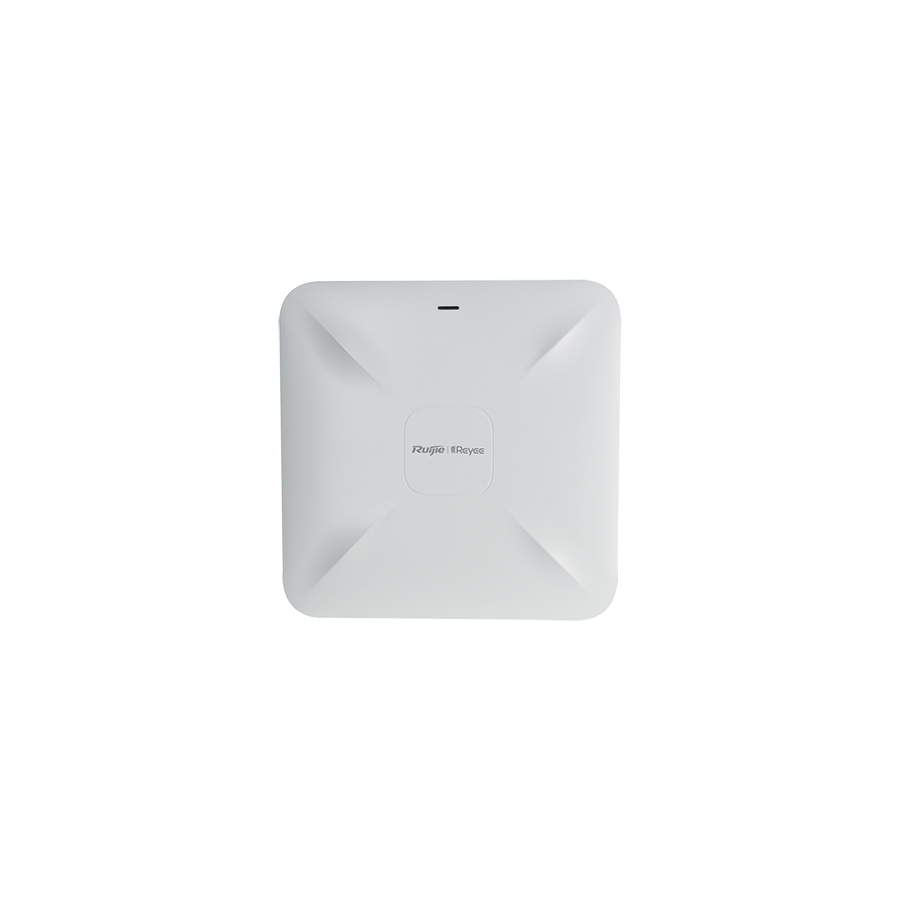
In the digital architecture of modern Australian commerce, wireless connectivity has become a core utility rather than a convenience. Offices, warehouses, retail centres, healthcare facilities, and education campuses now rely on uninterrupted WiFi in the same way they rely on power and water. Staff expect to roam freely with laptops and mobile devices, scanners and tablets drive logistics workflows, and cloud applications demand low latency and consistent throughput. In this environment, consumer-grade “all-in-one” routers are structurally inadequate. They are designed for a handful of devices in a home, not hundreds of concurrent users in a commercial space.
The professional solution is the dedicated WiFi Access Point. An access point is a purpose-built radio platform engineered for density, reliability, and manageability. It separates wireless coverage from routing and security functions, allowing networks to scale predictably. When deployed correctly, access points provide seamless roaming, stable performance under load, and the resilience required for mission-critical business operations.
The capabilities of a WiFi access point are defined by the IEEE 802.11 standard it supports. In contemporary enterprise deployments, WiFi 6 (802.11ax) and WiFi 6E represent the current benchmark.
Earlier generations focused on headline speed, but WiFi 6 is designed around efficiency in crowded environments. It introduces Orthogonal Frequency Division Multiple Access, which divides a channel into smaller resource units. This allows the access point to communicate with multiple devices at the same time rather than sequentially. The result is lower latency, smoother performance, and significantly better behaviour when dozens or hundreds of clients are active.
WiFi 6E extends these benefits into the 6GHz spectrum. This band is free from legacy WiFi devices and household interference sources, creating clean channels for high-bandwidth and low-latency applications. In offices running video conferencing, real-time collaboration tools, or immersive technologies, the additional spectrum provided by WiFi 6E can dramatically improve user experience.
Enterprise access points are rarely powered from a nearby wall outlet. Instead, they rely on Power over Ethernet, which delivers both data and DC power over a single structured cabling link. This simplifies installation and allows access points to be mounted in optimal RF locations such as ceilings or high walls without the need for additional electrical work.
Power planning is critical. Many modern access points use multiple radios, advanced processing, and high transmit power. These features often exceed the capacity of legacy PoE standards. While basic PoE provides up to 15.4 watts, PoE+ delivers up to 30 watts and PoE++ can provide even more. If insufficient power is supplied, the access point may disable radios, reduce performance, or reboot under load. Accurate power budgeting at the switch is therefore essential to ensure stable operation across the network.
Wireless performance is tightly coupled to the quality of the wired backhaul. An access point can only deliver the throughput that its copper or fibre link supports. Poor termination, substandard cable, or mechanical damage to the run will undermine even the most advanced radio technology.
This is where the Schnap Electric Products ecosystem becomes integral to professional deployment. Structured cabling to each access point is typically terminated using dedicated data mechanisms and faceplates to ensure compliance and mechanical integrity. In warehouses, factories, and open-ceiling environments, cabling is often routed through rigid conduit or heavy-duty communications duct to protect against physical impact, rodents, and electromagnetic interference from nearby power infrastructure.
At the ceiling or wall mount, proper mounting blocks and brackets ensure that the access point is fixed securely and that cable bend radius and strain relief are maintained. These details directly affect reliability and service life.
Access point placement is not arbitrary. Radio frequency behaviour is influenced by building materials, ceiling height, reflections, and absorption. Concrete cores, lift shafts, racking, and even tinted glass can significantly attenuate or distort signals.
Professional deployments begin with an RF site survey or predictive heat-mapping exercise. This modelling determines how many access points are required and where they should be installed to achieve consistent coverage without excessive overlap. Too few access points create dead zones. Too many create co-channel interference that degrades performance.
Mounting height, antenna orientation, and separation distance are all calculated to ensure smooth roaming and balanced cell sizes. In high-density areas such as conference rooms or training spaces, additional access points may be installed at lower power levels to increase capacity rather than coverage.
A key advantage of enterprise WiFi access points is their ability to manage roaming intelligently. In a commercial environment, users move constantly. Phones, tablets, and laptops should transition between access points without dropped connections or noticeable delays.
Modern access points support roaming assistance standards that allow the network to guide clients toward the most suitable access point. When signal quality drops below a defined threshold, the client is encouraged to move to a closer radio. This process occurs fast enough that real-time applications such as voice calls or barcode scanning continue uninterrupted. Effective roaming is essential in hospitals, warehouses, and large offices where mobility is central to operations.
Contemporary access points use beamforming to direct RF energy toward connected devices rather than broadcasting evenly in all directions. By adjusting the phase and timing of signals across multiple antennas, the access point focuses energy where it is needed, improving signal quality and reducing interference.
Multi-User Multiple Input Multiple Output technology builds on this by allowing the access point to transmit multiple independent data streams at the same time. Instead of serving devices one after another, the radio can communicate with several clients simultaneously. This dramatically increases aggregate throughput and ensures fair performance across many users.
Wireless networks are often the most exposed part of a business infrastructure. Access points must therefore support strong security and segmentation. Enterprise platforms allow multiple SSIDs to be mapped to separate logical networks. Staff devices, guest access, and Internet of Things equipment can be isolated from one another.
This segmentation prevents unauthorised access to sensitive systems and limits the impact of compromised devices. Encryption standards, authentication mechanisms, and centralised management further strengthen the wireless edge against intrusion.
The market includes many access points that appear similar on paper but differ significantly in reliability, compliance, and support. Grey-market hardware may lack Australian regulatory certification, local firmware support, or valid warranties.
Professional network integrators and facility managers source access points through specialised electrical wholesaler who verify compliance and provide long-term support pathways. These suppliers also stock compatible cabling, connectors, patch leads, and cable management accessories, enabling the entire wireless infrastructure to be delivered as a cohesive, standards-aligned system.
The WiFi access point is the cornerstone of modern commercial connectivity. It is where radio physics, power engineering, and data networking converge. By adopting WiFi 6 and 6E standards, designing accurate PoE power budgets, and supporting deployments with robust structured cabling and mounting systems from suppliers such as Schnap Electric Products, Australian organisations can build wireless networks that are fast, resilient, and scalable. In an economy driven by cloud services and mobility, the quality of the wireless edge defines the quality of the digital experience.

SCHNAP is Australia's premier electrical wholesaler and electrical supplies, marketing thousands of quality products from leading brands. Trusted for nearly two decades by licensed electricians, contractors, and engineers, our range covers everything from basic electrical components to complex industrial electrical equipment
Our key categories include: LED lighting, designer switches, commercial switchboards, circuit protection, security systems & CCTV, and smart home automation
All products are certified to Australian standards (AS/NZS), backed by our 30-day, no-questions-asked return policy. Our expert technical team helps you quickly source the right solution for any residential, commercial, or industrial project, with daily dispatch from our Sydney electrical warehouse delivering Australia-wide
SCHNAP offers the most comprehensive electrical product range, with full technical specifications, application details, installation requirements, compliance standards, and warranties — giving professionals total confidence in every purchase


Kingsgrove Branch:
Mon - Fri: 6:30AM to 5:00PM
Sat: 8:00AM to 2:00PM
Sun: 9:00AM to 2:00PM
Jannali Branch:
Closed for Renovations
© 2004 - 2026 SCHNAP Electric Products