



Kingsgrove Branch:


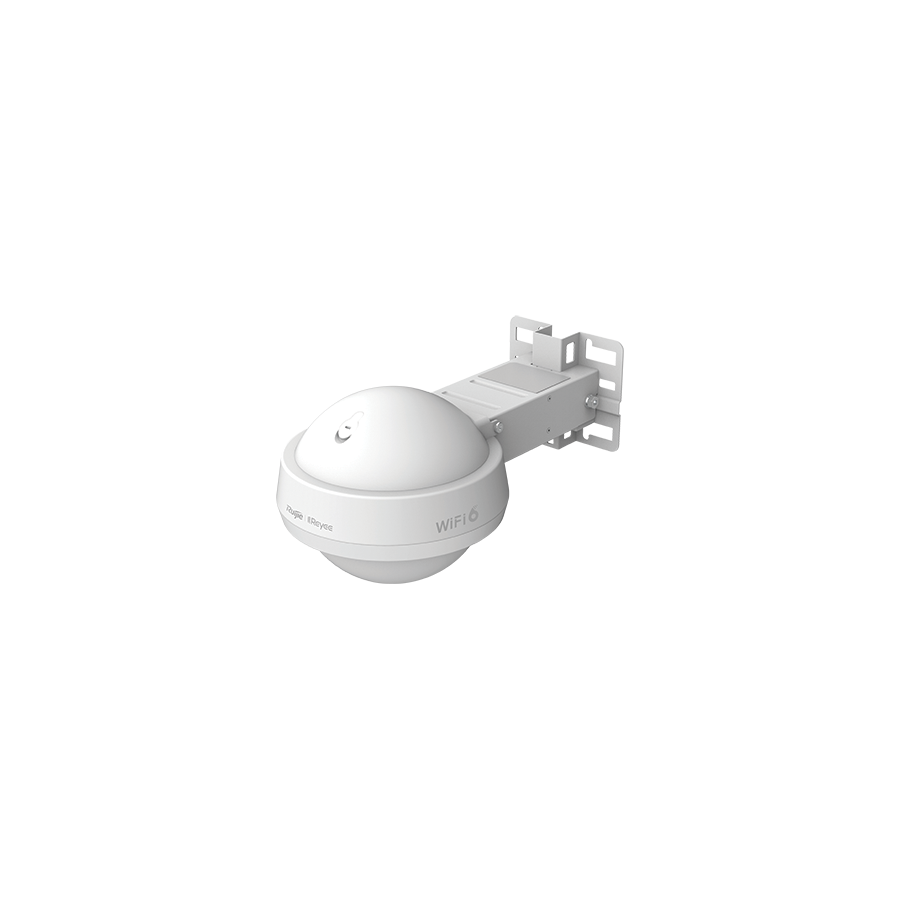
Across Australia’s geographically expansive and operationally demanding environments, the need for reliable wireless connectivity has moved well beyond the walls of buildings. Logistics yards in Western Sydney, alfresco hospitality precincts in Brisbane, port facilities, agricultural operations, and remote mining accommodation all require stable, high-bandwidth access in locations exposed to sun, dust, rain, and electrical interference. Consumer indoor routers are fundamentally unsuitable for these conditions. Their enclosures degrade under ultraviolet exposure, ports corrode from moisture, and thermal limits are quickly exceeded. The professional solution is the Wi-Fi outdoor access point. This purpose-built device combines enterprise-grade radio engineering with industrial mechanical design to deliver consistent IEEE 802.11ax (Wi-Fi 6) performance while surviving Australia’s harsh climate.
The defining feature of an outdoor access point is its enclosure rating. Unlike indoor units that rely on open vents and convection cooling, outdoor units must be sealed to prevent dust, water, and insects from entering the electronics. Professional devices are typically rated to IP67. A rating of six confirms total dust exclusion, critical in agricultural and mining zones where airborne particles are often conductive. A rating of seven confirms protection against temporary immersion, ensuring survival during heavy rain or wash-down procedures.
Sealing a device creates a secondary challenge: heat dissipation. High-performance Wi-Fi chipsets generate significant thermal energy, particularly under sustained client load. Outdoor access points address this by using cast aluminium or metal-reinforced chassis that function as passive heat sinks. Thermal energy is conducted directly from the chipset to the enclosure surface and dissipated to ambient air. To prevent condensation during temperature cycling, many designs incorporate a pressure equalisation membrane. This vent allows internal air pressure to stabilise without permitting moisture ingress, a critical detail for long-term reliability.
Outdoor radio propagation differs substantially from indoor environments. In open spaces, there are fewer reflective surfaces and greater distances between transmitter and receiver. Antenna selection therefore becomes a primary design variable. Most outdoor access points integrate omnidirectional antennas that radiate evenly across the horizontal plane. This configuration suits courtyards, loading docks, and hospitality zones where users move freely around a central mounting point.
For point-to-point or elongated coverage areas, directional or sector antennas are used. These antennas concentrate radio energy into a defined beam, increasing effective range and overcoming free-space path loss. Engineers must also account for Fresnel zone clearance. Even when visual line of sight exists, obstructions within the Fresnel zone can diffract signals and reduce throughput. Proper mounting height and antenna orientation are therefore as important as transmitter power.
Outdoor access points are rarely installed near standard power outlets. Power is delivered via Power over Ethernet using IEEE 802.3at or 802.3bt standards. This simplifies installation but places additional importance on cable selection and protection. Standard indoor Ethernet cable jackets deteriorate rapidly under UV exposure and temperature extremes.
Professional installations require external-grade or gel-filled Category 6 cabling with UV-stabilised jackets. Mechanical protection is equally important. Cables must be shielded from vandalism, bird damage, and accidental impact. This is where infrastructure from Schnap Electric Products plays a key role. Rigid and flexible UV-rated conduit systems protect data cabling along building exteriors, while weather-tight glands and adaptors ensure that cable entry points maintain the enclosure’s IP rating. These details prevent water tracking along the cable sheath into the device, a common cause of premature failure.
Any device mounted outdoors, particularly on poles or rooftops, is exposed to lightning-induced electrical surges. Even indirect strikes can induce high-energy transients onto Ethernet cabling. Without mitigation, these surges can destroy access points and propagate back to core network switches.
Australian standards recommend comprehensive earthing strategies. Outdoor access points typically include a grounding lug that must be bonded to the building earth system. Ethernet surge protectors should be installed close to the access point and again at the point of entry to the building. These devices divert transient voltages safely to earth, protecting both the access point and upstream equipment. Proper earthing not only improves safety but also reduces radio frequency noise, enhancing wireless performance.
In locations where running a physical data cable is impractical or prohibited, outdoor access points can be configured in mesh topologies. In a mesh network, access points communicate with each other wirelessly while simultaneously serving client devices. Traffic dynamically selects the optimal path back to the wired network, creating a self-healing architecture.
Mesh capability is particularly valuable in temporary event sites, heritage buildings, and remote compounds. Modern outdoor access points include dedicated radios for backhaul communication, preventing client traffic from competing with inter-node links. Intelligent channel management allows the system to adapt to interference from radar, neighbouring networks, or changing environmental conditions.
Outdoor wireless infrastructure must comply with Australian regulatory requirements for electromagnetic compatibility and radio transmission. Devices lacking proper compliance markings may cause interference or be rejected by insurers and facility owners. Thermal testing, ingress testing, and long-term UV exposure trials differentiate professional access points from consumer products marketed as weather resistant.
Reliability is measured over years, not weeks. A failed access point mounted on a pole or roof is costly to replace and disruptive to operations. Selecting devices designed specifically for outdoor duty reduces maintenance costs and improves user experience.
The market includes many low-cost extenders and repeaters that claim outdoor capability but lack true environmental hardening. These devices often fail after the first summer heatwave or heavy storm. Professional installers source outdoor access points through specialised electrical wholesaler that provide technical documentation, mounting hardware, and warranty support.
A comprehensive installation includes proper mounting brackets, sealed connectors, shielded RJ45 terminations, and continuity of earthing from device to rack. Attention to these details ensures that the access point performs as specified throughout its service life.
The Wi-Fi outdoor access point defines the modern edge of the digital network. It enables connectivity in spaces once considered unreachable by reliable wireless technology. By understanding ingress protection, antenna physics, power delivery, and surge mitigation, and by supporting installations with robust infrastructure from suppliers such as Schnap Electric Products, Australian industry professionals can deploy outdoor wireless systems that perform consistently in sun, dust, rain, and storms. In the science of wireless networking, durability is not optional; it is the foundation of performance.

SCHNAP is Australia's premier electrical wholesaler and electrical supplies, marketing thousands of quality products from leading brands. Trusted for nearly two decades by licensed electricians, contractors, and engineers, our range covers everything from basic electrical components to complex industrial electrical equipment
Our key categories include: LED lighting, designer switches, commercial switchboards, circuit protection, security systems & CCTV, and smart home automation
All products are certified to Australian standards (AS/NZS), backed by our 30-day, no-questions-asked return policy. Our expert technical team helps you quickly source the right solution for any residential, commercial, or industrial project, with daily dispatch from our Sydney electrical warehouse delivering Australia-wide
SCHNAP offers the most comprehensive electrical product range, with full technical specifications, application details, installation requirements, compliance standards, and warranties — giving professionals total confidence in every purchase


Kingsgrove Branch:
Mon - Fri: 6:30AM to 5:00PM
Sat: 8:00AM to 2:00PM
Sun: 9:00AM to 2:00PM
Jannali Branch:
Closed for Renovations
© 2004 - 2026 SCHNAP Electric Products