



Trade Discount 25%
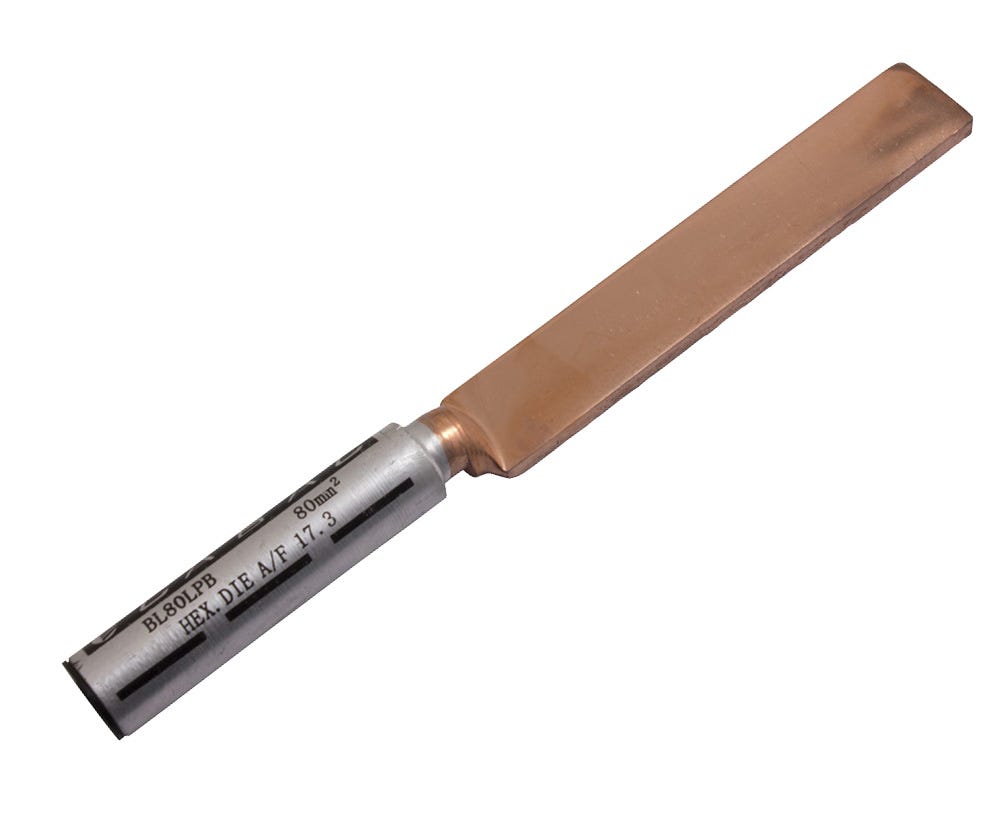
Bi-Metal Lug 120mm2-LPB Aluminium & Copper Friction Welded Joint Cabac
The Bi-Metal Lug 120mm2-LPB is designed for secure electrical power connectivity, featuring a strong friction welded joint made from high-quality aluminium and
Please sign in so that we can notify you about a reply

Sign in
Please login to continue to your account.
Technical Specifications
- Material: Aluminium (99.6%) and Copper (99.9%)
- Manufacturing Process: Friction welded joint
- Palm Length: Variable, unfinished for cropping and drilling
- Barrel Length: Extended with additional crimping position
- Surface Treatment: Chemically treated barrels with jointing compound
- Compatibility: Designed for CCT conductors with polyethylene covering and water blocking compound
- Crimping: Suitable for standard Australian tooling
- Dimensions (H x L x W): 15mm x 120mm x 40mm
- Weight: 0.15 kg
Key Features
- Manufactured using friction welding process producing a very strong electrically sound joint
- Compound reduces contact resistance and inhibits corrosion
- Crimp from palm end to force compound into conductor strands
- Suitable for CCT cable installations
- Long barrel length with additional crimping position for secure connection
- Palm length can be cropped and drilled to individual requirements
Professional Installation Requirements
- Installation should be performed by a qualified electrician experienced with crimping and connecting CCT conductors to ensure secure and compliant connections.
Applications
- Electrical power connectivity for overhead aluminium conductors
- Suitable for CCT (Covered Conductor Thick) cable installations
- Used in electrical distribution and transmission systems
Standards & Compliance
- Complies with AS/NZS 3000 – Wiring Rules (Electrical Installation)
Environmental Benefits
- Reduces corrosion and extends service life of electrical connections
- Minimizes flashover and vegetation clearance requirements, reducing environmental impact
- Supports use of CCT conductors which reduce wildlife interference
Warranty Information
Standard manufacturer warranty against defects applies. Please refer to Cabac warranty policy for details.
Available Now
The Cabac Bi-Metal Lug 120mm2-LPB is available for immediate purchase, ideal for electrical power connectivity in overhead aluminium conductor installations.





