



Kingsgrove Branch:


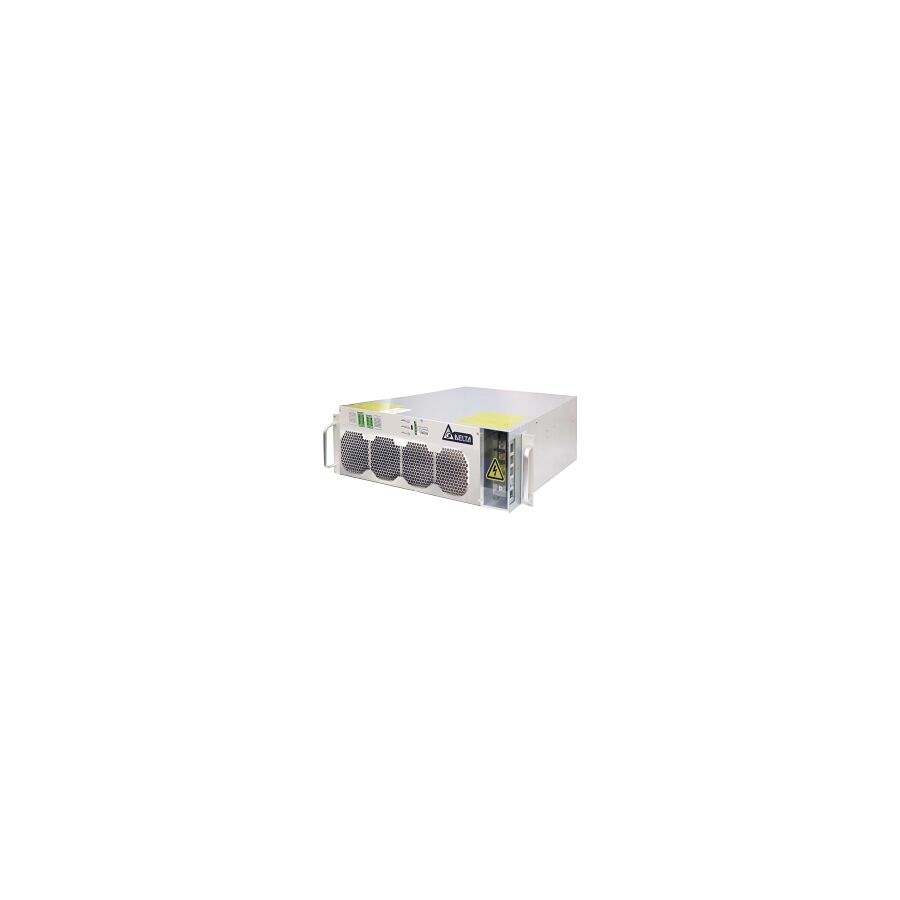
The electrical profile of Australian industrial and commercial facilities has changed permanently. Where once the dominant loads were linear and predictable, modern installations are now saturated with non-linear electronic equipment. Variable Speed Drives control motors with precision, LED drivers power vast lighting arrays, UPS systems protect critical loads, and EV chargers inject high-power switching currents into local networks. These technologies improve efficiency and controllability, but they introduce harmonic distortion as a by-product of their operation.
Harmonics are not a minor side effect. They deform the current waveform, elevate neutral currents, overheat transformers, create nuisance tripping, and shorten the life of sensitive electronics. In large facilities, unmanaged harmonic distortion can result in failed audits, breached network connection agreements, and costly downtime. The engineering response adopted across Australian industry is the active power filter module. This device does not merely suppress symptoms. It dynamically neutralises harmonic currents in real time, restoring electrical stability at the source.
An active power filter module operates on a fundamentally different principle to passive harmonic filters. Passive solutions rely on fixed inductors and capacitors tuned to specific harmonic frequencies. While effective under stable load conditions, they lack adaptability and can resonate with the network under changing conditions.
Active filters operate dynamically. Using high-accuracy current transformers, the module continuously measures load current flowing through the supply. A digital signal processor analyses this waveform in real time, separating the fundamental fifty-hertz component from the harmonic content using mathematical techniques such as Fast Fourier Transform analysis.
Once the harmonic signature is identified, the filter generates an equal and opposite current waveform using its internal power electronics. This compensating current is injected into the system at the point of connection. When combined with the distorted load current, the harmonics cancel each other out, leaving a clean sinusoidal current drawn from the upstream supply. This process occurs within microseconds and adapts instantly as loads fluctuate. Whether a drive ramps up, a lift starts, or an EV charger engages, the filter responds without delay.
Australian electricity networks operate under strict power quality requirements. AS/NZS 61000.3.6 defines permissible harmonic emission limits for installations connected to medium and high voltage networks. Distribution Network Service Providers enforce these limits to protect shared infrastructure and ensure equitable network performance.
Excessive Total Harmonic Distortion can lead to penalties, enforced remediation, or disconnection. Active power filter modules are specifically engineered to address these requirements. High-performance units mitigate harmonics across a wide frequency spectrum, often up to the fiftieth harmonic order. By targeting dominant harmonic components such as the fifth, seventh, eleventh, and thirteenth orders, facilities can reduce THDi at the point of common coupling to acceptable levels.
This capability is particularly important in data centres, hospitals, mining facilities, and commercial towers where non-linear loads dominate and network compliance is closely monitored.
Modern active power filter technology has evolved towards modular construction. Instead of large standalone cabinets, current systems use compact modules that integrate directly into switchboards. These modules are typically rated in discrete current capacities and can be paralleled to meet site requirements.
This modularity delivers several operational advantages. Capacity can be scaled precisely to match measured harmonic load rather than over-sizing equipment. Redundancy is inherent. If one module is taken offline for maintenance, remaining modules continue operating, preserving partial harmonic mitigation. As facilities expand or load profiles change, additional modules can be installed without redesigning the entire system.
For Australian sites planning staged expansion, this approach provides future-proofing while maintaining continuous compliance.
An active power filter module is not limited to harmonic suppression. It also functions as a comprehensive power quality conditioner. One key capability is dynamic power factor correction.
Traditional capacitor banks correct displacement power factor in fixed steps. They cannot respond quickly to load variation and do not address distortion power factor caused by harmonics. Active filters correct both simultaneously. They inject reactive current dynamically, maintaining a near-unity power factor under all operating conditions. This reduces apparent power demand, lowers current draw, and improves utilisation of transformers and cabling.
Additionally, active filters can balance three-phase loads. In buildings with uneven single-phase loading, neutral currents can become dangerously high. By redistributing current on the supply side, the filter presents a balanced load to the upstream network, reducing thermal stress and improving overall system stability.
Integrating an active power filter module into a main switchboard requires careful attention to measurement accuracy, protection coordination, and thermal management. The current transformers feeding measurement data to the filter are critical components. Inaccurate sensing leads to incorrect compensation and reduced effectiveness.
High-accuracy CTs ensure the digital processor receives precise current data. Protection of the module itself is equally important. Active filters handle significant energy and must be isolated safely in the event of internal faults. Appropriate upstream protection devices ensure faults are contained without affecting the broader installation.
Mechanical integration also matters. Modular filters are often connected to busbars using flexible conductors that accommodate thermal expansion and vibration while allowing rapid replacement. This design supports safe maintenance and minimises downtime.
This is where infrastructure components from Schnap Electric Products are commonly specified. Precision CTs, high-capacity protection devices, and flexible busbar solutions support accurate sensing, safe isolation, and practical switchboard assembly.
Active power filter modules generate heat during operation due to high-frequency switching within their power electronics. Efficient heat removal is essential to protect internal components and maintain long-term reliability.
Switchboard enclosures housing active filters must provide adequate airflow and filtration. Poor thermal design leads to elevated internal temperatures, accelerated ageing of components, and increased failure rates. In Australian environments, airborne dust compounds this risk by insulating heat sinks and contaminating electronics.
Professional installations incorporate forced ventilation and filtration strategies to maintain clean, controlled internal conditions. Proper cabinet design is a fundamental part of system reliability, not an optional accessory.
Selecting an active power filter module is not a commodity purchase. Performance depends on switching frequency, control algorithms, thermal design, and measurement accuracy. Low-quality units may introduce audible noise, respond too slowly to load changes, or fail prematurely under sustained operation.
Consulting engineers and switchboard manufacturers typically specify active filters based on detailed site audits. Harmonic spectra, load diversity, and expansion plans inform module sizing and configuration. Procuring equipment through specialised wholesalers ensures access to verified products with documented performance and local technical support.
A controlled supply chain also ensures compatibility between modules, sensing equipment, protection devices, and switchboard hardware, reducing installation risk and commissioning time.
The active power filter module is a cornerstone of modern Australian electrical infrastructure. It enables facilities to embrace efficient, electronically controlled loads without sacrificing power quality or regulatory compliance. By dynamically cancelling harmonics, correcting power factor, and balancing phase loads, it restores stability to networks under increasing strain. When specified correctly and integrated with precision infrastructure, the active power filter module transforms a polluted supply into a clean, efficient power system. In the domain of power quality, control is not optional. It is the foundation of performance and reliability.

SCHNAP is Australia's premier electrical wholesaler and electrical supplies, marketing thousands of quality products from leading brands. Trusted for nearly two decades by licensed electricians, contractors, and engineers, our range covers everything from basic electrical components to complex industrial electrical equipment
Our key categories include: LED lighting, designer switches, commercial switchboards, circuit protection, security systems & CCTV, and smart home automation
All products are certified to Australian standards (AS/NZS), backed by our 30-day, no-questions-asked return policy. Our expert technical team helps you quickly source the right solution for any residential, commercial, or industrial project, with daily dispatch from our Sydney electrical warehouse delivering Australia-wide
SCHNAP offers the most comprehensive electrical product range, with full technical specifications, application details, installation requirements, compliance standards, and warranties — giving professionals total confidence in every purchase


Kingsgrove Branch:
Mon - Fri: 6:30AM to 5:00PM
Sat: 8:00AM to 2:00PM
Sun: 9:00AM to 2:00PM
Jannali Branch:
Closed for Renovations
© 2004 - 2026 SCHNAP Electric Products