



Kingsgrove Branch:


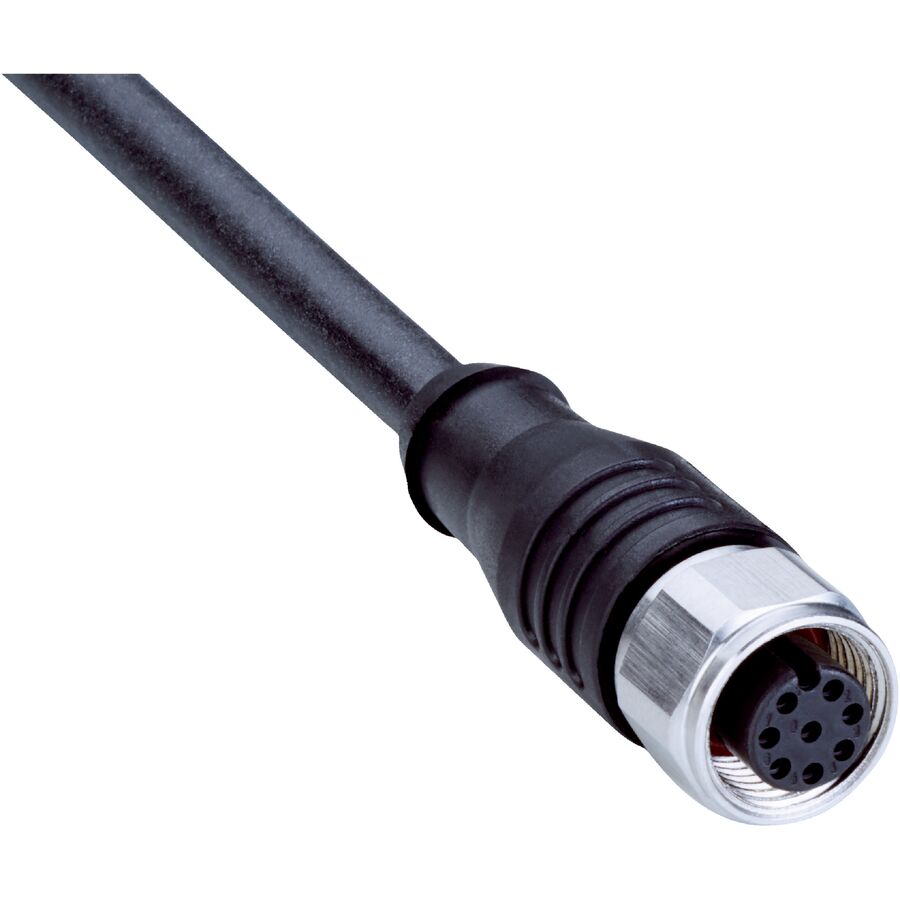
In modern Australian manufacturing, automation reliability is not determined solely by controllers, software, or motors. It is defined by the physical interconnections that transmit power and control signals from logic to motion. At the heart of this interface is the actuator cable. Whether driving a linear actuator on a packaging line, controlling a pneumatic valve manifold in food processing, or supplying feedback to a robotic arm in advanced manufacturing, the actuator cable forms the mechanical and electrical link between intention and execution.
Unlike fixed building wire, an actuator cable operates in dynamic and electrically noisy environments. It must tolerate constant movement, vibration, chemical exposure, and electromagnetic interference while maintaining precise signal integrity. Selecting the wrong cable specification does not result in gradual degradation; it leads to sudden faults, unpredictable behaviour, and costly downtime. For engineers and maintenance planners, actuator cable selection is a design decision, not a consumable choice.
The defining characteristic of most actuators is movement. In CNC machines, robotic cells, and automated conveyors, cables are often routed through drag chains where they bend, twist, and flex repeatedly. Over time, this mechanical stress is far more destructive than static load.
Standard electrical cables use solid or coarse-stranded copper conductors designed for fixed installations. When exposed to repeated flexing, these conductors suffer from work hardening. Microscopic cracks form, resistance increases, and eventually the conductor fractures. The failure often appears intermittent, making diagnosis difficult and repair time-consuming.
Professional actuator cables use Class 6 ultra-fine stranded copper conductors. Each conductor is composed of hundreds of microscopic filaments twisted together to distribute mechanical stress evenly. This construction allows the cable to flex millions of times without internal fatigue. In addition, the internal cable geometry is engineered with short lay lengths and controlled stranding patterns. Low-friction fleece fillers separate conductor bundles so they can slide smoothly during bending instead of compressing and twisting. This prevents corkscrewing, a failure mode where the cable twists internally until it self-destructs.
Cable longevity in motion systems is directly linked to bend radius. Actuator cables are rated for minimum dynamic bend radii, often defined as a multiple of the cable diameter. Exceeding this limit accelerates fatigue and voids manufacturer performance claims.
High-quality actuator cables are tested for millions of flex cycles at defined radii and travel lengths. These tests simulate real-world drag chain operation. Cables that pass these tests are suitable for long-term automated use. Cables without verified test data should never be installed in dynamic applications, regardless of price.
Actuators rely on clean control signals. These may be digital outputs, analogue references, or feedback loops that operate at low voltages. In industrial environments, these signals often run alongside high-power motor cables connected to variable speed drives. These drives generate high-frequency switching noise that radiates electromagnetic interference.
If this interference couples into actuator control lines, the result can be erratic movement, positioning errors, or unexplained faults. High-specification actuator cables mitigate this risk through comprehensive shielding. A braided or foil copper shield surrounds the conductors and provides high optical coverage, typically greater than 85 percent. This shield intercepts electromagnetic noise and directs it to earth before it can corrupt the signal.
For shielding to be effective, continuity must be maintained through the connector system. The shield must be terminated correctly and bonded to ground at the appropriate point. Poor shielding practices negate the benefits of high-quality cable construction.
The external sheath of an actuator cable determines how it survives the industrial environment. While PVC jackets are common in light-duty applications, they are often unsuitable for automation systems exposed to oils, coolants, and mechanical abrasion.
Polyurethane has become the industry standard jacket material for actuator cables. PUR offers exceptional resistance to mineral oils, hydraulic fluids, and cutting lubricants. It also resists abrasion and tearing, making it ideal for drag chain and machine-mounted applications. Unlike PVC, PUR maintains flexibility over a wide temperature range and does not embrittle after chemical exposure.
In Australian manufacturing environments where machinery is frequently cleaned or exposed to airborne contaminants, PUR jackets significantly extend service life and maintain ingress protection integrity.
An actuator cable is only as reliable as its termination. The transition from flexible cable to rigid actuator housing is a common failure point if not engineered correctly. Mechanical strain, vibration, and environmental exposure concentrate stress at this interface.
This is where the Schnap Electric Products ecosystem is commonly integrated into professional assemblies. IP68-rated metric cable glands provide controlled compression that grips the cable jacket without damaging internal conductors. These glands deliver strain relief, environmental sealing, and mechanical stability at the point of entry.
In modular automation systems, circular connectors such as M12 assemblies are preferred. These connectors provide fast installation, standardised pinouts, and reliable sealing. Factory-moulded actuator cables with integrated connectors eliminate termination errors and ensure gas-tight electrical contacts.
Modern automation prioritises maintainability. When an actuator fails, replacement must be quick and repeatable. Hard-wired terminations slow maintenance and introduce variability.
Actuator cables terminated with standard connectors allow components to be swapped without rewiring. This modularity reduces downtime and simplifies spare parts management. Clear labelling and structured cable routing further improve serviceability and long-term asset management.
The market contains many cables marketed as actuator or drag chain compatible without verified testing. These cables may function initially but fail prematurely under real operating conditions. In production environments, the cost of failure far exceeds the cost of quality cable.
Professional automation teams source actuator cables through specialised electrical wholesaler that provide verified specifications, test data, and compliance documentation. Cables tested for dynamic flexing, chemical resistance, and EMC performance deliver predictable reliability. Access to compatible connectors, glands, and protective conduit ensures the entire cable system performs as designed.
Actuator cables are designed for control and power delivery within defined limits. They should not be overloaded electrically or mechanically. Separating high-power motor cables from control and feedback lines reduces interference. Respecting bend radius, routing paths, and installation guidelines preserves cable integrity.
Correct installation is as important as correct selection. Even the highest quality actuator cable can fail if crushed, over-tightened, or improperly supported.
The actuator cable is a critical component in industrial automation, translating digital control into physical motion. Its performance is defined by mechanical flexibility, electromagnetic stability, chemical resistance, and termination quality. By selecting cables engineered for dynamic stress, shielding against interference, and protecting installations with robust infrastructure from suppliers such as Schnap Electric Products, Australian industry professionals can ensure reliable, precise, and long-lasting machine operation. In automation, motion begins with the connection, and the connection defines the outcome.

SCHNAP is Australia's premier electrical wholesaler and electrical supplies, marketing thousands of quality products from leading brands. Trusted for nearly two decades by licensed electricians, contractors, and engineers, our range covers everything from basic electrical components to complex industrial electrical equipment
Our key categories include: LED lighting, designer switches, commercial switchboards, circuit protection, security systems & CCTV, and smart home automation
All products are certified to Australian standards (AS/NZS), backed by our 30-day, no-questions-asked return policy. Our expert technical team helps you quickly source the right solution for any residential, commercial, or industrial project, with daily dispatch from our Sydney electrical warehouse delivering Australia-wide
SCHNAP offers the most comprehensive electrical product range, with full technical specifications, application details, installation requirements, compliance standards, and warranties — giving professionals total confidence in every purchase


Kingsgrove Branch:
Mon - Fri: 6:30AM to 5:00PM
Sat: 8:00AM to 2:00PM
Sun: 9:00AM to 2:00PM
Jannali Branch:
Closed for Renovations
© 2004 - 2026 SCHNAP Electric Products