



Kingsgrove Branch:


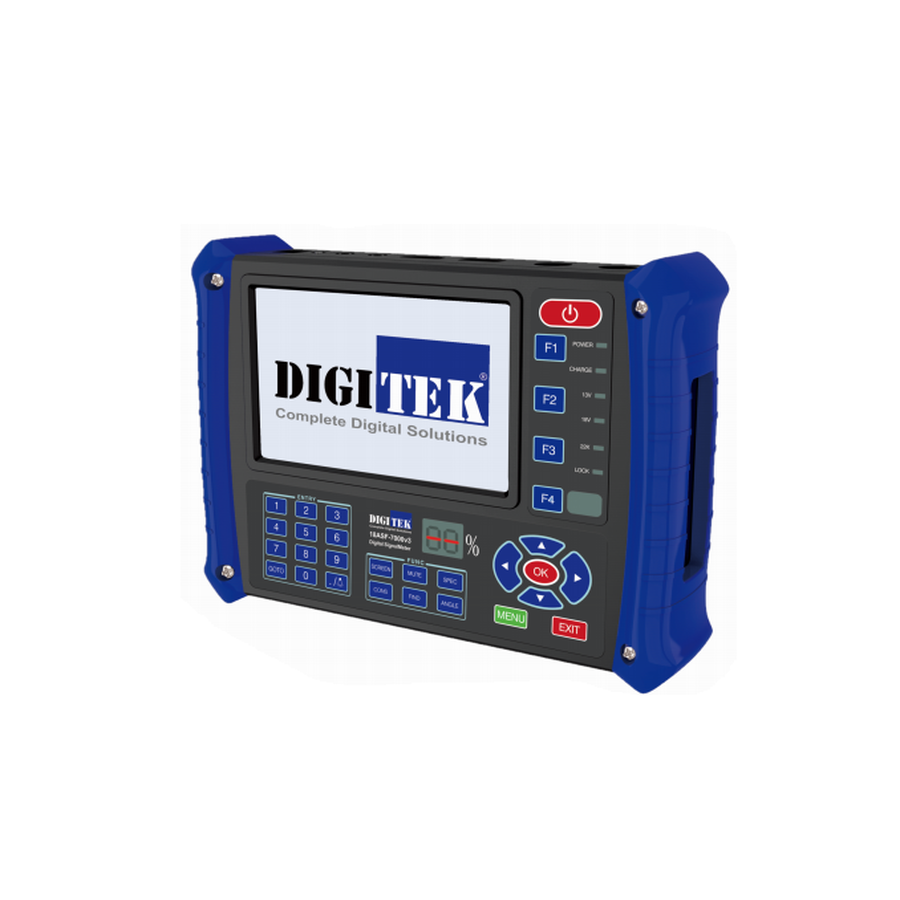
In the precise domain of Australian telecommunications and broadcasting, the transition from analogue transmission to digital delivery has fundamentally changed how reception systems are designed, installed, and verified. During the analogue era, antenna alignment relied on subjective visual feedback. Snow indicated weak signal strength, ghosting suggested multipath interference, and a technician could often achieve an acceptable result by eye. In the digital world of DVB-T, DVB-T2, DVB-S, and DVB-S2, that methodology no longer applies. Digital signals operate on a binary threshold. The picture remains flawless until the signal quality drops below a critical margin, at which point reception collapses instantly. This behaviour is known as the digital cliff.
To engineer stability rather than rely on guesswork, installers require an instrument capable of translating invisible radio frequency behaviour into measurable data. The Digital Signal Meter fulfils this role. Far more than a simple field strength indicator, it is a portable spectrum analyser and demodulator that provides objective, numerical insight into signal quality, interference, and system integrity before a television or set-top box is ever connected.
One of the most common misconceptions in RF work is equating high signal strength with good reception. In practice, signal strength alone is meaningless without signal integrity. A signal can be extremely strong yet corrupted by noise, distortion, or interference, making it undecodable.
Digital signal meters focus on integrity metrics rather than raw amplitude. Two measurements are critical. Modulation Error Ratio, or MER, represents how accurately the received digital symbols align with their ideal positions within the modulation constellation. In Australian DVB-T services using 64-QAM modulation, symbol spacing is tight. Even small distortions can cause decoding errors. MER values above 30 dB generally indicate a clean, stable signal with healthy margin. Values below the mid-20 dB range place the system dangerously close to failure.
Bit Error Rate, or BER, measures how many bits are corrupted before and after error correction. Pre-correction BER reveals underlying signal quality, while post-correction BER confirms whether the receiver can still reconstruct the stream. A rising BER is the earliest warning that reception will become unstable under changing weather or interference conditions. Digital signal meters allow technicians to monitor these metrics in real time, ensuring installations are engineered with adequate margin rather than operating on the edge of collapse.
Australia’s RF environment has become increasingly congested following the reallocation of broadcast spectrum to mobile services. The digital dividend introduced powerful 4G and 5G transmissions adjacent to traditional television bands. A basic meter cannot distinguish between broadcast signals and mobile interference.
Professional digital signal meters incorporate a live spectrum analyser. This displays frequency on the horizontal axis and signal amplitude on the vertical axis, revealing the entire RF landscape. The technician can identify raised noise floors, impulsive interference, and out-of-band transmissions that may compromise reception. This capability is essential for diagnosing LTE ingress, identifying faulty amplifiers, or determining whether antenna relocation or filtering is required.
Spectrum analysis also supports compliance with ACMA planning data. Installers can document that interference levels fall within acceptable limits at the time of commissioning, protecting both the client and the contractor from future disputes.
Digital signal meters are equally critical for satellite reception, including VAST and Foxtel systems. In satellite installations, the meter becomes the receiver. It powers the Low Noise Block via the coaxial cable and controls polarisation and band selection through precise voltage and tone injection.
The meter must switch accurately between 13 volts and 18 volts to select vertical or horizontal polarisation, and apply a 22 kHz tone to access high and low frequency bands. Real-time quality feedback allows the installer to perform fine adjustments to azimuth, elevation, and skew. Audible tones linked to MER enable micro-movements that maximise cross-polarisation isolation, ensuring reliable reception even during heavy rain fade.
Without a digital signal meter, satellite alignment becomes a slow and unreliable process. With one, it becomes a repeatable engineering exercise.
A digital signal meter does not only assess the antenna or dish. It validates the entire passive distribution system from head-end to outlet. A comparison between readings at the antenna and readings at the wall plate immediately highlights losses caused by poor cabling, damaged connectors, or faulty splitters.
This is where infrastructure quality becomes visible. Systems built using components from the Schnap Electric Products ecosystem demonstrate predictable, linear behaviour under test. High-quality RG6 quad shield coaxial cable, precision F-type compression connectors, and impedance-matched splitters maintain signal integrity across the frequency band. When tested with a digital signal meter, correct attenuation values and stable MER readings confirm that the physical network meets design expectations.
In commercial and multi-dwelling projects, functional reception is not sufficient. Asset owners require documented proof of performance. Modern digital signal meters include internal memory, USB interfaces, and sometimes wireless connectivity.
Technicians can record signal strength, MER, BER, and spectrum plots for every outlet. These records form commissioning reports that demonstrate compliance with industry benchmarks, typically minimum signal levels above 60 dBµV and MER values exceeding 25 dB at all points. This documentation is essential for warranty support, future fault diagnosis, and contractual handover requirements.
Measurement accuracy is critical. A meter that reads several decibels incorrectly can lead to serious design errors. Over-amplification based on false readings can overload tuners and introduce distortion across an entire network.
For this reason, professional installers source digital signal meters through electrical wholesaler. These suppliers provide equipment pre-configured for Australian channel plans and satellite transponders, with calibration support and firmware updates. They also supply compatible test adaptors and protective cases to preserve the meter’s accuracy in harsh site conditions.
The digital signal meter is the definitive authority in modern broadcast and satellite installation. It replaces subjective judgement with measurable data, enabling technicians to engineer systems that remain stable under real-world conditions. By focusing on MER and BER rather than raw strength, analysing the RF spectrum, and validating infrastructure built with trusted components such as Schnap Electric Products, Australian industry professionals deliver reception systems that are technically sound and future-proof. In the science of digital signals, precision measurement is the foundation of reliability.

SCHNAP is Australia's premier electrical wholesaler and electrical supplies, marketing thousands of quality products from leading brands. Trusted for nearly two decades by licensed electricians, contractors, and engineers, our range covers everything from basic electrical components to complex industrial electrical equipment
Our key categories include: LED lighting, designer switches, commercial switchboards, circuit protection, security systems & CCTV, and smart home automation
All products are certified to Australian standards (AS/NZS), backed by our 30-day, no-questions-asked return policy. Our expert technical team helps you quickly source the right solution for any residential, commercial, or industrial project, with daily dispatch from our Sydney electrical warehouse delivering Australia-wide
SCHNAP offers the most comprehensive electrical product range, with full technical specifications, application details, installation requirements, compliance standards, and warranties — giving professionals total confidence in every purchase


Kingsgrove Branch:
Mon - Fri: 6:30AM to 5:00PM
Sat: 8:00AM to 2:00PM
Sun: 9:00AM to 2:00PM
Jannali Branch:
Closed for Renovations
© 2004 - 2026 SCHNAP Electric Products