



Kingsgrove Branch:


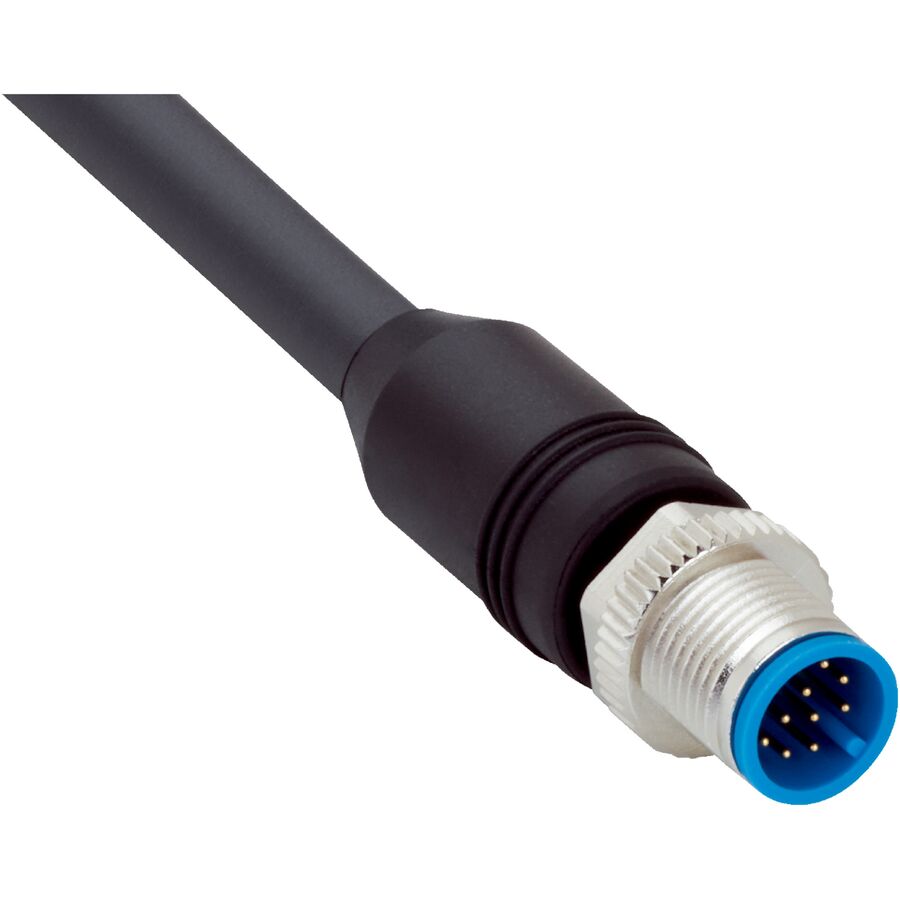
As Australian industrial automation continues to advance, machine builders and systems integrators are under constant pressure to extract more data from less physical space. Modern production lines demand precise motion control, real-time diagnostics, and dense sensor aggregation, all while reducing cabinet size, robot mass, and mechanical envelope. Traditional multi-pole connectors such as M23 or rectangular heavy-duty interfaces provide capacity but at the cost of bulk. In compact machinery and robotic tooling, that bulk is no longer acceptable.
The M12 12-pin sensor actuator cable addresses this challenge through intelligent connector densification. By accommodating twelve individual signal paths within the standard 12 mm circular M12 housing, it allows complex feedback and multi-signal transmission without increasing connector size. This capability has made the 12-pin M12 format the preferred interface for incremental encoders, servo feedback, advanced IO-Link sensor blocks, and compact automation devices across Australian manufacturing.
Packing twelve contacts into a connector originally designed for four or five pins introduces unavoidable electrical trade-offs. In low-pin-count M12 connectors, each contact is relatively large and can typically support currents up to 4 A. In a 12-pin configuration, contact size is reduced significantly to fit within the same shell diameter.
As a result, the current rating per pin is typically limited to 1.5 A or 2 A depending on the manufacturer and conductor size. This makes the M12 12-pin cable unsuitable for powering high-load actuators. Using it for motor power or solenoid supply is a critical design error that leads to overheating and premature failure. Instead, these cables are engineered for signal-level applications such as digital inputs, analogue feedback, serial communication, and encoder pulse trains.
The conductors themselves are correspondingly fine, often 0.14 mm² or 0.25 mm². This conductor size demands factory-moulded terminations. Manual field wiring is impractical due to the microscopic contact dimensions and the high risk of solder bridges or conductor damage.
With twelve cores inside a single jacket, correct identification is essential. Unlike simpler sensor cables that rely on basic colour sets, M12 12-pin cables typically follow the DIN 47100 colour coding standard. Each core is assigned a unique colour or colour combination, enabling consistent identification across devices and documentation.
This standardisation is critical during commissioning and troubleshooting. When used with pre-moulded cordsets, the colour logic is verified at the factory, ensuring pin-to-colour consistency. Attempting to terminate or re-terminate these cables in the field significantly increases the likelihood of wiring errors, particularly in environments where lighting, cleanliness, and time are constrained.
Professional automation projects therefore treat M12 12-pin cables as precision components rather than generic consumables.
One of the most common applications for M12 12-pin sensor actuator cables is encoder and resolver feedback in servo and variable speed drive systems. These signals are often low-voltage, high-frequency pulse trains that must be transmitted with absolute integrity.
In industrial environments, electromagnetic interference is a constant threat. Motors driven by PWM switching generate high-frequency noise that can couple into unshielded or poorly shielded cables. If encoder signals are corrupted, the drive loses position feedback, triggering faults or uncontrolled motion.
High-quality 12-pin M12 cables incorporate a braided copper shield with high optical coverage, typically above 85 percent. This shield is terminated 360 degrees to the connector coupling nut, providing a continuous path to earth through the device housing. This design prevents the cable from acting as an antenna and protects millivolt-level signals from external interference.
In many designs, specific signal pairs are twisted to further reduce crosstalk and improve noise rejection, particularly for differential encoder channels.
Although the internal conductors are fine, the cable must survive harsh mechanical conditions. Crushing, abrasion, and metal swarf are common hazards in automated machinery.
This is where integration with the Schnap Electric Products ecosystem becomes relevant. To protect M12 12-pin cables along machine frames and robot arms, engineers frequently route them through flexible industrial conduit systems. These conduits shield the jacket from impact and prevent metal debris from adhering to the cable surface.
Within control panels, the transition from M12 cables to PLC or drive terminals is managed using terminal blocks and structured cable identification. Clear labelling ensures the complex DIN 47100 colour scheme is translated accurately into the control logic, reducing commissioning time and future maintenance errors.
The external jacket material plays a decisive role in cable longevity. In static installations, PVC may be acceptable. However, many M12 12-pin applications involve motion, torsion, or exposure to oils and coolants.
Polyurethane is the preferred jacket material for these environments. PUR offers superior resistance to mineral oils, cutting fluids, and abrasion compared to PVC. It also maintains flexibility at low temperatures and resists cracking under repeated bending.
For robotic and drag-chain applications, internal construction is optimised to reduce mechanical stress. Conductors are often laid with a controlled twist length and separated by low-friction fleece fillers, allowing them to move relative to each other without fatigue. This construction supports long service life in continuous-motion systems.
M12 connectors are commonly specified to IP67, meaning they are dust-tight and protected against temporary immersion. Achieving this rating depends not only on connector design but also on moulding quality and sealing precision.
Cheap connectors often fail at this point. Inconsistent moulding tolerances lead to poor O-ring compression, allowing moisture ingress. Once water enters the connector, corrosion and insulation breakdown follow quickly, particularly in washdown or outdoor environments.
Professional-grade M12 12-pin cables use precision-moulded connectors with gold-plated contacts to maintain low contact resistance and corrosion resistance over repeated mating cycles.
Manufacturing tolerances for 12-pin M12 connectors are extremely tight. Pin misalignment of even a fraction of a millimetre can bend contacts or damage mating sockets on the device, leading to expensive repairs.
For this reason, automation engineers source these cables through specialised electrical wholesalers who verify quality, continuity, and insulation resistance. Reputable suppliers provide cordsets tested at the factory and offer compatible accessories such as bulkhead connectors and IP-rated distribution boxes. This approach ensures that high-density interconnects perform reliably throughout the life of the machine.
Best practice dictates using M12 12-pin cables strictly for signal and feedback applications. Power and high-current loads should be carried on separate connectors or hybrid cables designed specifically for that purpose. Maintaining separation between power and signal paths simplifies EMC management and improves system robustness.
Clear documentation, correct routing, and mechanical protection are essential to fully realise the benefits of high-density interconnects.
The M12 12-pin sensor actuator cable represents a sophisticated balance between mechanical compactness and electrical capability. It enables the transmission of complex data sets within a minimal footprint, supporting the increasing intelligence of modern automation systems. By respecting current limitations, prioritising EMC shielding, selecting durable PUR jackets, and protecting installations with robust infrastructure from suppliers such as Schnap Electric Products, Australian industry professionals can deploy high-precision interconnects with confidence. In advanced automation, density is not merely about saving space. It is about enabling capability without compromise.

SCHNAP is Australia's premier electrical wholesaler and electrical supplies, marketing thousands of quality products from leading brands. Trusted for nearly two decades by licensed electricians, contractors, and engineers, our range covers everything from basic electrical components to complex industrial electrical equipment
Our key categories include: LED lighting, designer switches, commercial switchboards, circuit protection, security systems & CCTV, and smart home automation
All products are certified to Australian standards (AS/NZS), backed by our 30-day, no-questions-asked return policy. Our expert technical team helps you quickly source the right solution for any residential, commercial, or industrial project, with daily dispatch from our Sydney electrical warehouse delivering Australia-wide
SCHNAP offers the most comprehensive electrical product range, with full technical specifications, application details, installation requirements, compliance standards, and warranties — giving professionals total confidence in every purchase


Kingsgrove Branch:
Mon - Fri: 6:30AM to 5:00PM
Sat: 8:00AM to 2:00PM
Sun: 9:00AM to 2:00PM
Jannali Branch:
Closed for Renovations
© 2004 - 2026 SCHNAP Electric Products