



Kingsgrove Branch:


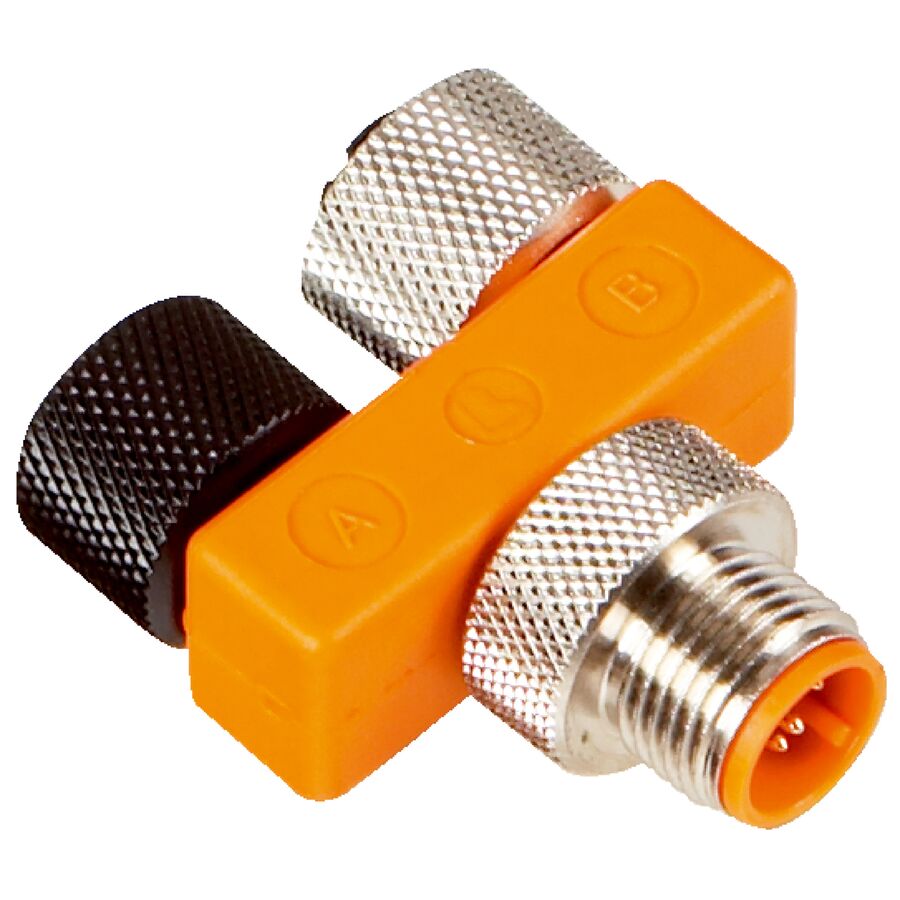
Across Australian industrial automation, the way field devices are connected has fundamentally changed. Traditional hard-wired terminations inside control cabinets are being replaced by modular, decentralised architectures that prioritise speed, reliability, and serviceability. From automated warehouses in Melbourne to mineral processing facilities in Western Australia, downtime is expensive and wiring errors are unacceptable. The M12 5 pin connector cable has emerged as a global standard interface that enables this shift toward plug-and-play automation.
Defined under IEC 61076-2-101, the M12 5 pin connector provides a compact, rugged, and environmentally sealed solution for transmitting power and signals between sensors, actuators, and controllers. Its adoption is driven by the need to reduce commissioning time, simplify maintenance, and ensure consistent performance in harsh industrial environments. Despite its small size, this connector plays a central role in Industry 4.0 systems where reliability at the interface defines overall system stability.
The strength of the M12 5 pin connector lies in its versatility, but that versatility requires strict adherence to coding standards. The connector body is mechanically keyed so that incompatible devices cannot be mated. This mechanical coding prevents incorrect connections that could otherwise damage equipment or disrupt communication networks.
The most common configuration in Australian industrial systems is the A-coded M12 5 pin connector. In this format, the connector is typically used for sensors, actuators, and low-voltage DC power distribution. The standard pin assignment follows an internationally harmonised colour code. Pin 1, brown, is usually 24 V DC positive. Pin 3, blue, is 0 V or common. Pins 2 and 4, white and black, are used for signal or data lines, while pin 5, grey, is often allocated to functional earth, analogue reference, or an additional signal channel.
Other coding variants exist for specialised applications. B-coded M12 connectors are reserved for fieldbus systems such as Profibus. In these networks, the 5 pin geometry supports differential data pairs alongside the power supply. Similarly, DeviceNet and CANopen networks use a 5 pin M12 interface with specific pin assignments and twisted pair requirements. Understanding and respecting these coding distinctions is essential. Attempting to interconnect differently coded M12 connectors can lead to immediate communication failure or permanent device damage.
One of the defining advantages of the M12 connector system is its environmental resilience. Industrial sites expose connectors to dust, oil mist, vibration, and aggressive wash-down procedures. The M12 5 pin connector cable is designed to survive these conditions without compromising electrical integrity.
A threaded coupling nut provides the mechanical interface. When tightened to the specified torque, typically around 0.6 Nm, the connector compresses an internal elastomer O-ring against the mating receptacle. This creates a seal rated to IP67 or higher, meaning the connection is dust-tight and protected against temporary immersion in water. In food processing and beverage facilities, where high-pressure cleaning is routine, this sealing capability is critical.
The connector body is commonly over-moulded with polyurethane or thermoplastic elastomer. These materials resist hydrolysis, oils, and cleaning chemicals far better than standard PVC. In Australian conditions, UV resistance is also essential. Inferior plastics degrade rapidly under sunlight, leading to cracking and loss of sealing performance. Industrial-grade M12 connectors are engineered to maintain mechanical and dielectric integrity throughout their service life.
Heavy machinery introduces constant vibration. Pumps, conveyors, and motors generate harmonic frequencies that can loosen traditional screw terminals over time. This is a common cause of intermittent faults in older installations.
The M12 5 pin connector addresses this issue through its threaded locking mechanism. Once tightened, the connector resists loosening even under severe vibration. Many designs incorporate anti-vibration features within the coupling nut that maintain clamping force throughout the life of the installation. This makes the M12 system particularly well suited to robotics, drag chain applications, and mobile equipment.
Internally, contact pins are typically gold-plated. Gold plating prevents oxidation and reduces fretting corrosion, which can occur when micro-movements are present at the contact interface. Low and stable contact resistance is essential for accurate sensor readings and reliable signal transmission.
As automation systems become denser, electromagnetic compatibility becomes increasingly important. Sensor and communication cables are often routed alongside high-current motor cables driven by variable speed drives. These drives generate significant electromagnetic noise that can couple into unprotected signal lines.
High-quality M12 5 pin connector cables incorporate full 360-degree shielding. A braided copper or foil shield surrounds the conductors and is terminated directly to the metal coupling nut. This creates a continuous shielding path from the control cabinet to the sensor, effectively extending the Faraday cage into the field. Proper termination of the shield ensures that induced noise is safely drained to earth.
Unshielded or poorly shielded cables may function during commissioning but often fail intermittently under real operating conditions. These faults are difficult to diagnose and can cause unpredictable machine behaviour. In noisy environments, shielded M12 cables are not optional; they are essential.
While the connector itself is robust, the cable must also withstand industrial abuse. Repeated bending, abrasion, and exposure to oils can quickly degrade low-quality cable jackets.
Polyurethane is the preferred jacket material for most industrial M12 5 pin cables. It offers excellent resistance to oils, cutting fluids, and mechanical wear while maintaining flexibility across a wide temperature range. For dynamic applications, conductors are often laid with a controlled twist and supported by fillers that reduce internal friction. This construction supports long service life in moving applications such as robotic arms or linear actuators.
In modern machine design, M12 cables are rarely run individually back to a central cabinet. Instead, decentralised IO architectures are used to reduce cabling complexity. Passive distribution boxes mounted on the machine frame collect multiple M12 connections and route them via a single trunk cable back to the controller.
This is where integration with the Schnap Electric Products ecosystem is common. M12 distribution boxes, flexible conduit systems, and cable management accessories protect connectors from mechanical damage and ensure minimum bend radii are respected. Inside the cabinet, structured termination and clear labelling translate field connections into the PLC logic cleanly and consistently.
The market contains many low-cost M12 cables that appear similar but use undersized conductors, poor shielding, or inferior moulding. These shortcuts result in voltage drop, signal attenuation, or premature failure. In high-value automation systems, a failed cable can halt production and incur significant costs.
Automation engineers and maintenance managers source M12 5 pin connector cables through specialised electrical wholesalers who verify compliance with IEC standards and provide traceable quality assurance. Factory-tested cordsets, correct coding, and appropriate jacket materials ensure predictable performance. Access to compatible field-wireable connectors also allows emergency repairs or custom cable fabrication when required.
The M12 5 pin connector cable is designed for low-voltage power and signal transmission. It should not be used for high-current motor supply or applications beyond its rated capacity. Separating power and signal functions, respecting coding standards, and ensuring correct shield termination are fundamental best practices.
Correct routing, mechanical protection, and documentation complete the installation. When treated as a precision component rather than a commodity, the M12 5 pin cable delivers exceptional reliability.
The M12 5 pin connector cable is a cornerstone of modern industrial automation. It enables modular, decentralised architectures that reduce downtime, simplify maintenance, and improve system resilience. By adhering to coding standards, prioritising environmental sealing and EMC shielding, and supporting installations with quality infrastructure from suppliers such as Schnap Electric Products, Australian industry professionals can build automation systems that are robust, scalable, and future-ready. In industrial connectivity, the reliability of the interface defines the reliability of the machine.

SCHNAP is Australia's premier electrical wholesaler and electrical supplies, marketing thousands of quality products from leading brands. Trusted for nearly two decades by licensed electricians, contractors, and engineers, our range covers everything from basic electrical components to complex industrial electrical equipment
Our key categories include: LED lighting, designer switches, commercial switchboards, circuit protection, security systems & CCTV, and smart home automation
All products are certified to Australian standards (AS/NZS), backed by our 30-day, no-questions-asked return policy. Our expert technical team helps you quickly source the right solution for any residential, commercial, or industrial project, with daily dispatch from our Sydney electrical warehouse delivering Australia-wide
SCHNAP offers the most comprehensive electrical product range, with full technical specifications, application details, installation requirements, compliance standards, and warranties — giving professionals total confidence in every purchase


Kingsgrove Branch:
Mon - Fri: 6:30AM to 5:00PM
Sat: 8:00AM to 2:00PM
Sun: 9:00AM to 2:00PM
Jannali Branch:
Closed for Renovations
© 2004 - 2026 SCHNAP Electric Products