

Kingsgrove Branch:


Product help, identification or bulk pricing.
Send us a photo and our team will help identify it.
Large quantities? Send us the details via WhatsApp.
Enter a quantity or some details about your bulk request.
Request via WhatsApp
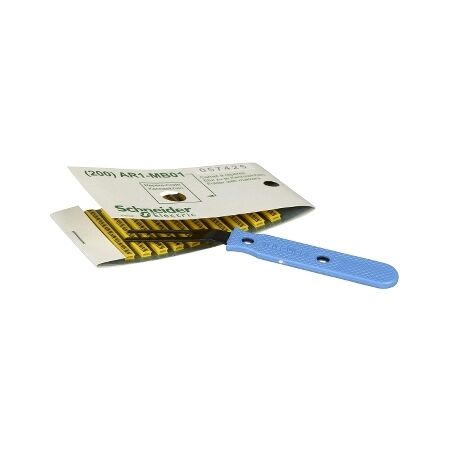
Twelve cores land in the same terminal strip, and by the time you've terminated core nine you've already lost track of which drain wire matched which circuit twenty minutes ago. That's a different problem to getting labelling the switchboard directory itself right — you can nail the door schedule perfectly and still hand the job over with a bundle of unmarked individual conductors that nobody can trace six months from now without pulling the panel apart.
A switchboard directory tells the next person which breaker feeds which circuit. It says nothing about which physical core, inside a multicore cable, connects to which terminal once you're three metres away from the board — in a ceiling space, a floor duct, or a junction box halfway along the run. That's the gap electrical cable tags are built for: identifying individual conductors at the point of termination, not the board as a whole.
It shows up hardest on control and instrumentation work — alarm panels, HVAC control loops, multicore runs feeding a distribution board with a dozen low-voltage circuits bundled through the same gland. Strip back the outer sheath on an untagged bundle a year later and every core looks the same. Cable markers and identification at the core level is what turns a five-minute fault trace back into an afternoon of continuity testing.
For most panel and switchboard work, clip-in cable markers do the job. They're pre-printed PVC clips that snap around the conductor and stay put without tape or adhesive — one clip per core, slid on before or during termination. Numbered end markers running 0-9 cover most core-counting jobs; for anything past nine cores, the standard trade approach is stacking two digits per core (a "1" and a "2" clipped side by side for core twelve) rather than hunting for a marker set with two-digit prints built in.
Letter markers work the same way for phase or function ID rather than sequence — an A-Z end marker set covers that without needing to run a separate numbering convention alongside a written legend. If you're clipping a high volume of markers in one sitting, a positioning tool speeds up placement and keeps clips seated consistently, which matters more than it sounds like once you're forty markers deep on a busy panel.
| Marker Size | Typical Wire Range | Common Use |
|---|---|---|
| 0.75-1mm | Fine-core control wiring | Alarm and instrumentation cores |
| 5-15mm | Standard multicore conductors | General panel and switchboard cores |
| 15-25mm | Heavier gauge single cores | Sub-mains, larger control circuits |
| 25x25mm | Cable, not individual core | Whole-cable ID at gland entry or tray |
Match the marker to the actual conductor diameter rather than the cable's overall size — a clip rated for 15-25mm won't sit properly on a fine 0.75mm control core, and it'll slide or spin once the loom is dressed down.
Clip-in PVC markers are fine indoors, in a dry switchboard or ceiling space, where nobody's expecting UV exposure or repeated handling. Outdoors, in plant rooms with wash-down, or on cable runs that get touched every time someone's doing maintenance, PVC clips crack, fade, or work loose over a few seasons. That's where a brass cable marker earns its place — stamped or engraved metal tag, wired or cable-tied on, built to stay legible well past the point a PVC clip would've given up.
Brass tags are typically reserved for permanent ID points rather than every single core — pit entries, external DB feeds, or cores that genuinely need to survive years of outdoor exposure without a repaint of the whole panel schedule. For everything else inside a dry enclosure, clip-in markers are faster to fit and just as functional for the job's actual lifespan.
Mixing numbering conventions across the same job. Starting a panel with clip-in numbers, then switching to a handwritten tag halfway through because the marker pack ran out, leaves the next person guessing which system applies where.
Tagging at the panel end only. If the far end of a multicore run isn't tagged with the same reference, tracing still means pulling continuity on every core when a fault shows up mid-run.
Using PVC clips outdoors and assuming they'll last. A marker that's fine in a switchboard for a decade can fade to unreadable within a year on an external run exposed to full sun.
Sizing the clip to the cable, not the core. A marker bought to match the overall cable diameter often doesn't grip an individual internal conductor properly once the sheath's stripped back.
No written legend backing up the tags. Numbers and letters on the cores only work if there's a matching reference somewhere — inside the panel door, in the O&M manual, or both — otherwise the tagging system dies with whoever installed it.
what size cable marker fits a 1.5mm control core?
For a 1.5mm control core, a marker in the 0.75-1mm to 5-15mm range typically fits, depending on the exact clip design — check the manufacturer's stated grip range rather than assuming by eye, since a marker that's slightly loose will spin and become unreadable.
can I use the same marker set for numbers and letters on one job?
Yes — most trade suppliers sell matching letter and number marker ranges in the same size and colour family, so you can run numbers for sequence and letters for phase or function without the two systems looking inconsistent side by side.
do clip-in markers work on stranded and solid core the same way?
In practice, clip-in markers grip both, but stranded cores compress slightly more under the clip, so it's worth doing a quick tug test after fitting rather than assuming the clip's seated just because it snapped shut.
is there a requirement to tag individual cores in a switchboard in Australia?
Wiring rules require conductors to be identifiable so circuits can be correctly traced and isolated — the specific method (tags, colour, or a documented legend) is a compliance and safety matter that should be checked against AS/NZS 3000 and confirmed with your licensing body for the job at hand, since requirements can vary by installation type.
will PVC cable markers survive outdoors long-term?
Generally not as well as metal alternatives — standard PVC clip-in markers are commonly rated for indoor or sheltered use, and prolonged UV exposure tends to fade the print well before the physical clip fails, which is why permanent outdoor ID points usually move to brass tags instead.
how do I stop cable tags from being pulled off during future maintenance?
Clip-in markers rely on friction fit, so they can work loose if a core gets handled repeatedly — for points that get touched often during servicing, a wired-on brass tag holds position more reliably than a clip that's only gripping the insulation.
Related Reading
Trade pricing on clip-in and permanent cable markers, dispatched same day from Kingsgrove NSW.
Browse the full electrical cable tags range at Schnap for trade pricing and same-day dispatch from Kingsgrove NSW.

SCHNAP Electrical Wholesaler - clear, upfront pricing that professional electricians trust

Get what you need in seconds. SCHNAP electrical wholesaler makes ordering quick and simple

Fast delivery anywhere - that's guaranteed. SCHNAP electrical wholesalers ship nationwide with same-day dispatch

Track your order every step of the way. SCHNAP electrical wholesale keeps you updated from click to delivery

SCHNAP is Australia's premier electrical wholesaler and electrical supplies, marketing thousands of quality products from leading brands. Trusted for nearly two decades by licensed electricians, contractors, and engineers, our range covers everything from basic electrical components to complex industrial electrical equipment
Our key categories include: LED lighting, designer switches, commercial switchboards, circuit protection, security systems & CCTV, and smart home automation
All products are certified to Australian standards (AS/NZS), backed by our 30-day, no-questions-asked return policy. Our expert technical team helps you quickly source the right solution for any residential, commercial, or industrial project, with daily dispatch from our Sydney electrical warehouse delivering Australia-wide
SCHNAP offers the most comprehensive electrical product range, with full technical specifications, application details, installation requirements, compliance standards, and warranties — giving professionals total confidence in every purchase


Kingsgrove Branch:
Opening hours:
Mon - Fri: 6:30 AM to 5 PM
Saturday: 8:00 AM to 2:00 PM
Sunday: 9:00 AM to 2:00 PM
Closed on public holidays
Jannali Branch:
Closed for Renovations
© 2004 - 2026 SCHNAP Electric Products