

Kingsgrove Branch:


Product help, identification or bulk pricing.
Send us a photo and our team will help identify it.
Large quantities? Send us the details via WhatsApp.
Enter a quantity or some details about your bulk request.
Request via WhatsApp
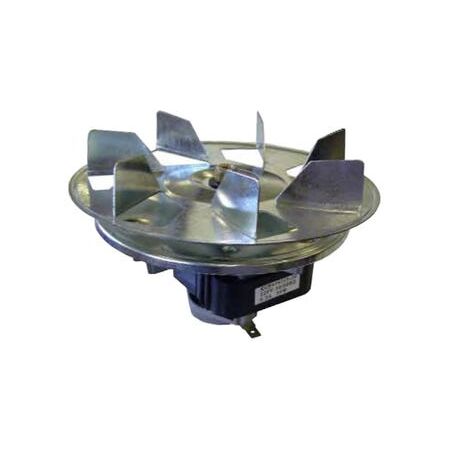
A fan-forced oven that cooks unevenly, or one that grinds for a minute and then goes quiet, often points to the fan. The catch is that "fan" can mean two different parts: the motor that spins the impeller, and the fan element that heats the air around it. This guide shows how to tell them apart, then how to match a replacement oven fan motor by shaft size, wattage and voltage.
Start with what the oven is actually doing. If the fan has stopped, turns slowly or rattles, the motor is a likely fault. If the fan spins normally but the oven is slow to heat in fan-forced mode, the fan element is a more likely culprit, though the main elements, thermostat or controls can cause the same symptom. A new motor will not fix any of those.
With the oven isolated at the switchboard and the cavity cool, take off the back panel and turn the impeller by hand. A fan that binds, scrapes or feels gritty typically points to worn bearings or a damaged impeller. A fan that turns freely but still does not run with the oven on could be the motor winding, its wiring or the oven controls, so leave that diagnosis to a qualified tech with a multimeter.
| Part | Typical symptom | What to match |
|---|---|---|
| Fan motor | Fan stops, runs slowly, grinds or squeals | Shaft size, wattage, voltage, mounting |
| Fan element | Fan runs, but the oven is slow to heat or will not reach temperature in fan mode (other heating faults can look the same) | Oven make and part number, wattage, voltage, diameter, hole spacing, connectors |
The fan element is a separate part with its own specs. A 1550W 230V 186mm oven fan element has a 2-turn short neck, 56mm hole spacing with a central hole on the flange, and two 6.3mm male spade connectors. This one is listed for a specific oven make and part number, so confirm yours matches before ordering. A near match may not seat or connect properly.
Related Reading: LANX RCBO vs RCD: What's the Difference? Useful if the oven circuit keeps tripping while you chase the fault.
Start with three numbers: shaft size, power and voltage. Both motor assemblies SCHNAP lists share the same 32W, 220-240V rating, so shaft size is the main difference. One is listed with an 11mm shaft and the other with a 12.5mm shaft, and a wrong size can leave the impeller sitting too far in or out of the fan housing, or not fitting at all.
Measure the shaft on the old motor with it out of the oven, both its length from the motor body to the tip and its diameter, then compare with the 11mm and 12.5mm listings. The product pages give one figure for each, so if your measurements do not clearly match one of them, check with the team before ordering rather than guessing. Both use a ball-bearing mount, and the 12.5mm version is specified for vertical mounting, so note how your old motor sits. The 32W oven motor assembly with an 11mm shaft covers the smaller listed size.
Each assembly comes with two impellers, a 6-blade star and a 7-blade round, plus three mounting screws and a dress nut. Compare both impellers with the original and fit the one that matches in shape, size and bore. Rotation direction and motor speed are not listed on the product pages, so confirm them against the original motor too. Both assemblies are listed as replacements for most electric and gas ovens, but "most" is not "all", so the old motor is still your best reference.
If the old motor has no readable label, or your measurements fall between the two sizes, you can send SCHNAP a photo of it and the team will help identify what you have.
On a freestanding cooker, the same call-out can include replacing a cooktop element on the hotplates above, so it is worth checking those terminals while the cooker is pulled out.
Safety first: isolate the oven at the switchboard before the back panel comes off. In most states, disconnecting and reconnecting a hard-wired oven is regulated electrical work, and licensing rules differ between states, so check with your local regulator. Both motor assemblies are listed as complying with AS/NZS 60335.
What size shaft does an oven fan motor have?
Measure the shaft on the old motor, length and diameter, with it out of the oven. SCHNAP lists two options, 11mm and 12.5mm. If the old motor reads 12.5mm, the 12.5mm shaft motor assembly is the one to check first, and it is described with ball bearings for vertical mounting.
Can I use a different wattage motor if the shaft fits?
It is better to match the original rating. Both assemblies here are 32W at 220-240V. A different power rating can change fan speed and airflow, so check the oven's data plate or service information if the old label is unreadable.
Do I need a licensed electrician to replace an oven fan motor?
It depends on the state and the oven. Disconnecting and reconnecting a hard-wired oven is typically electrical work that needs a licensed electrician, while some internal repairs on a plug-in appliance may fall to an appliance technician. The product listings recommend installation by a qualified tech, and your state regulator has the final say.
What circuit breaker rating does a wall oven need?
It depends on the oven's data plate rating and how the circuit is installed, so check the manufacturer's instructions and AS/NZS 3000 before changing anything. This guide to choosing the right MCB rating is a useful reference.
Can I get an oven fan motor the same day?
SCHNAP dispatches same-day from Kingsgrove NSW on orders placed in time. The same-day delivery cut-off times explain what applies in Sydney.
What is included with the oven motor assembly?
Each assembly includes two impellers (a 6-blade star and a 7-blade round), three mounting screws and a dress nut, on a ball-bearing mount.
With the fault diagnosed and the shaft measured, the parts for the job are listed below.
Related Reading
Servicing a hot water unit on the same visit? See water heater anode rod replacement for the anode rod and element gasket.
Trade accounts get trade pricing across the appliance accessories range, orders placed in time dispatch same-day from Kingsgrove NSW, and every order is covered by a 30-day return policy.
Oven Motor Assemblies
Oven Fan Elements
Browse the full oven fan motor range at Schnap.

SCHNAP Electrical Wholesaler - clear, upfront pricing that professional electricians trust

Get what you need in seconds. SCHNAP electrical wholesaler makes ordering quick and simple

Fast delivery anywhere - that's guaranteed. SCHNAP electrical wholesalers ship nationwide with same-day dispatch

Track your order every step of the way. SCHNAP electrical wholesale keeps you updated from click to delivery

SCHNAP is Australia's premier electrical wholesaler and electrical supplies, marketing thousands of quality products from leading brands. Trusted for nearly two decades by licensed electricians, contractors, and engineers, our range covers everything from basic electrical components to complex industrial electrical equipment
Our key categories include: LED lighting, designer switches, commercial switchboards, circuit protection, security systems & CCTV, and smart home automation
All products are certified to Australian standards (AS/NZS), backed by our 30-day, no-questions-asked return policy. Our expert technical team helps you quickly source the right solution for any residential, commercial, or industrial project, with daily dispatch from our Sydney electrical warehouse delivering Australia-wide
SCHNAP offers the most comprehensive electrical product range, with full technical specifications, application details, installation requirements, compliance standards, and warranties — giving professionals total confidence in every purchase


Kingsgrove Branch:
Opening hours:
Mon - Fri: 6:30 AM to 5 PM
Saturday: 8:00 AM to 2:00 PM
Sunday: 9:00 AM to 2:00 PM
Closed on public holidays
Jannali Branch:
Closed for Renovations
© 2004 - 2026 SCHNAP Electric Products