
Kingsgrove Branch:

Skooby
Electrical Assistant

G'day! I'm Skooby. Ask me about wiring rules or search our product catalog.
SCHNAP Trade Support
Product help, identification or bulk pricing.
Opens WhatsApp Trade Support
Not sure what this product is?
Send us a photo and our team will help identify it.
Send us any one of these:
Send Us a Photo on WhatsApp
- A clear photo of the full product
- Product label or brand
- Model/part number, if visible
- Product packaging, if available
Request Bulk Quote
Large quantities? Send us the details via WhatsApp.
Enter a quantity or some details about your bulk request.
Request via WhatsApp- 02 9150 7744
- Same Day Delivery in Sydney
- Open 7 Days
- 4.9 ★★★★★ 1000+ Google Reviews

- Menu
-
-
Cable
- Power Cables
- Specialty Cable
- Data & Comms Cable
- Fibre Optic Cable
- Solar Cable
-
Cable Accessories
- Aluminium Lugs
- Copper Lugs
- Bi-Metal Lugs
- Circuit Breaker Lugs
- Bootlace Pins & Terminals
- Bullet Terminals
- Forked Terminals
- Insulated Bell Terminals
- Insulated Pins
- Lug Terminals
- Non Insulated Tabs
- Piggy Back Terminals
- Quick Disconnects
- Stud Rings
- Terminal Lip Blades
- C Connectors
- Crimp Links
- Waterproof Crimp Links
- In-Line Splices
- Cable Joiners
- View more →
- Cable Support
-
Conduit & Ducts
- Heavy Duty Conduit
- Medium Duty Conduit
- Communications Conduit
- NBN Conduit
- Solar Conduit
- Corrugated Conduit
- Anaconda Pipe & Adaptors
- Rubber / Flex Conduit
- Split Conduit / Loom Tube
- Conduit Fittings
- Cable Duct
- Skirting Duct & Accessories
- Cable Covers
- Cable Pulling Accessories
- Pits, Pillars & Underground Enclosures
- Hazardous Area Ex Fittings
- Cabinets & Network Equipment
- Copper Cabling Components
- Fibre Optic
- Voice & NBN
- Data & Comms Tools
-
Electrical
- Powerpoints
- Switches & Mechs
- Plugs, Sockets & Adaptors
- Cover Plates & Grid Plates
- Mounting Accessories
- MATV & TV
- Sensors, Bells & Chimes
- Lighting Parts
- Appliance Parts
-
Switchboards & Meter Boxes
- Flush Mounted Switchboards
- Surface Mounted Switchboards
- Temporary Switchboards
- Temporary Switchboard Accesssories
- Distribution Boards
- Meter Boxes
- Plastic Enclosures
- Metal Enclosures
- Circuit Breaker Enclosures
- NBN Enclosures
- IP Rated Enclosures
- Adaptable Boxes & Accessories
- Pushbutton Enclosures
- Junction Boxes
- Extension Boxes
- Enclosure Accessories
-
Switch Gear & Protection
- AC Circuit Breakers
- DC Circuit Breakers
- Plug-In Circuit Breakers
- Moulded Case Circuit Breakers (MCCB)
- MCCB Accessories
- Residual Current Devices (RCDs)
- MCB / RCD / RCBO Combos
- Surge Protection
- Arc Fault Detection
- Main Switches
- Change Over Switches
- Isolators
- Contactors & Equipment
- Contactor Accessories
- Relays
- Overload Relays
- Relay Bases
- Thermal Overloads
- Electronic Overloads
- Fuses & Fuse Holders
- View more →
- Timers
- Metering
- Switchboard Accessories
- Earthing
- Kitchen & Household Appliances
- Battery & Device Chargers
-
Lighting
- Indoor Lighting
- Outdoor & Landscape
- Commercial & Industrial
- Lamps & Globes
- Ceiling Fan Lights & Fittings
- Lighting Accessories
- Exit & Emergency
- Air Conditioning
- Ceiling Fans
- Exhaust Fans
- Heaters & Hand Dryers
- Pedestal & Wall Fans
- Louvres & Grillers
- Ducting
-
HVAC & Ducted Components
- Pair Coil
- Colorbond Trunking
- Drip Trays & Drain Pipe
- Condensate Pumps
- Dektites
- Duct Supporting Straps
- Mounts & Brackets
- Quick Connect Fittings
- AC Cable
- Tape & Accessories
- AC Support Hardware
- Anti-Vibration & Seismic Mounts
- Copper Braze Fittings
- Flare & SAE Fittings
- Refrigerant Hoses & Line Sets
- Refrigeration Valves
- Ducted Vacuum Systems
- Filter Driers & Sight Glasses
- Oil Separators & Receivers
- Ducted Fittings
- Zone & System Controls
- HVAC Tools
- Worklights & Task Lighting
-
Solar & Smart
- Solar Panels
- Inverters
- Battery Storage
- EV Chargers & Accessories
- Solar Racking
- Solar BOS & Accessories
- Network Protection Boards
- Off-Grid Systems
- Portable Power Solutions
- Solar Tools
-
Automation
- C-Bus Controllers
- C-Bus Dimmer Controllers
- C-Bus Keypads
- C-Bus Mechs
- C-Bus Sensors
- C-Bus Output Boards
- C-Bus Input Boards
- C-Bus Built Boards
- C-Bus Network Interface & Bridges
- C-Bus PC Interface & Dongles
- C-Bus Power Supply
- C-Bus Bus Couplers
- C-Bus Gateways
- C-Bus Relays
- C-Bus Wall Box & Plates
- Clipsal Wiser
- Other BUS Automation
- Smart Switches & Outlets
- Smart Lighting
- WiFi & Wireless
- Security & Surveillance
- Access Control
- Intercoms
- Alarms & Detection
- Home Entertainment
- E-Mobility
-
Industrial
-
Tools
- Hand Tools
-
Power Tool Accessories
- Drill Bit Sets
- Drill Bit - Metal & Wood
- Drill Bit - Masonry
- Drill Bit - Glass & Tile
- Drill Bit - Ceramic
- Drill Bit - Long Series
- Multi Purpose Drill Bits
- Hole Saws & Kits
- Hole Saw Blades & Accessories
- Spade Bits & Kits
- Step Drills
- Auger Bits
- Driver / Adapter Bits
- Hexagonal Driver Bits
- Extension Bars
- Cut Off Discs
- Flap Discs
- Grinding Discs
- Blades
- Hacksaw Blades
- View more →
-
Meters & Testers
- Multimeters
- Clamp Meters
- Insulation Testers
- RCD Testers
- Loop Impedance Testers
- Multifunction Testers
- Voltage Testers
- Phase Rotation Testers
- Pair Testers
- Appliance Testers
- Lux Meters
- Circuit Tracers
- Butt Phones & Accessories
- Meter Load Testers
- Earthing Leads
- Test Equipment Accessories
- Earth Resistance Testers
- Micro-Ohm & Low Resistance Testers
- Specialty Test Instruments
- Heat & Soldering
- Work & Safety Lights
- Tool Storage
- Tool Kits
-
Fixings & Hardware
- Wood Screws
- Metal Screws
- Masonry / Brick Screws
- Bakerlite Screws
- Assorted Screw Packs
- Nuts and Bolts
- Nylon Nuts & Bolts
- Washers
- Rivets
- Toggles
- Wall Fixings
- Wall Mates / Plaster Mates
- Drop In Anchors
- Dyna Bolts / Sleeve Anchors
- Eye Bolts
- Nylon Nail In Anchors
- Screw Bolts
- Wall Plugs
- Chain
- D Shackles
- View more →
-
Consumables
- Electrical Insulation Tape
- Self Amalgamating Tape
- Construction Tape
- Double Sided Tape
- Duct Tape
- Warning Tape
- Adhesives & Glue
- Silicone & Foam
- Paint & Zinc Spray
- Corrosion Inhibitors
- Fire Seal
- Pens, Pencils & Markers
- Crayons
- Compliance Certificates
- Appliance Test Log Books
- Emergency Testing Log Books
- Batteries
- Vacuum Accessories
- Thinners & Solvents
- Painting Accessories
- View more →
- PPE & Personal Protection
- Site Safety & Emergency
- Ladders & Access Equipment
- Cleaning & Janitorial
- General & Site Equipment
- Power Tools
- Outdoor Power Equipment
- Plumbing
- Brands
- Blog
-
Cable
Electrical Pilot Light Selection Guide for Control Panels
07/09/2026
by Denny Setiawan
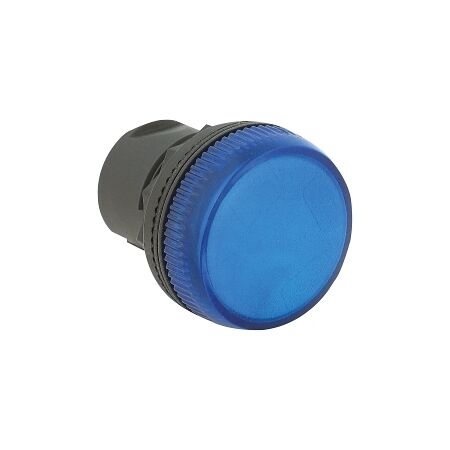
You have a control panel on the bench, the circuit is already defined, and the last thing to settle is the indication: what should the operator actually see when the equipment is energised, running or in a fault state? That choice looks simple until voltage, mounting size, colour and environment all need to line up.
Pilot lights are small components, but choosing the wrong one can mean extra panel work, an awkward fit or an indicator that does not match the electrical requirement. The same control-panel job may call for a compact 12mm indicator in one location and a larger metal, sealed unit in another. For the broader panel-selection context, see choosing the right switch rating.
Start With the Electrical Requirement
The first check is not the diameter of the indicator. It is the circuit it has to indicate. A pilot light needs to match the voltage and electrical arrangement of the circuit where it will be used.
The product range for this category includes 24V DC indicators, 24V AC/DC options, 120V and 130V AC/DC units, and 240V AC versions. That spread matters because a visually identical indicator can still be the wrong electrical choice for the circuit.
| What to check | Why it matters |
|---|---|
| Circuit voltage | The indicator must suit the circuit voltage rather than simply fit the panel hole. |
| AC, DC or AC/DC | The product configuration needs to match how the control circuit is supplied. |
| Indicator meaning | Choose a colour and indication function that make sense for the machine or panel sequence. |
| Panel environment | Exposed or harsher locations may need a more robust construction and environmental rating. |
[!] Check the circuit before ordering
Do not choose a pilot light from panel-hole size alone. Confirm the circuit voltage and whether the indicator is intended for AC, DC or AC/DC operation. Where a site specification or equipment manufacturer defines an indicator requirement, that requirement takes priority.
Related Reading
Match the Pilot Light to the Panel Layout
Once the electrical requirement is clear, the next issue is physical fit. A panel builder working with a compact control station may be limited by the available mounting diameter, while a larger machine panel may have more room for a larger indicator and a more substantial front assembly.
The products supplied for this category span 12mm, 18mm, 22mm and 30mm formats. That means the mounting dimension should be treated as a design constraint, not as an afterthought. Re-check the panel cut-out and the existing hardware before selecting the indicator.
A 22mm pilot light can be a practical middle ground when the panel design calls for a conventional industrial control-hole format. Smaller 12mm indicators can make more sense where space is tight, while 30mm units suit applications already designed around the larger mounting format.
Also watch the difference between a complete indicator and an accessory or component intended to work with another assembly. A panel layout can look compatible on paper while still requiring the correct body, lens, or mounting arrangement.
Use Colour and Test Function to Tell the Story
A pilot light is most useful when its meaning is obvious to the person standing in front of the machine. That is why colour should follow the machine's indication logic rather than being selected simply because a particular colour is in stock.
The range includes red, green, amber, blue, yellow, white and clear configurations. A practical panel might use one colour for an operating state and another for a different machine condition. The actual meaning should be consistent with the equipment design and any applicable project or manufacturer documentation.
Push-to-test and test-diode configurations serve a different purpose from a basic illuminated indicator. They can help verify that the indication circuit and lamp function are available to be tested, which can be valuable during commissioning or maintenance. The important point is to choose the function deliberately rather than treating all LED pilot lights as interchangeable.
[!] Keep the indication logic consistent
Colour conventions can vary between machines, sites and project specifications. Follow the documented indication logic for the equipment rather than assuming a colour has the same meaning in every installation.
When the Environment Changes the Choice
A pilot light inside a protected control cabinet is not facing the same conditions as one mounted where dust, moisture or regular cleaning are part of the job. That is where construction and environmental rating start to matter as much as voltage and mounting size.
The supplied range includes IP65 and IP66 pilot-light options, including metal-front versions. These products are the more relevant choices when the installation demands a higher level of protection at the panel interface. The exact protection required still needs to be checked against the enclosure, installation environment and project specification.
For a harsher application, do not assume that changing only the lens colour is enough. The construction of the complete indicator and its stated rating need to suit the location. This is especially important where the panel is exposed to moisture, dust or frequent cleaning.
Common Mistakes When Choosing Pilot Lights
Choosing by diameter alone. A pilot light may physically fit the panel and still be electrically wrong. Confirm voltage and circuit type before locking in the mounting format.
Treating every LED indicator as interchangeable. Voltage, AC/DC configuration, test function and construction can differ even when two indicators look similar from the front.
Using colour without checking the panel logic. A red, green or amber light is only useful when its meaning is clear and consistent with the equipment's indication scheme.
Ignoring the installation environment. A standard indicator may not be the right choice for a location where moisture, dust or cleaning exposure is significant. Check the stated environmental rating before ordering.
Forgetting the panel cut-out already in front of you. Replacing an existing indicator is often easiest when the replacement matches the mounting arrangement. Measure first rather than discovering the mismatch during fit-off.
Frequently Asked Questions
Electrical Selection
What voltage should I use for a 24V control circuit?
Use a pilot light that is specifically rated for the circuit voltage and the required AC/DC configuration. The product list includes 24V DC and 24V AC/DC options, so the exact circuit arrangement still needs to be checked before ordering. A 24V AC/DC option from the range is the 22mm dual-colour pilot light.
Do pilot lights need to match the panel switch size?
They need to suit the available mounting arrangement, but there is no single universal indicator size for every panel. The supplied products cover several mounting formats, including 12mm, 18mm, 22mm and 30mm.
Installation and Compliance
Do I need to be a licensed electrician to install a pilot light?
Where the work forms part of fixed electrical installation or other regulated electrical work, licensing and applicable Australian requirements should be followed. The exact requirement depends on the installation and the work being performed, so the responsible licensed electrical professional should confirm the applicable rules for the job.
Should I use an IP66 pilot light outdoors?
An IP66-rated pilot light can be relevant where the installation needs a higher level of protection, but the indicator rating must be considered as part of the complete enclosure and installation. Check the project requirements and environmental conditions rather than relying on the IP number alone.
Shop Electrical Pilot Light at Schnap
Schnap supplies pilot lights across several mounting sizes, voltages, colours and configurations for trade and industrial applications. Trade pricing and same-day dispatch from Kingsgrove NSW are available for orders from the range.
- 12mm Indicators
- 12mm LED Indicator 24V DC Red -- compact 24V DC panel indication.
- 12mm LED Pilot Light 24V Red -- compact red pilot-light option.
- 18mm Pilot Lights
- 18mm LED Pilot Light 240V AC Amber -- amber indication for 240V AC applications.
- 18mm LED Pilot Light 240V AC Green -- green indication for 240V AC applications.
- 22mm Pilot Lights
- 22mm Dual-Colour LED Pilot Light -- red/green indication for 24V AC/DC circuits.
- 22mm Test Diode Indicator 24V AC/DC White -- test-diode configuration with white indication.
- 22.5mm and 30mm Options
- 22.5mm IP66 Metal LED Pilot Light 24V AC/DC Blue -- robust blue indicator for higher-protection applications.
- 30mm Full-LED Pilot Light 120V AC IP65 Red -- larger-format red indicator with IP65 rating.
For panel work, the right pilot light is the one that matches the circuit first, the panel geometry second, and the operating environment and indication logic after that. That approach keeps the selection practical and reduces avoidable changes at fit-off.
For the complete range, see the electrical pilot light range at Schnap and get same-day dispatch from Kingsgrove NSW.

Transparent Pricing
SCHNAP Electrical Wholesaler - clear, upfront pricing that professional electricians trust

Streamlined Ordering
Get what you need in seconds. SCHNAP electrical wholesaler makes ordering quick and simple

Australia-wide Delivery
Fast delivery anywhere - that's guaranteed. SCHNAP electrical wholesalers ship nationwide with same-day dispatch

End-to-end Support
Track your order every step of the way. SCHNAP electrical wholesale keeps you updated from click to delivery

Sydney-Based Electrical Wholesaler Supporting Electricians Australia-Wide
SCHNAP Electric Products is a Sydney-based electrical wholesaler in Kingsgrove supplying electricians and contractors through a trade counter open seven days and an online store with Australia-wide delivery. We have supplied licensed electricians, contractors and engineers since 2008, with products from basic electrical components to industrial electrical equipment.
Electrical Supplies for Licensed Electricians
Our key categories include LED lighting, designer switches, commercial switchboards, circuit protection, security systems and CCTV, and smart home automation.
Online Electrical Wholesaler Australia
Orders are dispatched from our Sydney warehouse and delivered Australia-wide. Same-day delivery is available in Sydney on eligible orders. Orders under $150 are pickup only. Returns are accepted within 30 days of purchase. Our trade support team helps you find the right product for residential, commercial and industrial projects. Products are supplied with the manufacturer's warranty, and approvals and compliance details are shown on the product page where available.
Extensive Electrical Product Range Across Leading Brands and Trade Categories
SCHNAP lists products from brands such as Hager, Clipsal and Legrand across lighting, switchgear, cables, CCTV, smoke alarms and data. Product pages show the part number, specifications and application details where available.


Customer Support
Information
Contact Us
-
-
-
-
Opening hours:
-
Mon - Fri: 6:30 AM to 5 PM
Saturday: 8:00 AM to 2:00 PM
Sunday: 9:00 AM to 2:00 PM
-
-
Closed on public holidays
-
Jannali Branch:
-
-
Closed for Renovations
© 2004 - 2026 SCHNAP Electric Products