

Kingsgrove Branch:


Send us a photo and our team will help identify it.

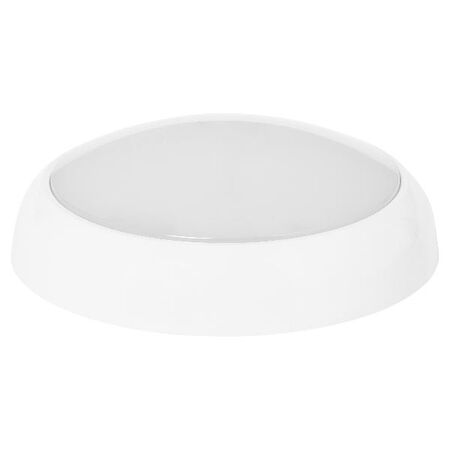
An electrician finishing a small café fit-out drops in a standard oyster light for the counter area, only for the building certifier to flag it at final inspection — the space needs a maintained emergency function, and the plain fixture doesn't qualify. AS 2293.1 sets out when a ceiling fixture in a commercial or multi-residential tenancy generally needs to double as emergency or maintained egress lighting, and getting the wrong variant on the switchboard schedule is an easy way to lose a sign-off. The difference between a standalone unit and one wired into a central maintained supply comes down to how the building's emergency system is set up, not just which oyster light looks right for the ceiling.
In most commercial tenancies, multi-residential common areas, and other spaces with public access, egress paths and exit points typically need lighting that keeps working for a set period after mains power is cut — commonly around 90 minutes, though the exact duration and coverage should be confirmed against the building's fire and emergency lighting design. An ordinary oyster light with no battery backup doesn't satisfy that requirement on its own. What the certifier is actually checking is whether the fixture (or a dedicated unit nearby) keeps functioning through a simulated outage, not just whether the ceiling looks lit.
A standalone unit, like the Legrand 15W standalone oyster light, carries its own battery pack and test function inside the fixture — it doesn't need to be wired into anything beyond its own circuit, which makes it the quicker option for a single tenancy or small retrofit. A maintained fixture, such as the Ektor 26W maintained oyster light, connects to and is monitored by the building's central emergency lighting system — this is the more common requirement in larger multi-tenant buildings that already run centralised testing and monitoring across every exit and egress fixture in the property.
| Type | Setup | Testing | Best for |
|---|---|---|---|
| Standalone | Self-contained battery, own circuit | Manual test button on the fixture | Single tenancies, small retrofits |
| Maintained | Wired to central emergency supply | Monitored centrally with the rest of the building | Larger multi-tenant buildings with existing central monitoring |
Related Reading
Outdoor Oyster Light: IP54 vs IP65The most frequent mix-up is treating any oyster light labelled "emergency" as standalone when it's actually a sensor-integrated unit wired to run continuously off the mains, with no independent test button of its own — the certifier finds nothing to test, and the job stalls. Checking the model's spec sheet for standalone versus centrally-wired before ordering avoids this entirely.
The second common error is putting the emergency fixture on the same switched or sensor circuit as the general lighting. If the same run also uses corridor sensor lighting choices, confirm the sensor circuit and the emergency circuit are wired separately before the switchboard is signed off — otherwise a sensor timeout or a switched-off circuit can leave the space with nothing illuminated at the exact moment the emergency function is meant to prove itself.
Do oyster lights need to be AS 2293 compliant in commercial fit-outs?
Generally, any fixture along an egress path or at an exit in a commercial or multi-residential tenancy needs to meet AS 2293.1 requirements — check the specific coverage and duration against your building's fire and emergency lighting design before ordering.
What's the difference between a standalone and a maintained emergency oyster light?
A standalone unit like the Legrand 15W standalone oyster light covered above carries its own battery and test button. The Legrand Galaxy emergency oyster light is a similar standalone option in a different finish, while a maintained unit is wired into and monitored by the building's central emergency system instead.
Can I get a sensor-integrated emergency oyster light for a corridor?
Yes — units like the Legrand sensor emergency oyster light combine motion-sensor general lighting with the emergency function in one fixture, which suits corridors where both are required.
Do I need a licensed electrician to install an emergency oyster light?
Yes — like any hardwired lighting circuit, installation and connection to mains or a central emergency supply needs to be carried out by a licensed electrician, and the completed job typically needs to be certified as part of the tenancy sign-off.
How long should the emergency battery last during a power outage?
Duration requirements vary by building and application, but 90 minutes is a common benchmark — the Legrand 240V sensor emergency oyster light is built to that kind of runtime, but always confirm the figure against your job's emergency lighting design.
How often do emergency oyster lights need testing?
Most jurisdictions require a short monthly function test and a longer annual discharge test — standalone units are tested individually at the fixture, while maintained units are usually tested and logged through the building's central emergency lighting system.
Related Reading
LED Panel Sizes: A Retrofit Guide for Ceiling GridsTrade pricing applies across the range below, with same-day dispatch from Kingsgrove NSW on in-stock orders.
Standalone Emergency Oyster Lights
Sensor-Integrated Emergency Oyster Lights
Maintained Emergency Oyster Light
Browse the full emergency oyster light range at Schnap.

SCHNAP Electrical Wholesaler - clear, upfront pricing that professional electricians trust

Get what you need in seconds. SCHNAP electrical wholesaler makes ordering quick and simple

Fast delivery anywhere - that's guaranteed. SCHNAP electrical wholesalers ship nationwide with same-day dispatch

Track your order every step of the way. SCHNAP electrical wholesale keeps you updated from click to delivery

SCHNAP is Australia's premier electrical wholesaler and electrical supplies, marketing thousands of quality products from leading brands. Trusted for nearly two decades by licensed electricians, contractors, and engineers, our range covers everything from basic electrical components to complex industrial electrical equipment
Our key categories include: LED lighting, designer switches, commercial switchboards, circuit protection, security systems & CCTV, and smart home automation
All products are certified to Australian standards (AS/NZS), backed by our 30-day, no-questions-asked return policy. Our expert technical team helps you quickly source the right solution for any residential, commercial, or industrial project, with daily dispatch from our Sydney electrical warehouse delivering Australia-wide
SCHNAP offers the most comprehensive electrical product range, with full technical specifications, application details, installation requirements, compliance standards, and warranties — giving professionals total confidence in every purchase


Kingsgrove Branch:
Opening hours:
Mon - Fri: 6:30 AM to 5 PM
Saturday: 8:00 AM to 2:00 PM
Sunday: 9:00 AM to 2:00 PM
Closed on public holidays
Jannali Branch:
Closed for Renovations
© 2004 - 2026 SCHNAP Electric Products