

Kingsgrove Branch:


Product help, identification or bulk pricing.
Send us a photo and our team will help identify it.
Large quantities? Send us the details via WhatsApp.
Enter a quantity or some details about your bulk request.
Request via WhatsApp
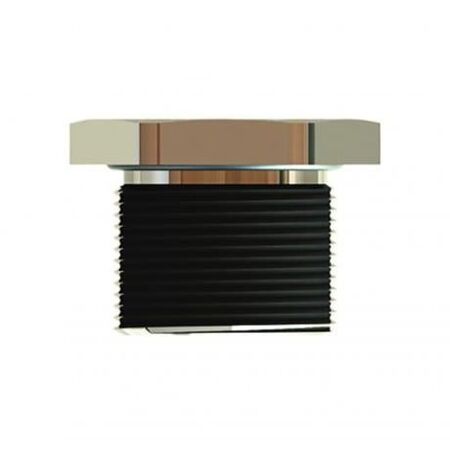
The distribution board on a servo forecourt upgrade has entries tapped M40 — standard for the panel builder who supplied it. The only IECEx-rated cable gland in the van is M32. Nothing about the job changes because of a 8mm thread mismatch, except now there's a decision to make before a single cable goes through that enclosure wall.
Ex-rated enclosures come pre-drilled and tapped by the panel builder, often to whatever thread size suited their layout — not necessarily what's sitting in your gland stock. On retrofit and upgrade work this mismatch shows up constantly: an older Ex d junction box tapped to an imperial or NPT standard, a new switchboard drilled M40 when your glands are M32, or a control panel with M20 entries when the cable you're running needs the larger M25 gland body to seat properly.
The instinct on some jobs is to redrill the entry to match the gland. On a hazardous area enclosure, that's not something to do without thinking it through — redrilling changes the certified entry and can affect the Ex rating of the enclosure itself. A thread adapter that's rated for the same hazardous area classification is, in practice, the more straightforward fix, provided it's sized correctly.
The naming trips people up more than the logic does. A reducer steps a larger enclosure entry down to a smaller gland thread — entry M40, gland M32, reducer bridges the two. An M40 to M32 brass reducer is exactly that case. An enlarger does the opposite — it steps a smaller enclosure entry up to accept a larger gland, useful when the cable itself needs a bigger gland body than the entry was drilled for.
Both are typically nickel-plated brass for corrosion resistance and carry the same IP66/68 sealing rating as the gland they're paired with, so the adapter itself isn't the weak point in the seal — thread engagement and correct tightening are.
| Enclosure Entry | Gland Thread | You Need |
|---|---|---|
| M40 | M32 | Reducer |
| M63 | M50 | Reducer |
| M12 | M16 or M20 | Enlarger |
| 3/4" NPT | M20 | Reducer (thread-standard adapter) |
[!] Compliance note: The reducer or enlarger needs to carry a rating that matches or exceeds the hazardous area classification of the enclosure it's fitted to — typically marked directly on the fitting alongside the IP66/68 rating. As a general rule, mixing an uncertified adapter into an Ex-rated entry undermines the certification of the whole assembly, not just the adapter itself, so it's worth checking the marking against the enclosure's own Ex rating before it goes on the job.
Thread engagement matters more than it looks like it should. A reducer or enlarger that's only partially threaded in — because it's the wrong pitch, or because it's been forced to "make do" — typically won't seal properly even if the gland itself is torqued down correctly afterward. If it doesn't wind in smoothly by hand for the first few turns, it's usually the wrong size or thread standard, not a fitting that needs force.
Once the thread is matched and the gland is seated, the next thing worth checking is whether the seal around the cable itself is holding IP66/68 — particularly on jobs where the gland's been in and out a few times, or the cable diameter is at the edge of the gland's range. cable gland sealant for IP66/68 gaps covers that side of it in more detail.
Ordering by outer diameter instead of thread size. Two glands can look the same size side by side but carry different metric threads. Always confirm the actual thread designation stamped on the gland or enclosure, not a visual guess.
Assuming NPT and metric threads are interchangeable. An M20 and a 3/4" NPT thread look close enough to force together, but the pitch is different — cross-threading it on-site is a common way to compromise the seal without realising it until the job's signed off.
Stacking two adapters to bridge a big size gap. Going from M63 down to M20 by threading a reducer into a reducer isn't a supported configuration for most Ex-rated fittings — it typically voids the certification of the assembly. If the size gap is that large, the enclosure entry itself usually needs review.
Forgetting the adapter needs its own IP66/68 rating. A generic hardware-store thread adapter will physically fit but won't carry the sealing or Ex certification the rest of the assembly relies on — it needs to be rated to the same standard as the gland and enclosure, not just the right thread pitch.
Not checking gland compatibility after resizing. Once the thread's adapted, double check the gland's clamping range still suits the actual cable diameter — resizing the thread doesn't change what cable diameter the gland itself is built to grip.
What size reducer do I need for an M40 entry with an M32 gland?
An M40 to M32 reducer steps the entry down to match the gland thread directly — no redrilling required.
Can I use a reducer instead of drilling a new entry in the enclosure?
Yes, and it's generally the preferred option on a certified Ex enclosure — drilling a new entry changes the certified configuration of the enclosure itself, while a correctly rated reducer or enlarger keeps the original entry intact.
How do I tell if my enclosure entry is metric or NPT thread?
Check the marking stamped near the entry or on the enclosure's data plate — it's usually noted alongside the Ex rating. If there's no marking, a 3/4" NPT to M20 reducer is a common fix for older imperial-threaded enclosures being fitted with metric glands.
Do I need to be a licensed electrician to fit Ex-rated cable gland reducers in NSW?
Work on hazardous area electrical installations in NSW generally requires the appropriate electrical licence, and depending on the site, additional hazardous area competency may apply. As a general rule, confirm site-specific licensing requirements before starting Ex-rated work.
Will fitting a reducer affect the Ex rating of my gland?
Not if the reducer or enlarger carries a matching or higher Ex rating than the gland and enclosure. It's the mismatch between ratings — not the presence of an adapter itself — that typically causes compliance issues.
What's the smallest thread jump these adapters typically cover?
Common jumps range from a single size step (M12 to M16) up to larger transitions like M63 to M50, covering most enclosure-to-gland mismatches encountered on standard switchboards and junction boxes.
Related Reading
Trade pricing on the full range, dispatched same day from Kingsgrove NSW.
Stock up on cable gland reducer and enlarger fittings at Schnap — everything you need in one place, dispatched same day from Kingsgrove.

SCHNAP Electrical Wholesaler - clear, upfront pricing that professional electricians trust

Get what you need in seconds. SCHNAP electrical wholesaler makes ordering quick and simple

Fast delivery anywhere - that's guaranteed. SCHNAP electrical wholesalers ship nationwide with same-day dispatch

Track your order every step of the way. SCHNAP electrical wholesale keeps you updated from click to delivery

SCHNAP is Australia's premier electrical wholesaler and electrical supplies, marketing thousands of quality products from leading brands. Trusted for nearly two decades by licensed electricians, contractors, and engineers, our range covers everything from basic electrical components to complex industrial electrical equipment
Our key categories include: LED lighting, designer switches, commercial switchboards, circuit protection, security systems & CCTV, and smart home automation
All products are certified to Australian standards (AS/NZS), backed by our 30-day, no-questions-asked return policy. Our expert technical team helps you quickly source the right solution for any residential, commercial, or industrial project, with daily dispatch from our Sydney electrical warehouse delivering Australia-wide
SCHNAP offers the most comprehensive electrical product range, with full technical specifications, application details, installation requirements, compliance standards, and warranties — giving professionals total confidence in every purchase


Kingsgrove Branch:
Opening hours:
Mon - Fri: 6:30 AM to 5 PM
Saturday: 8:00 AM to 2:00 PM
Sunday: 9:00 AM to 2:00 PM
Closed on public holidays
Jannali Branch:
Closed for Renovations
© 2004 - 2026 SCHNAP Electric Products