

Kingsgrove Branch:


Product help, identification or bulk pricing.
Send us a photo and our team will help identify it.
Large quantities? Send us the details via WhatsApp.
Enter a quantity or some details about your bulk request.
Request via WhatsApp
Last month a compliance audit flagged three Ex db enclosures on a servo drive line at a food processing plant. The cable had been swapped for a slightly smaller OD replacement two years earlier, and nobody went back to reseal the gap left behind at the gland. On paper the fitting was still IP66/68. In practice, water had been finding its way in for months.
A cable gland rated IP66/68 doesn't hold that rating on its own — the seal only works if the compression ring is actually gripping cable of the size it was designed for. Swap in thinner cable, reuse a gland from a decommissioned run, or terminate a multicore where the outer sheath is a couple of millimetres under spec, and you're left with an annular gap the compression cone was never meant to close. Getting the entry thread matched to the enclosure in the first place is its own decision — that's covered in picking the right entry thread — but thread selection doesn't help once the gland's already in and the cable inside it has changed.
In a hazardous area, this isn't just a nuisance leak. A gap at the gland is a gap in the enclosure's protection concept, and depending on the Ex marking, that can mean the difference between a compliant Ex e terminal box and one that's quietly out of scope of its own certificate.
Related Reading
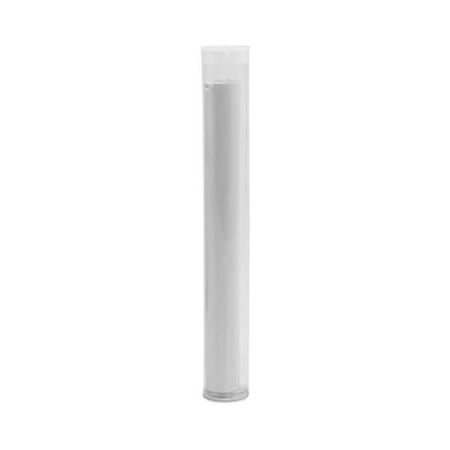
For the OD mismatch scenario above, the fix on site is usually cable gland putty — a two-part epoxy that's mixed by hand, mould-packed around the cable at the gland aperture, and left to cure. Unlike silicone, it's designed to be worked and shaped in place rather than injected, so it fills an irregular gap around a cable properly instead of just sitting on top of it. Working time is typically a few minutes, which is enough to pack the gap and smooth the surface before it starts to set.
The other common failure mode is a bit different: the compression ring itself is still gripping the correct cable size, but the rubber seal has perished from UV or heat over a few years and no longer closes properly. That's not a putty job — it's a seal replacement, and it's worth checking which one you're actually dealing with before reaching for either fix.
| Situation | Use |
|---|---|
| Cable OD smaller than the gland was set up for, ring still intact | Cable gland putty, packed around the gap |
| Rubber seal cracked, brittle, or visibly perished | Replace the seal ring, don't just putty over it |
| Gland body or thread damaged | Neither — replace the gland itself |
[!] Compliance note: Any rework of a gland entry on an Ex-marked enclosure should be recorded against the enclosure's inspection and maintenance log, not just fixed and left. AS/NZS 60079 inspection regimes expect a documented trail for gland and cable entry modifications — in practice, most sites log this as a routine entry rather than a full re-certification, but check your site's inspection procedure before assuming which applies.
Assuming the gland is fine because it "looks sealed." A compression ring can be tightened down hard around a cable that's too small for it and still look neat from the outside — the gap is inside the aperture, not visible without pulling the gland apart or checking with a feeler gauge.
Overpacking the putty. Cramming in more epoxy than the gap needs doesn't improve the seal — it just makes it harder to get a clean, even surface and increases the chance of trapping air pockets that become leak paths later.
Working the putty after it's started to set. Once cure begins, reshaping it breaks the bond that's already forming. If the first pack isn't right, it's usually faster to remove it and start with a fresh mix than to keep working a partially cured batch.
Not checking cable movement or vibration at the entry point. On a servo drive or pump enclosure with real vibration, a putty seal that isn't backed by proper cable support can crack over time even if it was packed correctly on day one.
Skipping the paperwork. The gap gets fixed, the enclosure looks fine, and the modification never makes it into the inspection log — which is exactly the gap an auditor finds two years later.
What size gap is too big for cable gland putty to fix?
As a general rule, a few millimetres of annular gap around the cable is a reasonable job for epoxy putty. If the mismatch is large enough that the compression ring can't grip the cable at all, packing putty around it isn't a substitute for the correct gland size — at that point you need a longer putty run at best, or a proper reducer, not a bigger blob of epoxy.
Can I use epoxy putty on a gland that's already IP66 rated?
Yes — putty is typically used as a remedial fix on an existing IP66/68 gland where the cable-to-gland fit has changed, not as a substitute for the gland's own seal on a correctly sized install. It's addressing a gap that's formed after the fact, not replacing the gland's original rating.
Do I need to replace the whole gland if the seal ring has perished?
Usually not — if the gland body and thread are still in good condition, a replacement seal ring is a much cheaper fix than swapping the entire fitting. Check the gland body for cracking or thread damage first, since that's a different repair entirely.
Is field-applied epoxy putty acceptable for AS/NZS 60079 hazardous area installations?
Two-part epoxy putty is a commonly used remedial sealant on Ex cable entries, but acceptability comes down to the specific enclosure's certificate and your site's inspection procedure rather than a blanket yes. As a general rule, check that the modification is documented in the enclosure's inspection log, and confirm with your site's Ex-competent person if the certificate has specific conditions on gland entries.
How do I know if my outdoor cable gland is still holding its IP66 rating after a few years?
Visual cracking or hardening of the seal is the obvious sign, but a gland can also lose its rating quietly through gradual cable creep or UV breakdown that's harder to spot on inspection. The same ageing pattern shows up in outdoor IP66 fittings more broadly — worth a look if you're checking multiple entry points on the same enclosure.
What's the difference between cable gland putty and standard silicone sealant?
Silicone is applied wet and cures by skinning over, which makes it harder to control around an irregular gap and prone to shrinking away from the cable as it sets. Epoxy gland putty is mixed and worked by hand before it sets, so it can be mould-packed tight against the cable and gland body while it's still workable, then left to cure hard.
Related Reading
Trade pricing and same-day dispatch from Kingsgrove NSW on epoxy putty and replacement seals for cable gland entries.
Stock up on hazardous area ex fittings at Schnap -- everything you need in one place, dispatched same day from Kingsgrove.

SCHNAP Electrical Wholesaler - clear, upfront pricing that professional electricians trust

Get what you need in seconds. SCHNAP electrical wholesaler makes ordering quick and simple

Fast delivery anywhere - that's guaranteed. SCHNAP electrical wholesalers ship nationwide with same-day dispatch

Track your order every step of the way. SCHNAP electrical wholesale keeps you updated from click to delivery

SCHNAP is Australia's premier electrical wholesaler and electrical supplies, marketing thousands of quality products from leading brands. Trusted for nearly two decades by licensed electricians, contractors, and engineers, our range covers everything from basic electrical components to complex industrial electrical equipment
Our key categories include: LED lighting, designer switches, commercial switchboards, circuit protection, security systems & CCTV, and smart home automation
All products are certified to Australian standards (AS/NZS), backed by our 30-day, no-questions-asked return policy. Our expert technical team helps you quickly source the right solution for any residential, commercial, or industrial project, with daily dispatch from our Sydney electrical warehouse delivering Australia-wide
SCHNAP offers the most comprehensive electrical product range, with full technical specifications, application details, installation requirements, compliance standards, and warranties — giving professionals total confidence in every purchase


Kingsgrove Branch:
Opening hours:
Mon - Fri: 6:30 AM to 5 PM
Saturday: 8:00 AM to 2:00 PM
Sunday: 9:00 AM to 2:00 PM
Closed on public holidays
Jannali Branch:
Closed for Renovations
© 2004 - 2026 SCHNAP Electric Products