

Kingsgrove Branch:



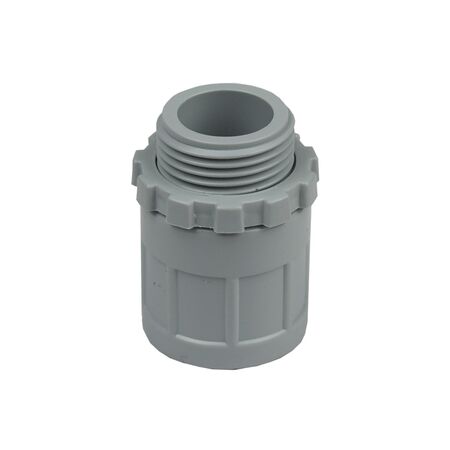
Every conduit run needs something to keep it together at the corners, lock it into the wall, cap it off at the end, and let a tradie back in when a cable needs pulling. That's what conduit fittings do. They're not the headline product on any job sheet, but get them wrong — wrong material for the environment, wrong IP rating for outdoors, wrong size coupling that won't seal — and you're pulling the run apart before the job's even done.
This guide covers the main types of conduit fittings used on Australian jobs, what each one is actually for, and which material to reach for depending on the environment. Product links throughout go to the live Schnap catalogue — everything listed is in stock and available for same-day dispatch from Kingsgrove NSW.
Not sure which conduit to pair your fittings with? See our guides on electrical conduit types, flexible conduit, and corrugated conduit first.
Before anything else, the material of the fitting has to match the environment and the conduit it's going onto. Using the wrong material is the fastest way to end up with corrosion at terminations, failed IP ratings, or a fitting that won't grip the conduit properly.
| Material | Best For | Watch Out For |
|---|---|---|
| PVC (grey or orange) | Standard indoor and outdoor surface wiring, residential and commercial | UV-resistant rating required for exposed outdoor use (check for UV stabilised label) |
| Hot-dip galvanised (HDG) steel | Heavy industrial, exposed outdoor, underground, mechanical risk environments | Not for coastal or high-chloride environments — use 316SS instead |
| 316 Stainless steel | Marine, coastal, food processing, washdown environments | Higher cost — specify only where the environment genuinely demands it |
| Nickel-plated brass | Flexible conduit terminations, industrial threaded fittings, IP-rated glands | Match thread standard to conduit (metric M-series vs imperial BSP) |
| Nylon / polyamide | Flexible corrugated conduit fittings, lighter-duty industrial, chemical resistance | Temperature rating — check spec sheet for sustained heat applications |
A coupling joins two lengths of conduit end-to-end. A solid coupling is sealed — once the conduit is through, there's no access. That's fine for straight runs where you're just extending length. A reducer joins conduit of two different sizes, useful when a run changes diameter at a junction or enclosure entry.
PVC couplings come in plain-to-plain, plain-to-screw, and screw-to-screw variants — match the coupling type to the conduit ends you're joining. The most common mistake is using a plain coupling on a screw-thread conduit end: it'll sit on without gripping properly and won't seal.
A bend changes the direction of a conduit run. The important distinction is between a solid bend and a sweep bend. A solid bend is a tight 90-degree elbow — cable pulling through it is harder because the radius is short. A sweep bend has a much longer radius, which makes pulling cables through significantly easier and is the correct choice for anything with a lot of cable or long runs. For most runs carrying more than a couple of cables, sweep bends are the professional standard.
Available in PVC (grey and orange) and hot-dip galvanised steel for heavier environments. The orange sweep bends are the standard choice for orange circular cable runs outdoors.
Saddles and clips secure conduit to the surface it's running along — walls, ceilings, cable trays, or structural steel. The difference matters: a saddle wraps fully around the conduit and holds it tight against the surface; a clip grips from one side and is faster to install but less secure under vibration or mechanical load.
AS/NZS 3000 specifies maximum support spacing for conduit depending on size and orientation — this is the most commonly ignored requirement on surface-run conduit. A conduit fixed only at the ends and sagging in the middle is non-compliant, regardless of how good the fittings are.
⚠ Compliance note: Under AS/NZS 3000, conduit must be continuously supported to prevent sagging. For horizontal runs, typical maximum spacing is 1.2m for 20mm conduit and 1.5m for larger sizes. Check the standard for your specific install conditions.
These two fittings are the pair you use every time a conduit enters a junction box, enclosure, or switchboard. The locating flange holds the conduit at the correct depth at the entry point. The adaptor lock nut (also called a conduit entry adaptor) threads onto the conduit from the inside of the enclosure and locks the conduit securely in place so it can't pull out. Together they create a secure, sealed conduit entry.
An inspection fitting — whether it's an elbow, tee, or bend — has a removable cover or lid that gives access to the inside of the conduit run after installation. This is the critical difference from a solid fitting: a solid elbow is sealed once the conduit is connected; an inspection elbow can be opened to pull cables through, add a new cable, or clear a fault without dismantling the conduit run.
AS/NZS 3000 requires cable access points at appropriate intervals in a conduit run — this is what inspection fittings are for. On long runs or runs with multiple direction changes, placing an inspection tee or elbow at strategic points is both a compliance requirement and a time-saver for anyone who needs to work on the run later.
An end cap or end plug seals the open end of a conduit run — essential wherever a conduit terminates in an open location rather than entering an enclosure. Without a sealed end, moisture, insects, and dust can enter the conduit and travel the length of the run, compromising both the cable inside and any enclosures at the other end. On outdoor or industrial runs, this is a compliance and longevity issue, not optional.
Flexible conduit — whether corrugated nylon or liquid-tight metal — uses a different fitting system from rigid PVC. The fitting needs to grip the corrugation profile of the flexible conduit securely while providing a sealed entry into the enclosure or junction box it's terminating at. Most flexible conduit fittings are IP-rated and designed with a locking mechanism that can't be pulled off under cable tension.
Adaptaseal and Adaptalok (Cabac) are the two systems most commonly seen on Australian jobs. Adaptaseal uses a sealing ring for IP-rated terminations into enclosures. Adaptalok uses a locking collar that grips the conduit and the enclosure wall simultaneously. Both come in a range of conduit-to-metric-thread sizes.
316 grade stainless steel fittings are specified where the environment will corrode standard galvanised steel — coastal locations, marine installations, food processing areas, and anywhere subject to regular washdown or chemical exposure. The Tobin IP69 range of stainless fittings is the go-to in Australian industrial applications: IP69 is the highest rating available, covering both high-pressure washdown and total dust exclusion.
A junction box at a conduit fitting point provides a sealed enclosure where conduit runs meet, branch, or change direction. The deep junction box (as opposed to a shallow box) is specified where the number of cables or the size of cable requires more internal space for safe termination. Three-way and four-way entry configurations cover most situations — a three-way box handles a T-junction in a conduit run; a four-way handles a cross junction.
Where a conduit penetrates a fire-rated wall or floor, Australian building and electrical codes require the penetration to be sealed to maintain the fire rating. A conduit collar (or firecollar) is fitted around the conduit at the penetration point. In a fire, the intumescent material inside the collar expands rapidly, crushing the conduit and sealing the opening to block the passage of fire and smoke through the penetration.
⚠ Compliance note: Penetrations through fire-rated construction must maintain the FRL (Fire Resistance Level) of the wall or floor. This applies to conduit penetrations under both the NCC (National Construction Code) and AS/NZS 3000. Collars must be installed per the manufacturer's tested system — not just pushed onto the conduit.
Q: What's the difference between a solid coupling and an inspection fitting?
A solid coupling seals two conduit lengths together permanently — no access once installed. An inspection fitting has a removable cover or lid that lets you access the inside of the conduit without dismantling the run. Use inspection fittings wherever the run might need cable access later.
Q: What's the difference between a sweep bend and a standard 90-degree bend?
A sweep bend has a long radius, which makes pulling cable through easier and reduces the risk of cable damage at the bend. A standard 90-degree bend has a short, tight radius — cable pulling is harder and the bend can kink the cable if forced. For most circuit wiring, sweep bends are the professional standard.
Q: Do I need both a locating flange and a lock nut when entering an enclosure?
Yes, both. The locating flange sets the conduit at the correct depth and prevents it from going too far into the enclosure. The lock nut threads onto the conduit from inside the enclosure and clamps everything in position. Using only the lock nut leaves the depth uncontrolled; using only the flange doesn't secure the conduit against being pulled out.
Q: What IP rating do I need for outdoor conduit fittings?
For standard outdoor exposure (rain, UV, dust), IP55 or IP65 is typical. For washdown environments (food processing, car wash areas), IP66 or IP67. For high-pressure jet washdown (abattoirs, industrial cleaning), IP69 is specified. The IP rating of the fitting must be equal to or higher than the IP requirement of the installation.
Q: When should I use 316 stainless steel fittings instead of galvanised?
316 stainless is specified where galvanised steel will corrode: coastal and marine environments within roughly 1km of saltwater, food processing and washdown areas, chemical environments, and anywhere with high humidity and corrosive atmospheres. For standard outdoor industrial use inland, hot-dip galvanised is generally sufficient and more cost-effective.
Q: What's the difference between Adaptaseal and Adaptalok fittings?
Both are Cabac systems for terminating flexible corrugated conduit. Adaptaseal uses a sealing ring that compresses around the conduit when the fitting is tightened, providing an IP-rated seal. Adaptalok uses a bayonet-style locking collar that locks the conduit in one action. Adaptaseal is the choice where IP-rated sealing is the priority; Adaptalok is faster to install where speed matters more than the highest possible seal rating.
Q: Does AS/NZS 3000 specify which fittings I have to use?
AS/NZS 3000 specifies performance requirements — IP rating, support spacing, access provision, fire penetration sealing — rather than listing specific products. AS/NZS 2053 covers the manufacturing requirements for conduit and fittings. Using fittings that comply with AS/NZS 2053 and are rated for the installation environment satisfies AS/NZS 3000 requirements.
Q: Do I need a licensed electrician to install conduit fittings?
In Australia, any conduit that contains or will contain energised electrical cable is part of a fixed electrical installation. Installation of fixed electrical wiring — including the conduit and fittings it runs through — must be carried out by a licensed electrician under AS/NZS 3000. This guide covers product selection, not a substitute for compliant installation.
Related Reading
Schnap stocks conduit fittings across the full range — PVC, galvanised steel, 316 stainless, brass, and nylon — covering everything from standard residential fittings to IP69 industrial systems. Same-day dispatch from Kingsgrove NSW.
Browse all Conduit Fittings at Schnap →
Related guides: What is Electrical Conduit? — Flexible Conduit Guide — Corrugated Conduit Guide — TPS Building Wire Guide

SCHNAP Electrical Wholesaler - clear, upfront pricing that professional electricians trust

Get what you need in seconds. SCHNAP electrical wholesaler makes ordering quick and simple

Fast delivery anywhere - that's guaranteed. SCHNAP electrical wholesalers ship nationwide with same-day dispatch

Track your order every step of the way. SCHNAP electrical wholesale keeps you updated from click to delivery

SCHNAP is Australia's premier electrical wholesaler and electrical supplies, marketing thousands of quality products from leading brands. Trusted for nearly two decades by licensed electricians, contractors, and engineers, our range covers everything from basic electrical components to complex industrial electrical equipment
Our key categories include: LED lighting, designer switches, commercial switchboards, circuit protection, security systems & CCTV, and smart home automation
All products are certified to Australian standards (AS/NZS), backed by our 30-day, no-questions-asked return policy. Our expert technical team helps you quickly source the right solution for any residential, commercial, or industrial project, with daily dispatch from our Sydney electrical warehouse delivering Australia-wide
SCHNAP offers the most comprehensive electrical product range, with full technical specifications, application details, installation requirements, compliance standards, and warranties — giving professionals total confidence in every purchase


Kingsgrove Branch:
Opening hours:
Mon - Fri: 6:30 AM to 5 PM
Saturday: 8:00 AM to 2:00 PM
Sunday: 9:00 AM to 2:00 PM
Closed on public holidays
Jannali Branch:
Closed for Renovations
© 2004 - 2026 SCHNAP Electric Products