

Kingsgrove Branch:



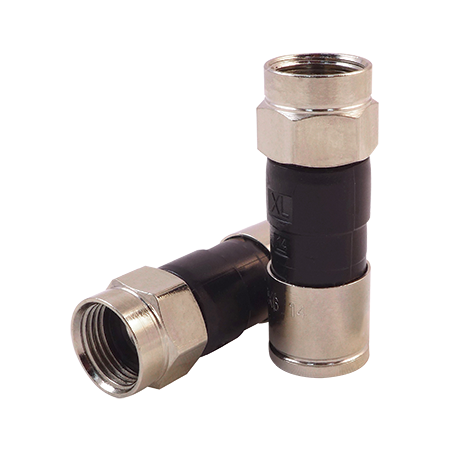
A rooftop antenna install works fine for three weeks, then the first proper rain hits and the picture starts breaking up. Nine times out of ten, the cable itself is fine -- it's the F type connector on the end of it that let water in.
RG6 is a well-shielded cable on its own. Where things go wrong is at the termination point, particularly on runs that end up exposed -- a lead-in to a roof-mounted antenna, a run along an eave to a satellite dish, or a CCTV camera feed clipped along an outdoor wall. A crimp connector barrel that isn't fully seated, or a compression connector tightened without checking the seal, leaves a gap small enough to miss on install day but large enough for moisture to track in over a few wet seasons. Once water gets past the connector and into the braid, corrosion sets in slowly -- signal loss shows up gradually rather than all at once, which is part of why it's easy to blame the cable run instead.
If you haven't locked in the cable itself yet, worth sorting that first -- picking between RG6 and RG11 cable changes what connector barrel size you'll need at termination.
Both methods terminate the same cable end, but the mechanism -- and what it means for a weatherproof result -- is different.
| Method | How it seals | Best suited to |
|---|---|---|
| Crimp | Barrel is mechanically crimped onto the braid with a dedicated tool; no compression ring or O-ring | Indoor runs, wall plates, patch points not exposed to weather |
| Compression | Ring is compressed over the connector body, typically with an O-ring seal against the fitting | Outdoor, rooftop, or any run where the termination sits exposed to rain or humidity |
In practice, a crimp connector can be perfectly reliable indoors -- it's a faster termination and there's no seal to worry about because there's nothing to seal against. The problem only shows up when a crimp-terminated cable ends up outside, which happens more often than it should when the same box of connectors gets used for every job regardless of where the run terminates.
[!] For any termination that ends up exposed to weather -- rooftop, eave, external wall -- a weatherproof compression connector with dual O-ring seals is the safer default, even if the run looks sheltered on install day.
The termination itself follows the same basic steps whether it's crimp or compression -- strip the outer jacket to expose the braid, fold the braid back over the dielectric, trim the centre conductor to length, then fit the connector. Where it goes wrong on outdoor jobs is usually at the strip stage: too much jacket removed leaves braid exposed beyond the connector body, and that gap becomes the entry point for moisture even with a compression seal fitted correctly. A stripping tool set to the right cable diameter keeps that cut consistent, rather than eyeballing it with a utility knife.
For rooftop antenna work specifically, Foxtel-approved compression connectors are worth using even on non-Foxtel installs -- the approval reflects a tighter tolerance on the compression fit, which matters more outdoors than the brand name does. Once the connector's on, a quick tug test and a visual check that the O-ring seal sits flush (not pinched or twisted) takes a few seconds and catches most of the failures that would otherwise show up as static after the next storm.
Using crimp connectors on an outdoor run because that's what was in the toolbox. It's the single biggest cause of the "worked fine until it rained" callback -- crimp connectors aren't designed to seal, and swapping them out later means re-terminating the whole run.
Over-stripping the cable jacket. Leaving braid exposed past the connector body defeats the seal even on a correctly compressed connector -- the water ingress point moves rather than disappears.
Skipping the F male size check on Foxtel work. Not every compression connector marketed for RG6 is Foxtel-approved -- using an unapproved connector on a Foxtel install can mean a failed inspection even if the termination itself is sound.
Reusing a connector after a failed compression attempt. Once a compression ring's been crimped once, the O-ring seal is often already compromised -- re-crimping the same connector body rarely restores a reliable seal.
Mixing RG6 and RG59 connectors. The two cables have different outer diameters, and a connector sized for one won't seat properly on the other -- it might go on, but the compression or crimp won't sit right against the dielectric.
do I need a compression connector for an indoor coax run or is crimp fine?
Crimp is fine for indoor runs that won't be exposed to moisture -- wall plates, patch panels, internal distribution points. Compression is really an outdoor-run requirement rather than a universal upgrade.
what's the difference between the RG6 F male compression connector and the standard one?
The main practical difference on jobs where it matters is Foxtel approval -- a tighter compression tolerance that's specified for Foxtel installs but works fine as a general higher-spec option for any outdoor run, like this Foxtel-approved F male compression connector.
can I use the same compression tool for RG59 and RG6?
Only if the tool has an adjustable spin knob rated for both diameters -- fixed-size compression tools are built for one cable size and won't seat the other correctly. An adjustable compression tool covering RG59 through RG11 avoids needing separate tools for each cable size.
why does my crimped F connector keep coming loose after a few weeks?
Usually a crimp that wasn't fully seated at the barrel, or a stripping cut that removed too little jacket so the connector body isn't gripping the braid properly. Checking the strip length against the connector spec before crimping typically resolves it.
do I need to be a registered cabler to terminate coax for a TV antenna install in Australia?
Antenna and pay-TV cabling generally falls under ACMA's cabling registration rules, and most rooftop antenna and outdoor coax work needs a registered cabler to carry it out -- worth checking current ACMA cabling provider rules for the specific job type before quoting.
is a weatherproof connector actually necessary if the cable run is under an eave?
An eave reduces direct rain exposure but doesn't eliminate humidity and wind-driven moisture -- in practice, most installers still use a weatherproof compression connector for anything outside the wall cavity, eave-covered or not.
Related Reading
Trade pricing and same-day dispatch from Kingsgrove NSW on compression and crimp connectors for coaxial tv cable termination, plus the tools to fit them properly.
Find the full f type connector range at Schnap -- trade pricing and same-day dispatch from Kingsgrove NSW.

SCHNAP Electrical Wholesaler - clear, upfront pricing that professional electricians trust

Get what you need in seconds. SCHNAP electrical wholesaler makes ordering quick and simple

Fast delivery anywhere - that's guaranteed. SCHNAP electrical wholesalers ship nationwide with same-day dispatch

Track your order every step of the way. SCHNAP electrical wholesale keeps you updated from click to delivery

SCHNAP is Australia's premier electrical wholesaler and electrical supplies, marketing thousands of quality products from leading brands. Trusted for nearly two decades by licensed electricians, contractors, and engineers, our range covers everything from basic electrical components to complex industrial electrical equipment
Our key categories include: LED lighting, designer switches, commercial switchboards, circuit protection, security systems & CCTV, and smart home automation
All products are certified to Australian standards (AS/NZS), backed by our 30-day, no-questions-asked return policy. Our expert technical team helps you quickly source the right solution for any residential, commercial, or industrial project, with daily dispatch from our Sydney electrical warehouse delivering Australia-wide
SCHNAP offers the most comprehensive electrical product range, with full technical specifications, application details, installation requirements, compliance standards, and warranties — giving professionals total confidence in every purchase


Kingsgrove Branch:
Opening hours:
Mon - Fri: 6:30 AM to 5 PM
Saturday: 8:00 AM to 2:00 PM
Sunday: 9:00 AM to 2:00 PM
Closed on public holidays
Jannali Branch:
Closed for Renovations
© 2004 - 2026 SCHNAP Electric Products