

Kingsgrove Branch:



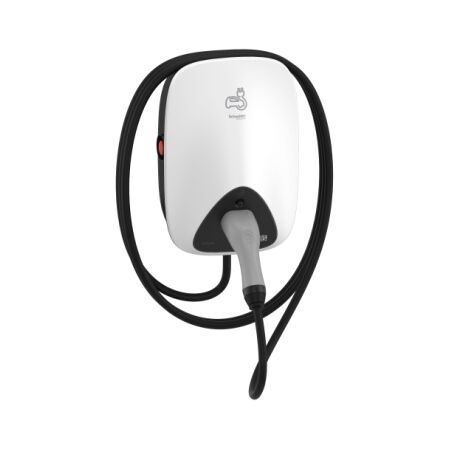
A property with three-phase power already run to the switchboard — common on larger homes, rural sheds, or small commercial sites — changes the EV charger conversation entirely. The question isn't just "which charger" anymore, it's whether to spend more upfront on a three-phase unit or stick with a cheaper single-phase charger that ignores the extra phases sitting unused in the switchboard. If your circuit sizing is also still an open question, our TPS building wire guide covers that side of the job.
A single-phase AC charger tops out at 7.4kW in most Australian installations, limited by the 32A single-phase circuit most switchboards are set up for. Three-phase changes that ceiling — 11kW and 22kW units are common on the three-phase range, spreading current across three active conductors instead of loading up one. In practice, that means a three-phase 22kW charger can put roughly three times the energy into a battery pack in the same overnight window compared to a 7.4kW single-phase unit — genuinely useful for a fleet vehicle or high-mileage daily driver, less relevant for a car that sits in the driveway for ten hours anyway.
The catch that trips a lot of buyers up: the car's onboard AC charger has its own ceiling, and it doesn't automatically match whatever the wall unit can deliver. Plenty of EVs on Australian roads still cap out at 7.4kW or 11kW AC input regardless of what's feeding them, which means a 22kW charger on that car is spending money on capacity the vehicle will never draw. If this install is for a fleet or a commercial depot with multiple vehicles cycling through, the sizing conversation looks different again — that's a separate calculation built around DC fast charging rather than AC phase count.
Related Reading
Before locking in a charger kW rating, the switchboard needs a genuine capacity check — not just "is there a spare three-phase breaker slot" but what's actually left over once existing loads (ducted air conditioning, pool pumps, workshop equipment) are accounted for. An electrician doing this properly will look at maximum demand across the whole property, not just what's drawing power right now, since a three-phase charger running overnight alongside daytime loads can catch out a supply that looked fine on paper.
Once the available capacity is confirmed, the supply cable itself needs to match the charger's draw — a 22kW three-phase charger pulling roughly 32A per phase needs a meaningfully heavier cable run than a 7.4kW single-phase circuit, and getting this wrong is one of the more expensive mistakes to fix after the fact. It's worth sorting cable sizing at the same time as the charger spec, not as an afterthought once the unit's already on the wall.
Higher-capacity chargers, particularly three-phase units at 22kW, commonly trigger a notification or approval step with the local electricity distributor before connection. This requirement varies by network and by the charger's total capacity, so it's typically checked as part of the initial site assessment rather than assumed either way.
Buying capacity the car can't use. A 22kW three-phase charger on a vehicle capped at 7.4kW AC input isn't future-proofing — it's paying for headroom that specific car will never draw, unless a faster-charging replacement vehicle is already on the cards.
Assuming a spare three-phase breaker means spare capacity. A free slot in the switchboard says nothing about what's actually left in the supply once existing loads are running at the same time as the charger overnight.
Sizing the charger before sizing the cable. Locking in a 22kW unit and only then checking whether the existing supply cable can carry it is a common sequence to get backwards — it's cheaper to confirm both together.
Skipping the network notification step. Assuming a three-phase charger install doesn't need distributor sign-off, then finding out otherwise partway through the job, adds delay that's avoidable with an earlier check.
Choosing tethered vs socket-outlet without thinking about the site. A tethered cable is convenient for a single dedicated vehicle; a socket-outlet unit makes more sense where multiple drivers or cable types need to use the same charger.
Do I need a three-phase EV charger if my car can only accept 7.4kW AC?
Not for that vehicle specifically — a single-phase 7.4kW charger will fully use what the car can draw. Three-phase only pays off once the vehicle's onboard charger can actually accept more, or if a faster-charging car is likely to replace this one within the next few years.
What's the real difference between an 11kW and a 22kW three-phase charger in charging time?
Assuming the car can accept the higher rate, a 22kW charger roughly halves overnight charging time compared to 11kW. Our 22kW three-phase wall-mount charger is a common pick where the vehicle's onboard charger supports it and the site has spare three-phase capacity confirmed.
Do I need approval from my electricity distributor to install a three-phase EV charger in NSW?
Generally yes for higher-capacity three-phase installs, though the exact threshold and process depends on the local network operator. This is typically confirmed as part of the initial site assessment rather than assumed either way — check with the installing electrician before committing to a charger size.
What licence does an electrician need to install a three-phase EV charger?
A licensed electrician with the appropriate electrical work licence for the relevant state is required — EV charger installation isn't a job for an unlicensed installer, given it typically involves new circuit wiring back to the switchboard. If cable sizing for that circuit is still unresolved, the TPS building wire guide is a useful reference for the licensed electrician doing that part of the job.
Can I start with a single-phase charger and upgrade to three-phase later?
It's possible, but it usually means a fresh circuit run rather than a simple swap, since single-phase and three-phase installs typically use different cable configurations back to the switchboard. If there's any chance of upgrading down the track, it's worth raising with the electrician at quoting stage — our 7.4kW single-phase charger is a common starting point where three-phase isn't justified yet.
Is a tethered or socket-outlet three-phase charger better for an outdoor installation?
Both are IP-rated for outdoor use across the three-phase range, so it comes down to how the site is used day to day rather than weather resistance. A tethered unit suits a single dedicated vehicle; a socket-outlet version is more flexible where different drivers or cable types need access to the same charger.
If this install is turning out to be a fleet or commercial depot job rather than a single vehicle at a home or small site, the sizing approach changes — that's a different conversation built around DC fast charging capacity rather than AC phase count.
Related Reading
Trade pricing and same-day dispatch from Kingsgrove NSW across the full AC charger range, from single-phase entry units through to 22kW three-phase.
Find the full three-phase EV charger range at Schnap — trade pricing and same-day dispatch from Kingsgrove NSW.

SCHNAP Electrical Wholesaler - clear, upfront pricing that professional electricians trust

Get what you need in seconds. SCHNAP electrical wholesaler makes ordering quick and simple

Fast delivery anywhere - that's guaranteed. SCHNAP electrical wholesalers ship nationwide with same-day dispatch

Track your order every step of the way. SCHNAP electrical wholesale keeps you updated from click to delivery

SCHNAP is Australia's premier electrical wholesaler and electrical supplies, marketing thousands of quality products from leading brands. Trusted for nearly two decades by licensed electricians, contractors, and engineers, our range covers everything from basic electrical components to complex industrial electrical equipment
Our key categories include: LED lighting, designer switches, commercial switchboards, circuit protection, security systems & CCTV, and smart home automation
All products are certified to Australian standards (AS/NZS), backed by our 30-day, no-questions-asked return policy. Our expert technical team helps you quickly source the right solution for any residential, commercial, or industrial project, with daily dispatch from our Sydney electrical warehouse delivering Australia-wide
SCHNAP offers the most comprehensive electrical product range, with full technical specifications, application details, installation requirements, compliance standards, and warranties — giving professionals total confidence in every purchase


Kingsgrove Branch:
Opening hours:
Mon - Fri: 6:30 AM to 5 PM
Saturday: 8:00 AM to 2:00 PM
Sunday: 9:00 AM to 2:00 PM
Closed on public holidays
Jannali Branch:
Closed for Renovations
© 2004 - 2026 SCHNAP Electric Products